

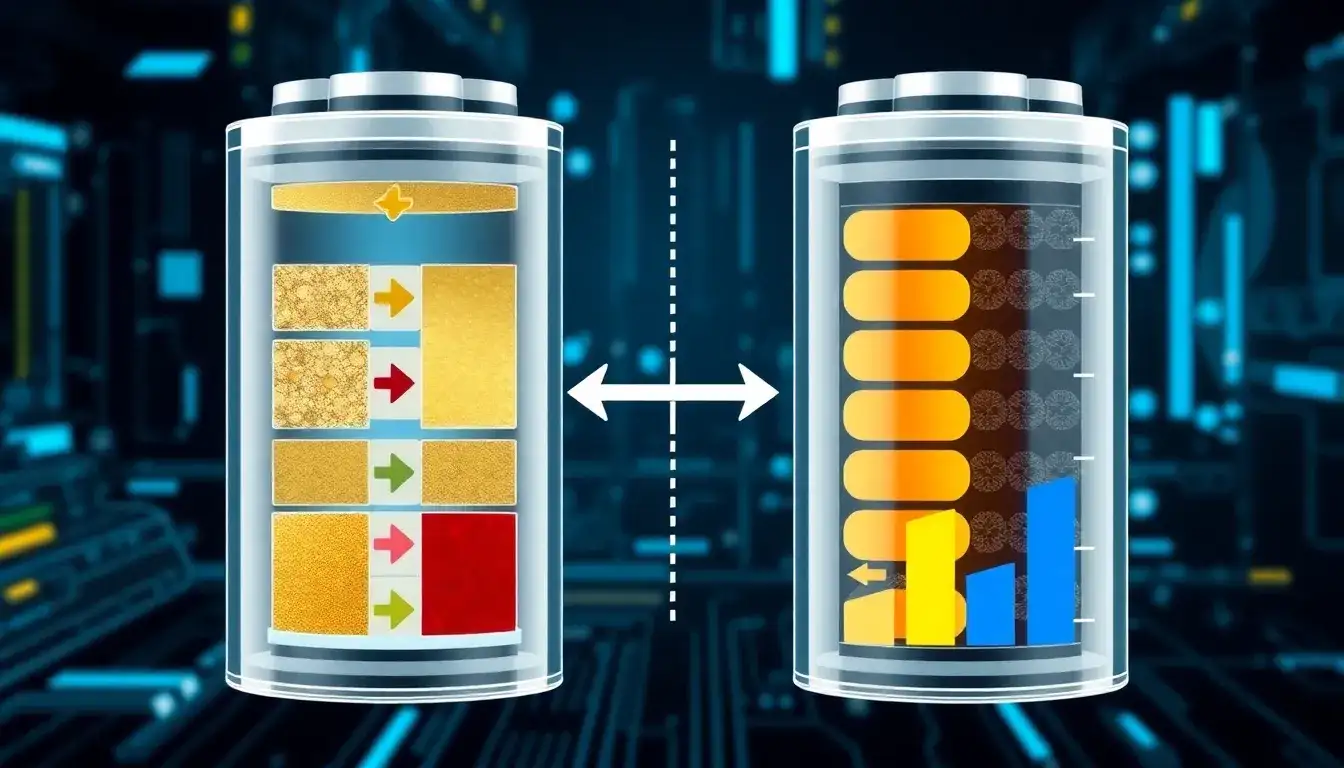
Lithium-sulfur (Li–S) batteries offer significantly higher energy density compared to conventional lithium-ion (Li-ion) batteries. Specifically:
- Gravimetric energy density (energy per unit mass):
- Li–S batteries typically provide specific energies around 450–550 Wh/kg, with some advances reporting even higher values such as 700 Wh/kg in recent prototypes.
- In contrast, lithium-ion batteries generally range between 150 and 260 Wh/kg.
- Theoretical maximum energy density:
- The theoretical gravimetric energy density of Li–S cells can reach approximately 2,510–2,600 Wh/kg, which is about 5 times higher than that of lithium-ion batteries.
- Volumetric energy density (energy per unit volume):
- Li–S batteries have demonstrated volumetric energy densities around 540–550 Wh/L, which is competitive and progressively improving.
The key reasons for this superior energy density in Li–S batteries include:
- The use of lightweight lithium metal anodes and sulfur cathodes, which have low atomic weights and high capacities.
- The direct oxidation of metallic lithium instead of lithium intercalation compounds used in Li-ion cells, reducing inactive material mass.
However, Li–S batteries face challenges such as limited cycle life and stability issues related to polysulfide dissolution and volume changes during charge-discharge cycles, which currently limit their commercial viability despite the high energy densities.
In summary, lithium-sulfur batteries surpass lithium-ion batteries by roughly two to five times in energy density potential, making them a promising next-generation battery technology pending resolution of durability and commercialization challenges.
Original article by NenPower, If reposted, please credit the source: https://nenpower.com/blog/how-do-lithium-sulfur-batteries-compare-to-lithium-ion-batteries-in-terms-of-energy-density/

