

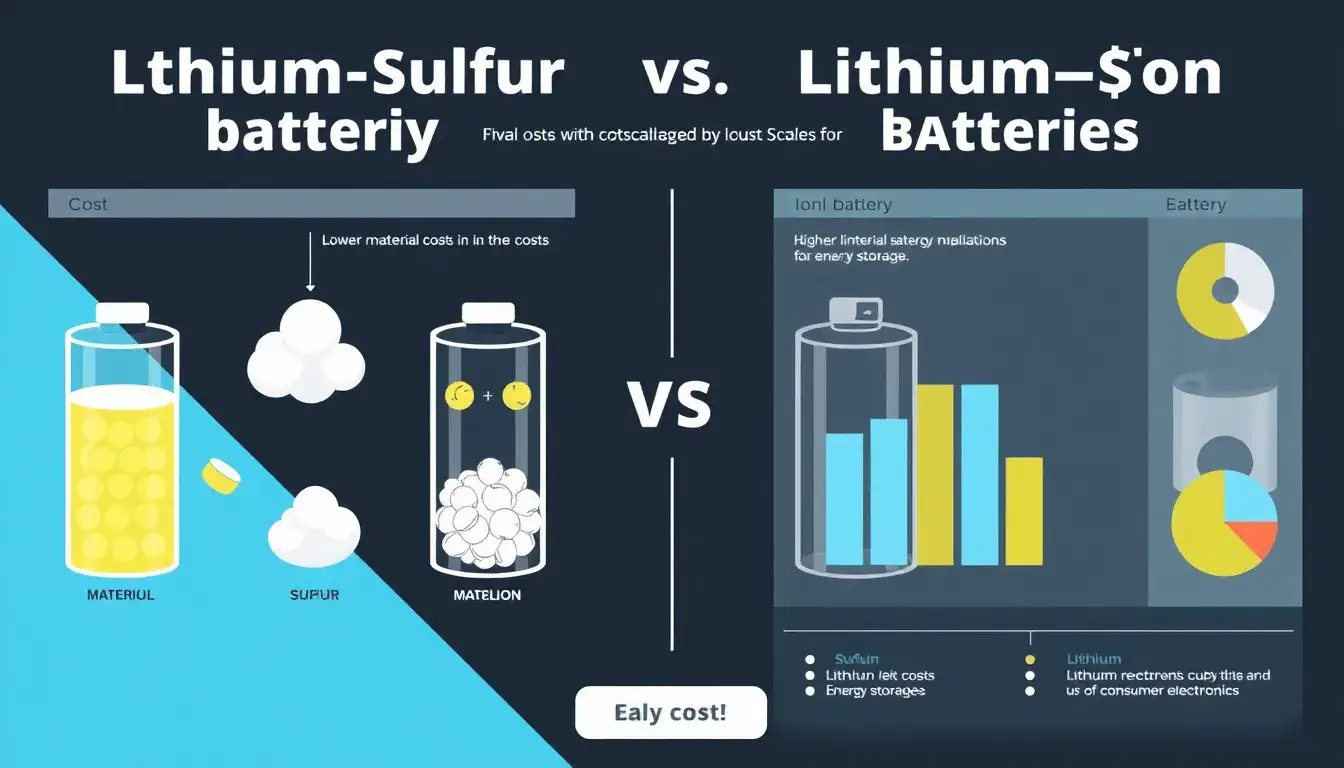
Lithium-sulfur (Li-S) batteries cost significantly less to produce than lithium-ion (Li-ion) batteries due to sulfur’s abundance and low price. Sulfur is a non-toxic, widely available material priced around $382 per metric ton (compared to cobalt at ~200× higher cost per ton), reducing reliance on expensive metals like cobalt, nickel, and manganese.
Cost comparison:
- Li-S batteries: Lower raw material costs (sulfur is ~100–200× cheaper than cobalt per ton), with simplified cathode composition.
- Li-ion batteries: Higher costs due to cobalt, nickel, and lithium mining, which are environmentally intensive and price-volatile.
While Li-S batteries offer cheaper materials, their shorter lifespan (300–500 cycles vs. Li-ion’s 1,000+ cycles) and lower technological maturity may affect long-term cost efficiency in applications requiring durability. However, for high-energy-density uses where weight matters (e.g., aerospace, EVs), Li-S batteries’ lower upfront material costs provide a compelling advantage.
Original article by NenPower, If reposted, please credit the source: https://nenpower.com/blog/how-do-lithium-sulfur-batteries-compare-to-lithium-ion-batteries-in-terms-of-cost/

