

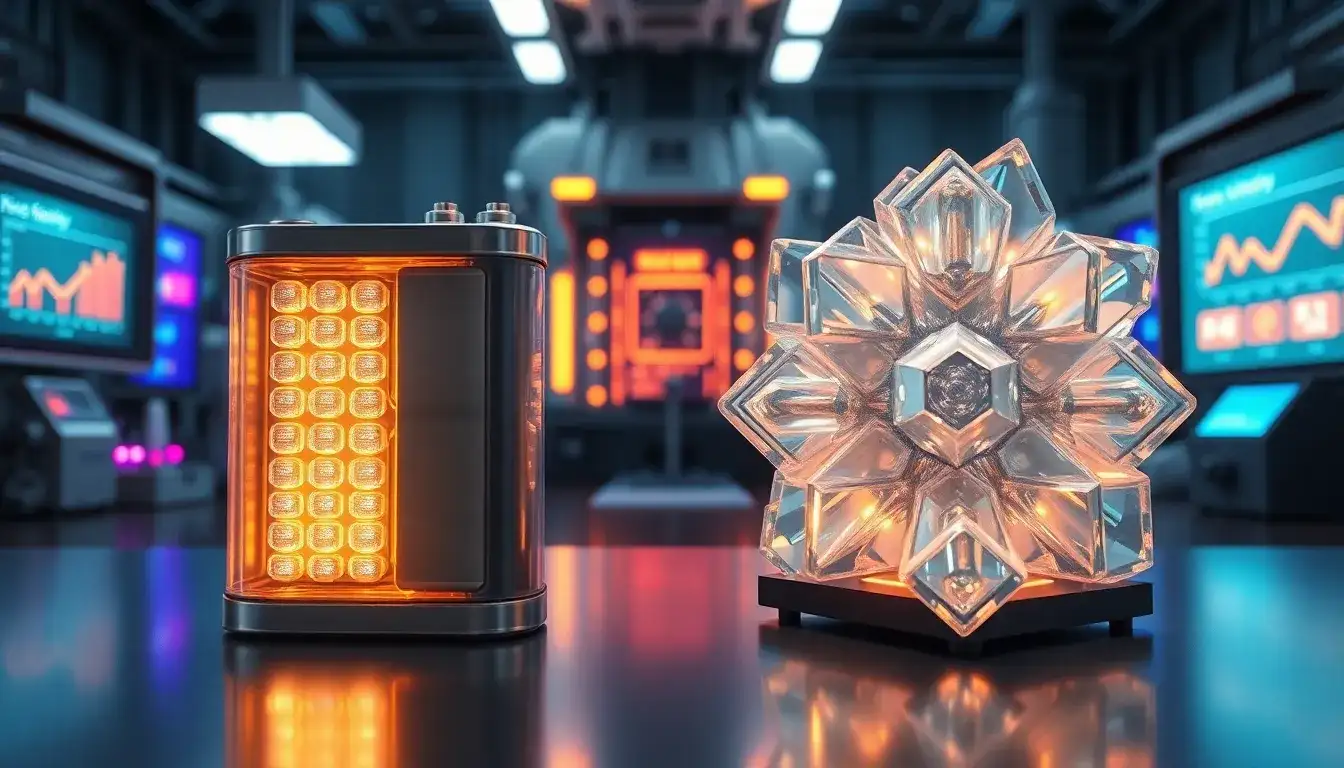
Lithium-Metal Batteries
- Energy Density: Lithium-metal batteries can achieve high energy densities. They typically offer around 500 Wh/kg, although recent developments have improved this to approximately 560 Wh/kg with active materials.
- Advantages: They have the potential for higher energy density compared to traditional lithium-ion batteries because they use lithium metal, which is more energy-dense than the intercalation materials used in lithium-ion batteries.
- Challenges: One of the major challenges is safety due to the reactivity of lithium metal and its electrolyte with water, leading to potential fire hazards.
Solid-State Batteries
- Energy Density: While solid-state batteries have shown tremendous promise in stability and safety, current reports do not specify their energy density as being significantly higher than lithium-ion batteries. However, their design allows for better safety and potentially higher energy density by using solid electrolytes.
- Advantages: Solid-state batteries are safer, more stable, and potentially offer longer lifetimes compared to liquid electrolyte batteries. They can theoretically support higher energy density materials.
- Challenges: The technology is still evolving, with ongoing research focused on material selection and scalability issues. Currently, they might not yet surpass lithium-metal batteries in terms of energy density but could offer superior safety and stability features.
In summary, lithium-metal batteries have higher reported energy densities compared to typical solid-state batteries currently under development. However, solid-state batteries offer significant improvements in safety and stability, which are crucial for widespread adoption, especially in portable electronics and electric vehicles. As technology advances, solid-state batteries may see improvements in energy density to potentially rival or surpass those of lithium-metal batteries.
Original article by NenPower, If reposted, please credit the source: https://nenpower.com/blog/how-do-lithium-metal-batteries-compare-to-solid-state-batteries-in-terms-of-energy-density/

