

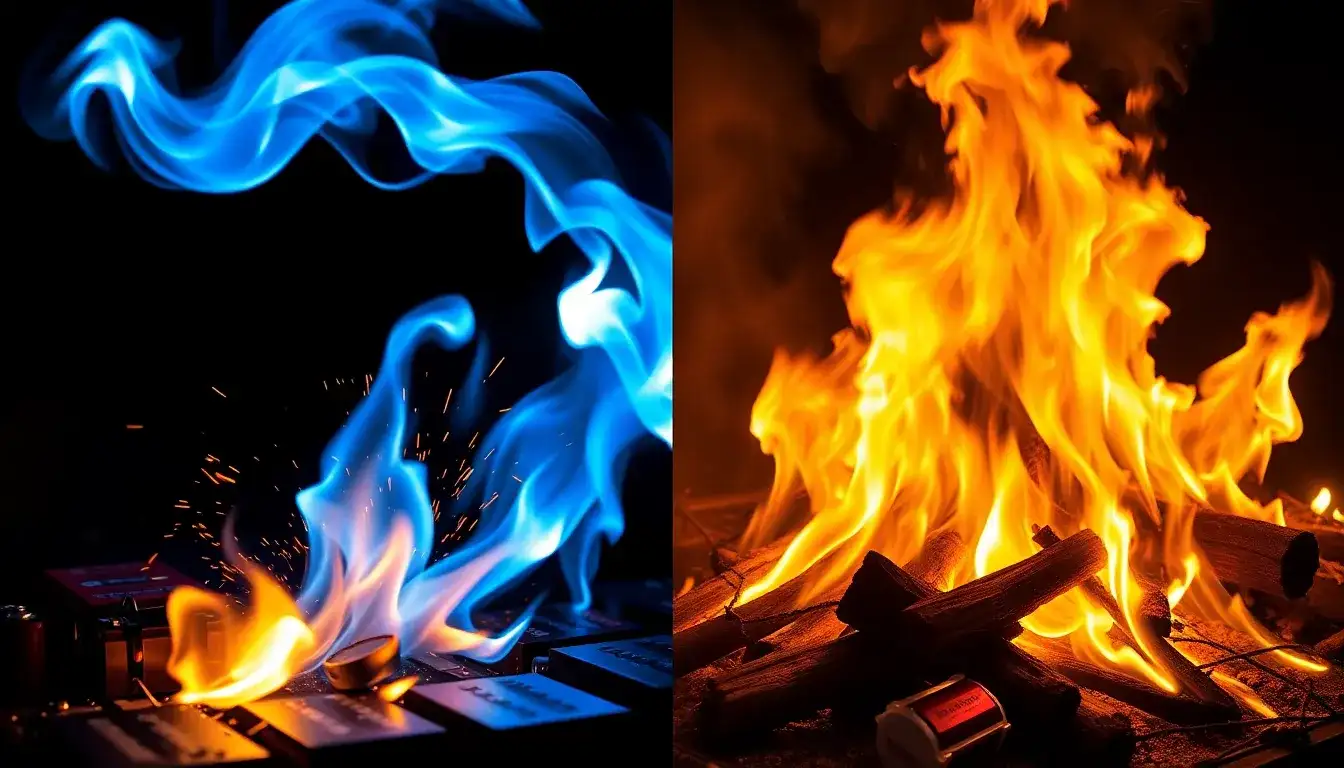
Lithium-ion Battery Fires Compared to Traditional Fires
Lithium-ion battery fires differ from traditional fires in several key ways:
Differences in Characteristics
- Intensity and Duration: Lithium-ion battery fires can burn hotter and longer than traditional fires. The thermal runaway process can cause a fire to reignite or continue burning despite initial extinguishing efforts.
- Flammability Components: Lithium-ion batteries have high charge density and contain multiple flammable components, such as electrolytes, which contribute to aggressive fires.
- Toxic Gases and Emissions: These fires release toxic gases like hydrogen fluoride, carbon monoxide, and carbon dioxide, posing serious health risks.
Propagation and Risk Factors
- Chain Reaction: A damaged lithium-ion cell can trigger a chain reaction affecting other cells in the battery pack, multiplying the explosive force and fire intensity.
- Causes and Risks: Lithium-ion battery fires are often caused by factors such as short circuits, overcharging, physical damage, or manufacturing defects, which can lead to thermal runaway.
Firefighting Challenges
- Extinguishment: Lithium-ion battery fires cannot be extinguished using standard water or fire extinguishers. They require specialized techniques and equipment to manage safely.
- Explosion Risk: The high energy density and rapid heating of lithium-ion batteries can lead to violent explosions, posing additional hazards compared to traditional fires.
Overall, lithium-ion battery fires are more hazardous due to their high energy density, toxic emissions, and challenging extinguishing requirements.
Original article by NenPower, If reposted, please credit the source: https://nenpower.com/blog/how-do-lithium-ion-battery-fires-differ-from-traditional-fires/

