

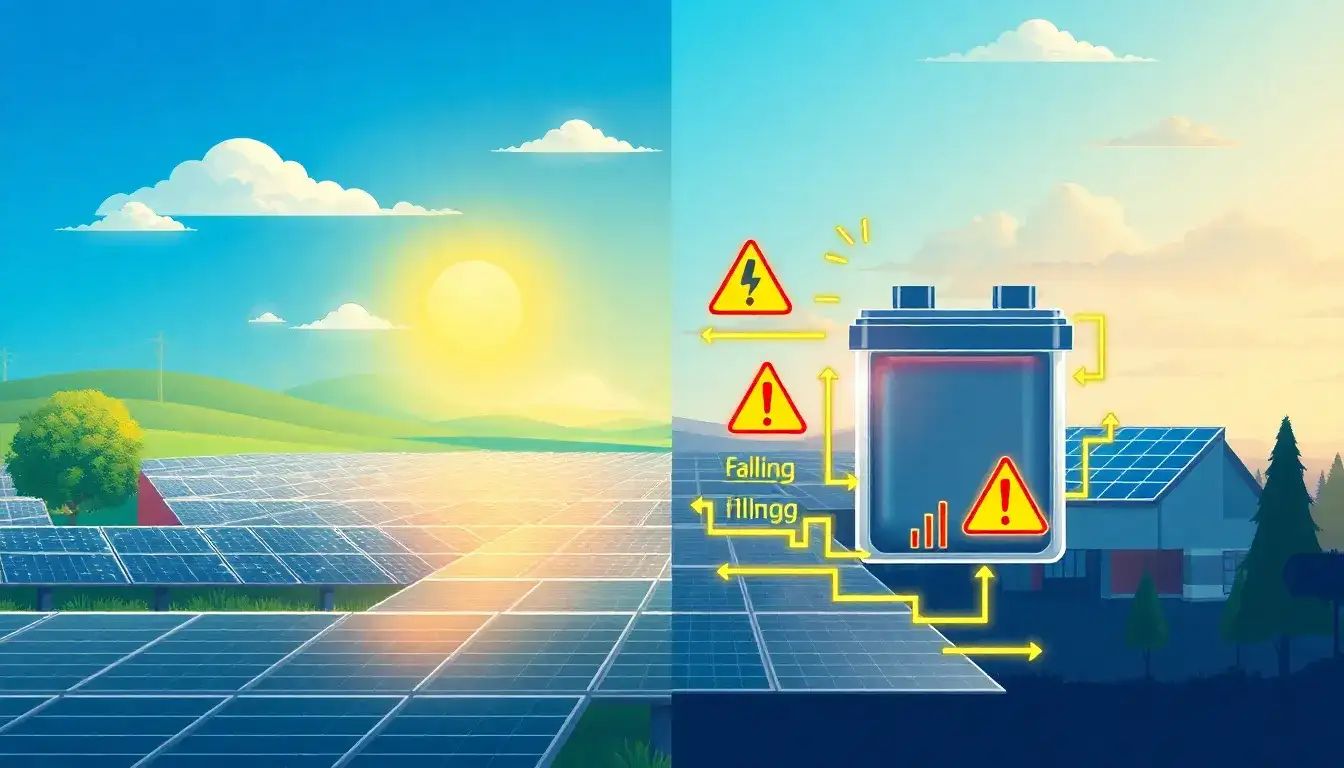
Impact on Energy Storage Efficiency
- Capacity degradation: As lithium-ion batteries age or fail, they lose the ability to hold their full charge. This means less stored energy is available for use when solar generation is low or demand is high, reducing the effective storage capacity of the solar system.
- Increased internal resistance: Aging or damaged batteries develop higher internal resistance, which leads to energy losses during charging and discharging cycles. This reduces the round-trip efficiency of the battery, meaning more energy is lost as heat instead of being stored and later used.
- End-of-life wear-out: After 10-15 years or around 6,000–10,000 cycles, failures become more common due to mechanical and chemical fatigue. This deterioration results in a marked drop in system efficiency and reliability.
Safety and Reliability Concerns
- Thermal runaway and overheating: Failures such as overcharging, short circuits, or physical damage can cause lithium-ion batteries to overheat and enter thermal runaway—a dangerous self-heating condition where temperatures can reach 400°C quickly, potentially causing fires. These events not only pose safety hazards but require system shutdowns, impacting solar system availability and efficiency.
- Faults disrupting system operation: Common faults including overcharging, over discharging, voltage imbalance between cells, and battery swelling degrade battery performance and can lead to premature failures or forced downtime of the solar energy system.
Integration and System-Level Effects
- Failures in lithium-ion batteries often stem from or cause integration issues with other solar system components such as inverters and battery management systems (BMS). Poor integration or faulty BMS configurations can exacerbate battery degradation or failure rates, further impacting overall system efficiency.
- Early failures due to manufacturing or installation errors tend to be addressed under warranty, but such failures temporarily reduce system efficiency and reliability during the resolution period.
Summary Table
| Aspect | Impact of Lithium-ion Battery Failures |
|---|---|
| Energy Storage Capacity | Reduced charge retention and usable energy |
| Round-trip Efficiency | Energy lost due to increased internal resistance |
| System Reliability | Increased downtime and maintenance needs |
| Safety Risks | Thermal runaway leading to fires, system shutdowns |
| Integration with Other Components | Faults may disrupt inverter/BMS operation and coordination |
In conclusion, lithium-ion battery failures reduce solar energy system efficiency primarily by decreasing usable energy storage capacity, increasing energy losses, causing operational downtime, and posing safety risks that can lead to system shutdowns. These effects underscore the importance of high-quality battery manufacturing, proper installation, reliable battery management systems, and regular maintenance to preserve the efficiency and safety of solar energy systems.
Original article by NenPower, If reposted, please credit the source: https://nenpower.com/blog/how-do-lithium-ion-battery-failures-impact-the-overall-efficiency-of-solar-energy-systems/

