

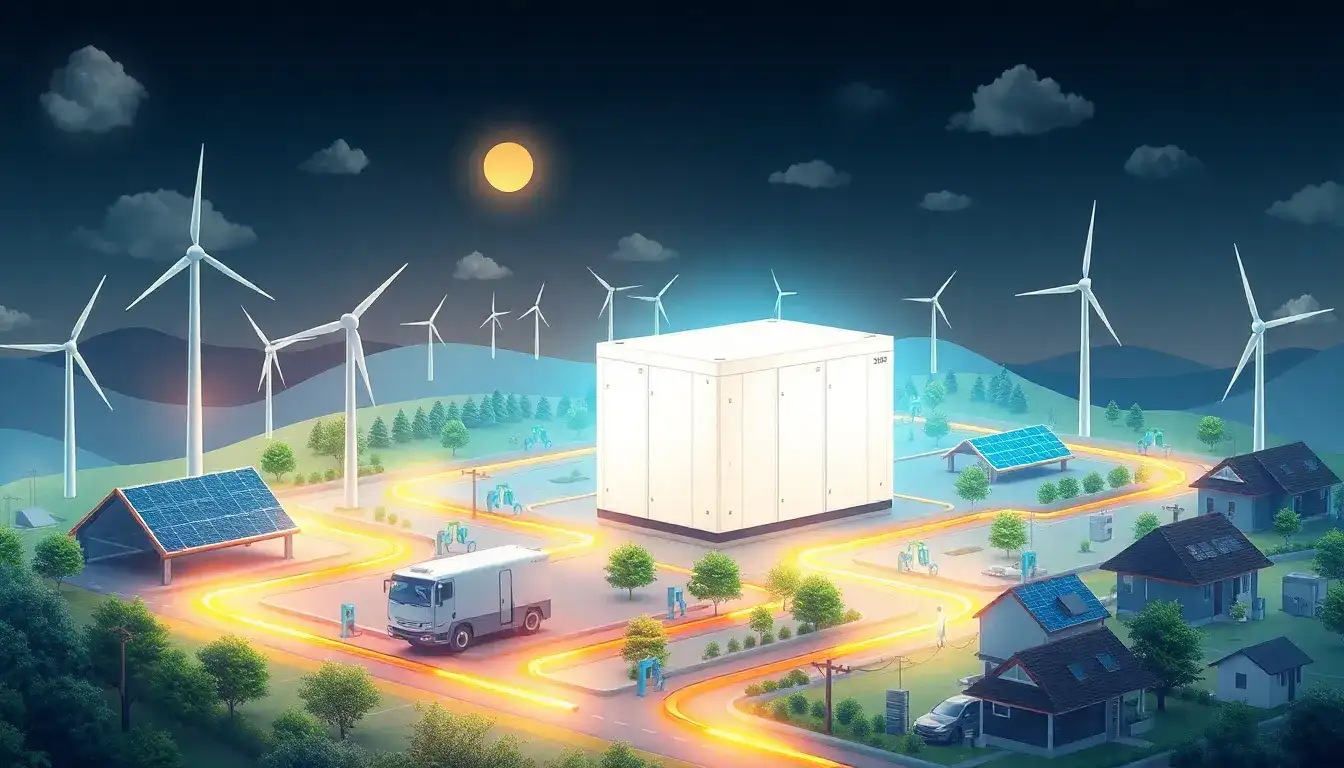
Lithium-ion batteries contribute significantly to grid stability and resilience through several key mechanisms:
Fast and Efficient Energy Balancing
Lithium-ion battery energy storage systems (BESS) help balance electricity supply and demand in real time, which is essential for maintaining grid stability. They can quickly absorb excess energy from the grid when supply exceeds demand or discharge stored energy back into the grid during shortages. This fast response time is critical in managing fluctuations, particularly as more intermittent renewable energy sources like solar and wind are integrated into the grid.
Frequency Regulation
Grid frequency must be maintained within tight thresholds (typically around 50 or 60 Hz) to avoid blackouts or damage to equipment. Lithium-ion batteries excel at frequency regulation by rapidly adjusting their output to counteract frequency deviations. When the frequency rises above the set point due to excess supply, batteries charge to absorb energy; when it falls due to high demand, they discharge to supply power, stabilizing the grid frequency quickly and effectively.
High Efficiency and Low Energy Loss
Lithium-ion batteries have high energy density and efficiency, meaning they store and release electrical energy with minimal loss. Their low self-discharge rates allow them to preserve stored energy for long periods without significant depletion. This efficiency ensures that energy stored during periods of surplus is delivered with minimal losses during peak demand or outages, improving overall grid resiliency.
Longevity and Optimal Operation via Battery Management
Advanced battery management systems optimize the charging and discharging cycles of lithium-ion batteries, ensuring they operate safely and prolonging their lifespan. These management systems monitor parameters such as state of charge and temperature to prevent overcharging, overheating, or damaging operation, which enhances reliability and system resilience.
Support for Renewable Energy Integration
As renewable energy penetration increases, the variability and intermittency of solar and wind generation pose challenges for grid stability. Lithium-ion battery storage smooths out these fluctuations by storing excess renewable generation when available and delivering it during lulls, thus supporting a more reliable and sustainable energy supply.
Summary Table
| Contribution to Grid Stability | Description |
|---|---|
| Real-time energy balancing | Absorbs or supplies power quickly to match grid supply and demand |
| Frequency regulation | Rapid response to maintain grid frequency within safe limits |
| High efficiency | Minimal energy loss during storage and retrieval |
| Longevity and safety | Battery management systems optimize operation and extend lifespan |
| Renewable energy integration support | Smooths variability of intermittent sources like wind and solar |
In essence, lithium-ion battery storage systems act as fast, efficient, and reliable buffers that maintain the delicate balance of electricity supply and demand, stabilize grid frequency, and enhance resilience against outages and renewable energy variability, making them a cornerstone technology for modern grid stability.
Original article by NenPower, If reposted, please credit the source: https://nenpower.com/blog/how-do-lithium-ion-batteries-contribute-to-grid-stability-and-resilience/

