

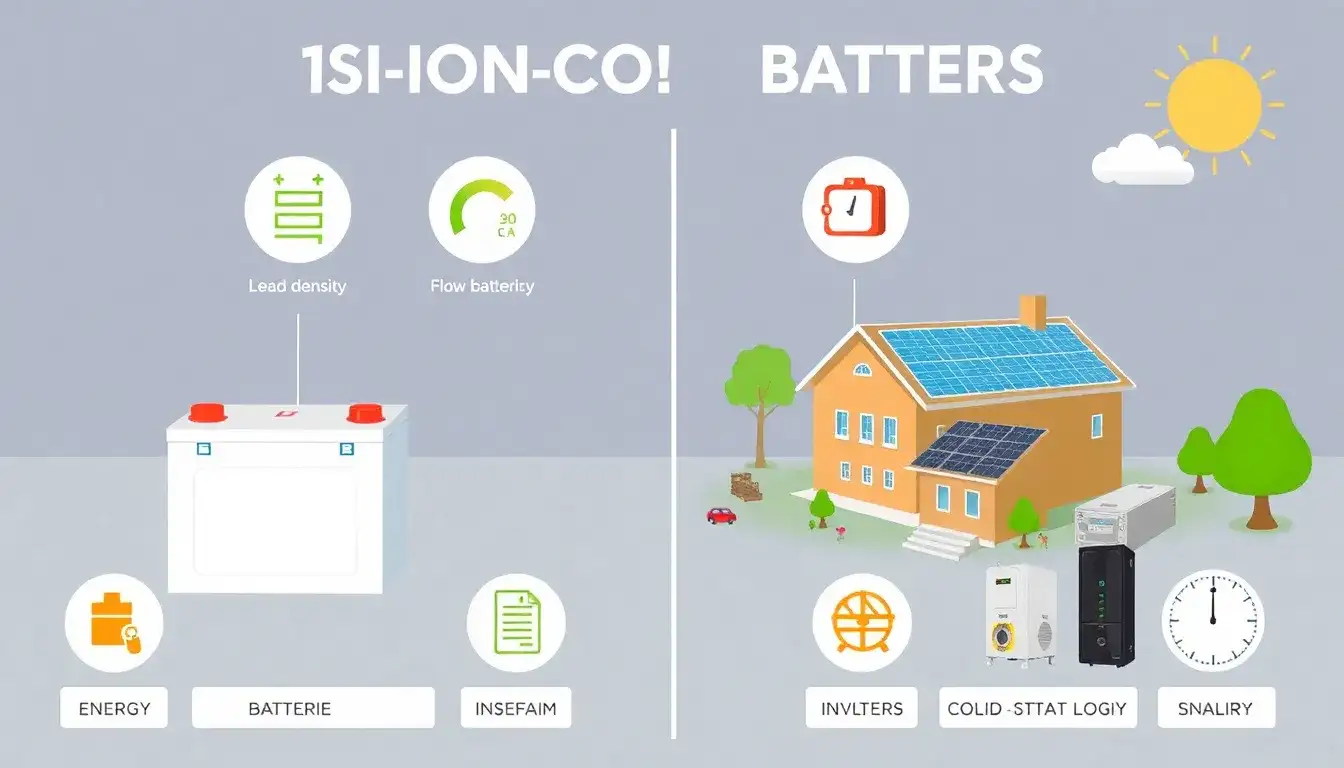
Lithium-ion batteries are the most popular choice for solar energy storage due to their superior performance compared to other battery types like lead-acid batteries. Here’s a comparison of lithium-ion batteries with other types of solar energy storage solutions:
Key Features of Lithium-Ion Batteries
- High Energy Density: Lithium-ion batteries store more power relative to their size than lead-acid batteries, making them ideal for space-sensitive applications.
- Long Lifespan: They have a longer lifespan, typically warrantied for around 10 years, compared to lead-acid batteries which last about 5 years.
- Higher Depth of Discharge (DoD): Lithium-ion batteries allow for up to 95% of their stored energy to be used without significant degradation, while lead-acid batteries should typically be limited to a 50% discharge.
- Efficiency and Maintenance: They offer high round-trip efficiency (90-95%) and require minimal maintenance.
- Cost: Although they are initially expensive, their long lifespan and reduced need for replacement make them cost-effective over time.
Comparison with Lead-Acid Batteries
| Feature | Lithium-Ion | Lead-Acid |
|---|---|---|
| Energy Density | High, more energy per unit of space. | Lower energy density, more space required. |
| Lifespan | Typically 10 years or more. | About 5 years. |
| Depth of Discharge (DoD) | Up to 95% can be safely discharged. | Should not exceed 50% to maintain lifespan. |
| Efficiency | High round-trip efficiency (90-95%). | Lower efficiency compared to lithium-ion. |
| Maintenance | Low to no maintenance required. | Requires regular maintenance (e.g., water refill). |
| Cost | Initially expensive but cost-effective long-term. | Cheaper upfront but needs frequent replacement. |
Comparison with Other Lithium Technologies
- Lithium Iron Phosphate (LiFePO4): Offers a safer alternative to traditional lithium-ion with a longer cycle life (up to 6,000 cycles) and is less prone to thermal runaway.
Summary
Lithium-ion batteries excel in solar energy storage due to their high energy density, efficiency, and long lifespan. While they are more expensive initially, their performance and reduced maintenance needs make them a preferred choice for residential solar storage systems. Other technologies like LiFePO4 further enhance safety and longevity but still build on the foundational advantages of lithium-ion batteries.
Original article by NenPower, If reposted, please credit the source: https://nenpower.com/blog/how-do-lithium-ion-batteries-compare-to-other-types-of-solar-energy-storage-solutions/

