

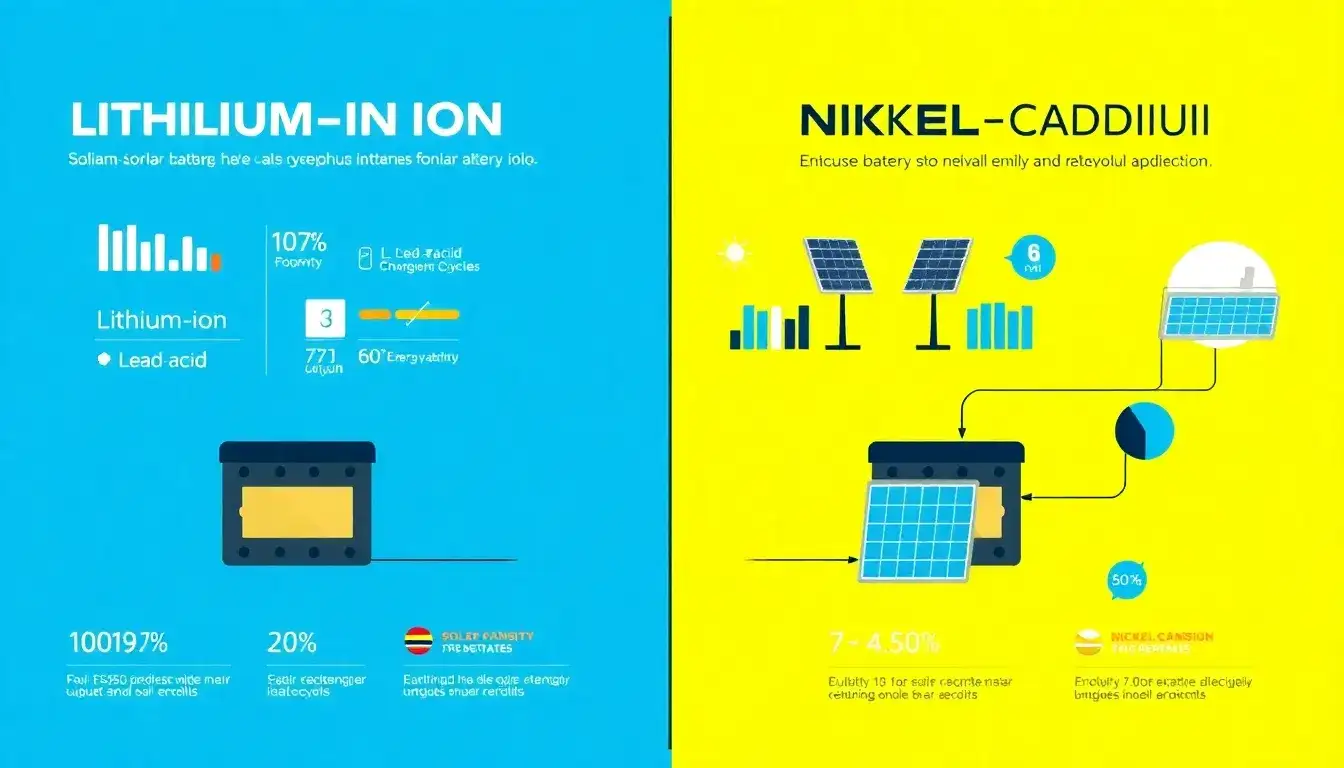
Lithium-ion batteries outperform other common solar battery types, such as lead-acid batteries, in terms of efficiency by a significant margin.
Efficiency Comparison
- Lithium-ion batteries typically have round-trip efficiencies around 95% to 96% or higher. This means that 95-96% of the energy stored can be effectively used when discharged, with less than 4-5% energy loss during charging and discharging cycles.
- Lead-acid batteries, in contrast, have lower efficiencies, generally between 80% and 85%, meaning a larger portion of stored energy is lost during use.
Other Efficiency-Related Advantages of Lithium-Ion Batteries
- Higher Depth of Discharge (DoD): Lithium-ion batteries have a DoD close to 95-100%, allowing users to utilize nearly all their stored energy without damaging the battery. Lead-acid batteries typically have a DoD of only about 50%, limiting usable capacity.
- Energy Density: Lithium-ion batteries offer much greater energy density (150-200 Wh/kg) compared to lead-acid batteries (30-50 Wh/kg). This higher density means lithium-ion batteries provide more energy storage in a smaller, lighter package, enhancing overall system efficiency and space utilization.
- Stable Power Delivery: Lithium-ion batteries maintain consistent voltage and power output throughout the discharge cycle, enhancing efficiency and suitability for appliances requiring steady or high power.
- Faster Recharge Rates: Lithium-ion batteries recharge quicker, maximizing the capture and storage of solar energy during peak production times.
Summary Table
| Feature | Lithium-ion Batteries | Lead-acid Batteries |
|---|---|---|
| Efficiency | ~95-96% (round-trip) | 80-85% |
| Depth of Discharge (DoD) | ~95-100% | ~50% |
| Energy Density | 150-200 Wh/kg | 30-50 Wh/kg |
| Cycle Life (approx.) | 500-1500 cycles | 200-400 cycles |
| Power Delivery Stability | Stable throughout cycle | Decreases towards end of cycle |
| Recharge Speed | Fast | Slower |
In essence, lithium-ion batteries are far more efficient than traditional lead-acid batteries for solar energy storage, offering higher usable capacity, less energy lost during cycling, faster recharge capabilities, and better overall performance. This makes lithium-ion the preferred choice for maximizing solar battery efficiency in residential and commercial solar power systems.
Original article by NenPower, If reposted, please credit the source: https://nenpower.com/blog/how-do-lithium-ion-batteries-compare-to-other-types-of-solar-batteries-in-terms-of-efficiency/

