

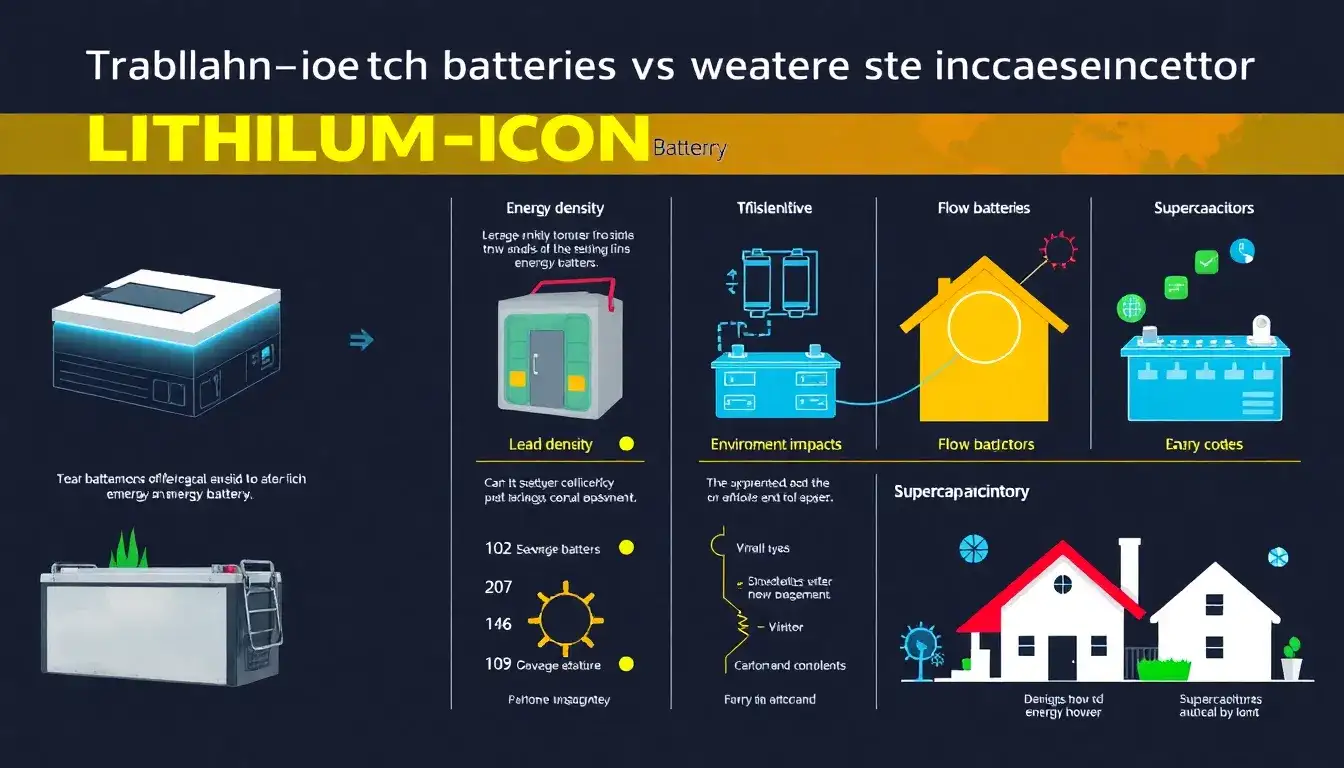
Lithium-ion Batteries
Advantages
- Energy Density: Lithium-ion batteries have high energy density, allowing them to store more energy per unit of weight and volume compared to lead-acid batteries.
- Efficiency: They offer high round-trip efficiency, typically around 90-95%, which means they can store and release more energy compared to other types like lead-acid (around 80-85%).
- Lifespan: Lithium-ion batteries have a longer cycle life, often between 5,000 to 10,000 cycles, and can last up to 15 years.
- Maintenance: They are virtually maintenance-free compared to lead-acid batteries.
- Types: There are subtypes like NMC, LFP, and LTO, each with its own pros and cons (e.g., NMC offers high capacity but may be less safe, LFP is safer but has lower capacity).
Disadvantages
- Cost: Higher upfront cost compared to lead-acid batteries.
- Safety Concerns: Lithium-ion batteries can catch fire, although this is rare.
Lead-Acid Batteries
Advantages
- Cost: Less expensive upfront compared to lithium-ion.
- Compatibility: Can be compatible with existing systems that handle lead-acid batteries.
Disadvantages
- Energy Density: Lower energy density means they require more space for the same capacity as lithium-ion.
- Efficiency: Lower efficiency and shorter lifespan (typically 500-1,000 cycles and 5-7 years).
- Maintenance: Requires regular maintenance such as checking electrolyte levels.
Other Energy Storage Options
- Flow Batteries: These are less common in residential settings but offer advantages in terms of scalability and longer duration energy storage without significant capacity degradation over time.
- Hydrogen Storage: Not typically used for residential energy storage due to complexity and cost, but it offers a promising future technology for larger-scale systems.
- Flywheel Energy Storage: Used more in industrial applications due to high power output over short durations.
In summary, lithium-ion batteries are the preferred choice for residential energy storage due to their efficiency, capacity, and longevity, despite higher upfront costs and safety concerns. Lead-acid batteries are less expensive but have lower efficiency and require more maintenance. Other technologies like flow batteries and hydrogen storage are less common in residential settings but offer potential for future advancements.
Original article by NenPower, If reposted, please credit the source: https://nenpower.com/blog/how-do-lithium-ion-batteries-compare-to-other-types-of-residential-energy-storage-systems/

