

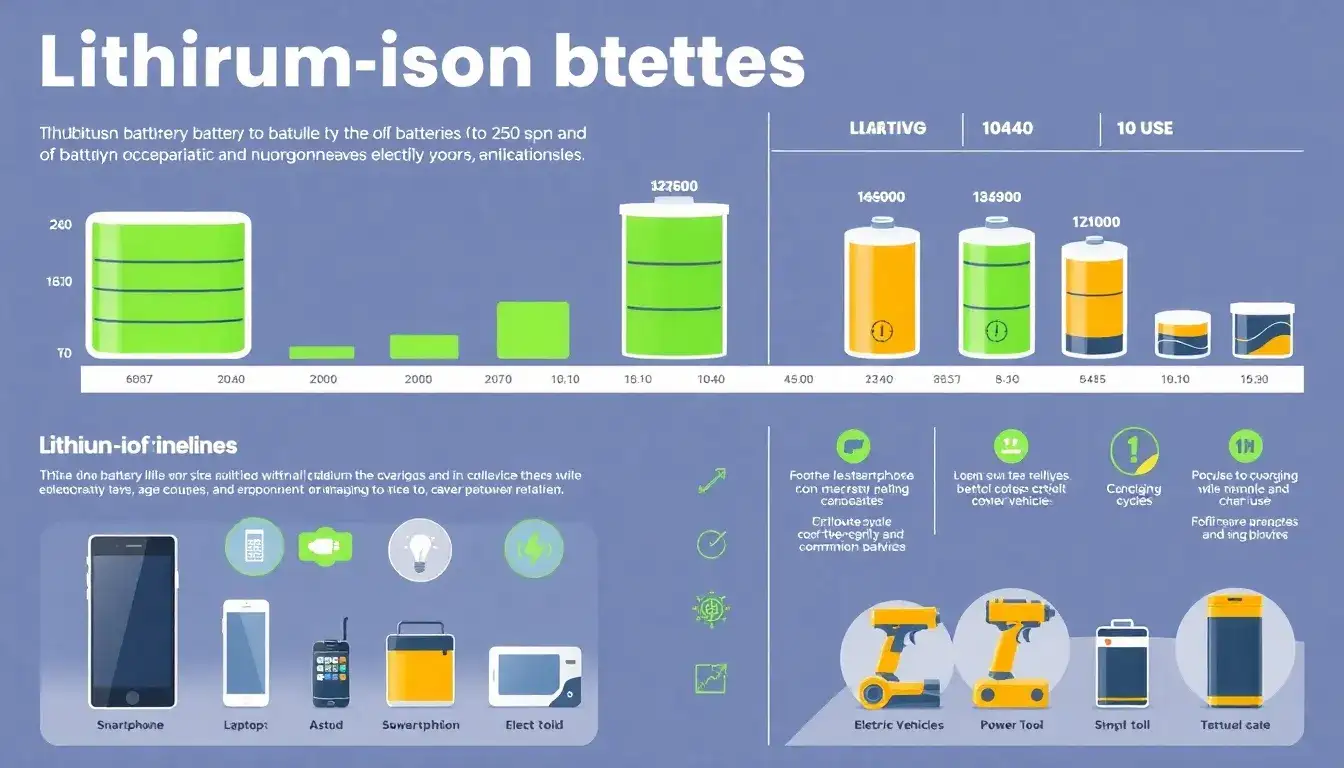
Lithium-ion batteries offer a significantly longer lifespan compared to other types of rechargeable batteries, such as lead-acid batteries. Here’s a comparison based on lifespan and charge cycles:
Key Points of Comparison
- Lithium-ion Batteries:
- Lifespan: Typically last between 2 to 10 years, depending on the type (e.g., standard lithium-ion, lithium iron phosphate).
- Charge Cycles: Can deliver between 1,000 to 5,000 partial charge cycles before their capacity diminishes significantly.
- Lithium Polymer (LiPo) Batteries:
- Lifespan: Generally last 2 to 5 years.
- Charge Cycles: Typically offer 800 to 1,200 cycles.
- Lithium Iron Phosphate (LiFePO4) Batteries:
- Lifespan: Can last from 5 to 15 years.
- Charge Cycles: Often deliver 3,000 to 5,000 cycles.
- Lead-Acid Batteries:
- Lifespan: Generally last around 3 to 5 years.
- Charge Cycles: Provide between 500 to 1,000 partial cycles before significant degradation.
Factors Influencing Lifespan
- Temperature: High temperatures can reduce battery lifespan.
- Charging Practices: Partial charging and avoiding overcharging can prolong life.
- Depth of Discharge: Keeping batteries at a moderate state of charge (e.g., 40%-80% SoC) can extend lifespan.
Overall, lithium-ion batteries, particularly those with lithium iron phosphate chemistry, offer the longest lifespan among rechargeable batteries, making them suitable for applications requiring durability and efficiency.
Original article by NenPower, If reposted, please credit the source: https://nenpower.com/blog/how-do-lithium-ion-batteries-compare-to-other-types-of-batteries-in-terms-of-lifespan/

