

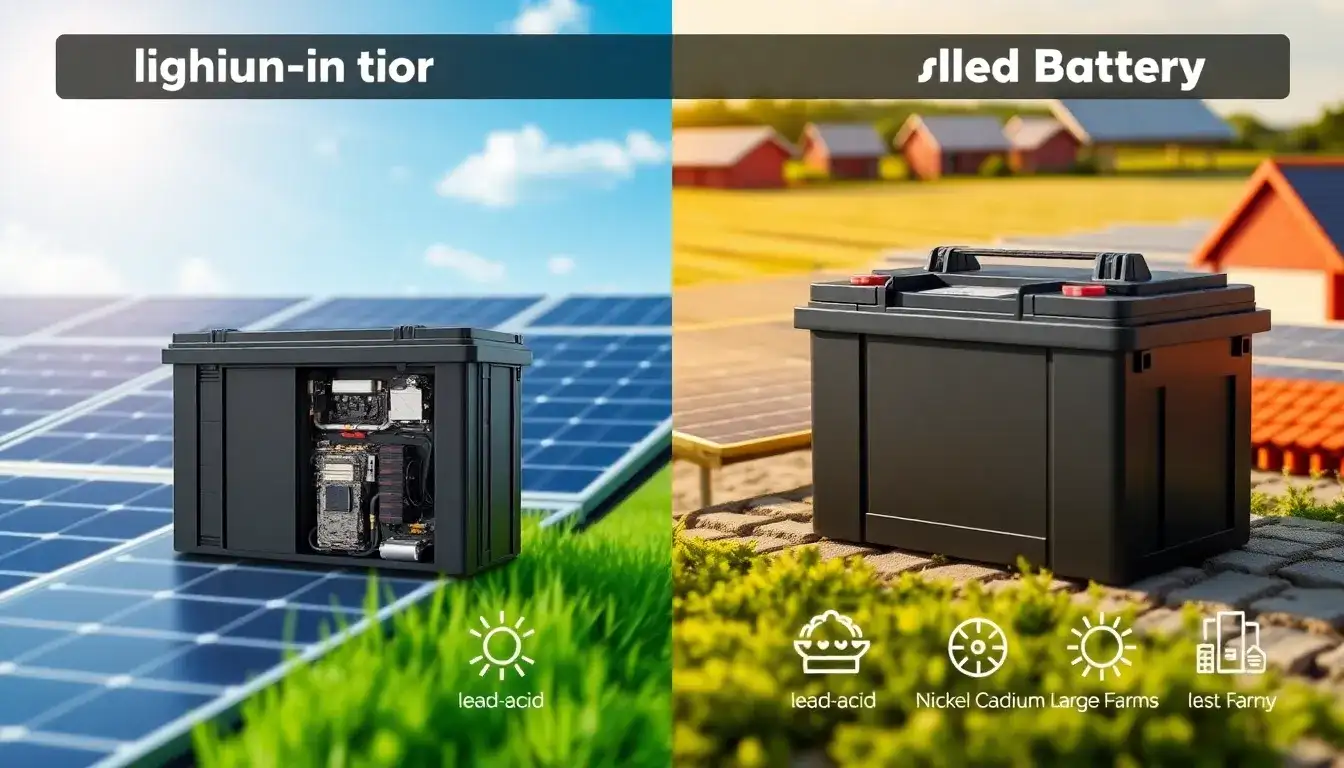
Lithium-ion batteries are a popular choice for solar energy storage due to several key advantages over other types of batteries. Here’s a comparison with lead-acid batteries, a common alternative:
Comparison of Lithium-Ion and Lead-Acid Batteries
Advantages of Lithium-Ion Batteries
- Higher Depth of Discharge (DoD): Lithium-ion batteries can safely discharge up to 80-95% of their capacity without damaging the battery, compared to lead-acid batteries, which are typically limited to a 50% DoD.
- Longer Lifespan: Lithium-ion batteries have a lifespan of around 10 years or more, with a cycle life of up to 10,000 cycles, while lead-acid batteries typically last about 5 years.
- Higher Energy Density: Lithium-ion batteries store more energy relative to their physical size, making them ideal for homes with limited space.
- Higher Efficiency: Lithium-ion batteries have a higher round-trip efficiency, meaning more of the stored energy is usable when discharged.
- Low Maintenance: They require little to no maintenance, unlike lead-acid batteries which need regular upkeep.
Disadvantages of Lithium-Ion Batteries
- Higher Cost: Lithium-ion batteries are more expensive upfront, though they are cost-effective in the long term due to their durability and efficiency.
- Risk of Thermal Runaway: There’s a small risk of overheating, which can be mitigated with proper installation and maintenance.
Lead-Acid Batteries
Lead-acid batteries are cheaper upfront but have a shorter lifespan and require more maintenance. They are less efficient and have a lower DoD, which means they cannot be drained as much as lithium-ion batteries without risking damage.
Other Considerations
- Lithium-Iron Phosphate (LiFePO4) Batteries: A subtype of lithium-ion batteries, LiFePO4 batteries are known for their safety and longer lifespan. They are also highly efficient and require no maintenance.
- Solar Panel Integration: Both lithium-ion and lead-acid batteries can be used with solar panels, but lithium-ion batteries offer more benefits in terms of efficiency and lifespan, particularly for off-grid or backup power systems.
In summary, lithium-ion batteries are the preferred choice for solar energy storage due to their high performance, efficiency, and longevity. While they are more expensive initially, their long-term benefits make them a worthwhile investment for many homeowners and off-grid applications.
Original article by NenPower, If reposted, please credit the source: https://nenpower.com/blog/how-do-lithium-ion-batteries-compare-to-other-types-of-batteries-for-solar-energy-storage/

