

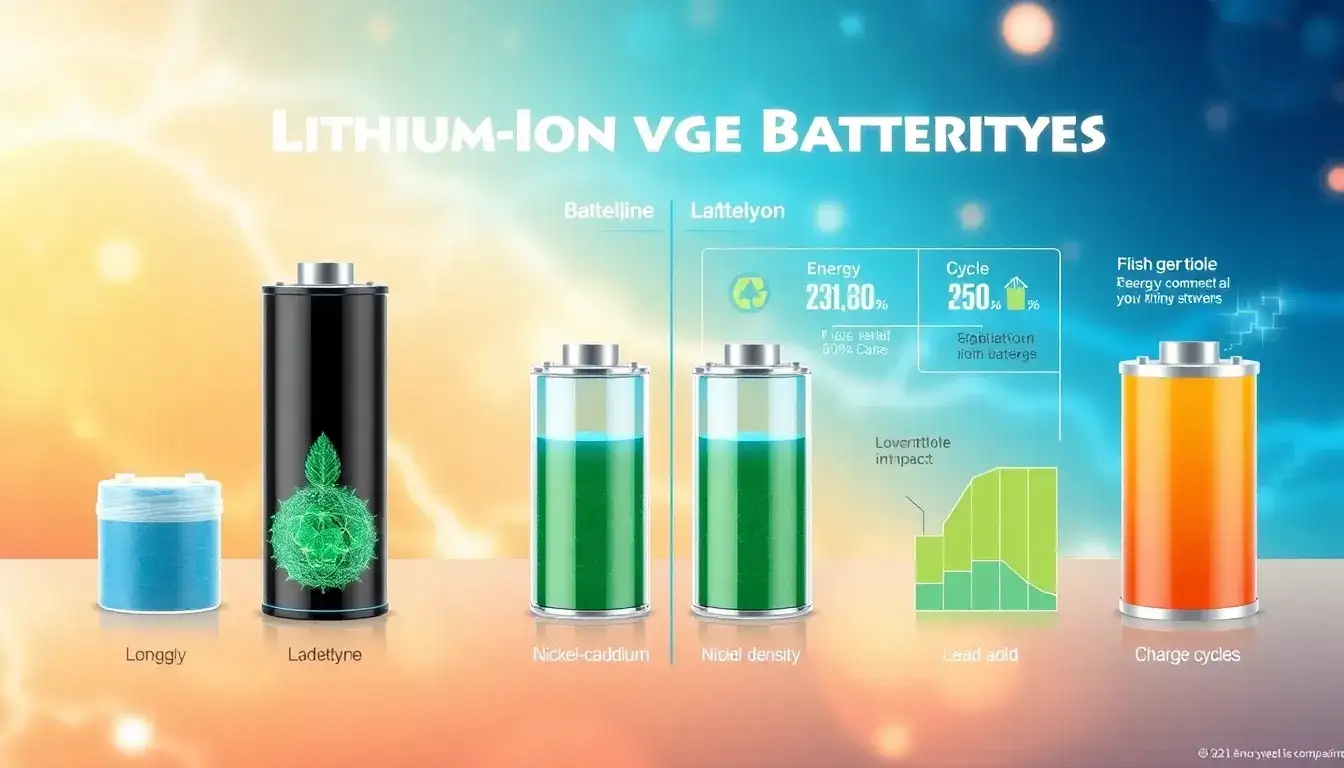
Lithium-Ion vs. Lead-Acid Batteries
- Lithium-Ion Batteries: These can last between 2 to 10 years, depending on usage and environmental conditions. They typically handle 3,000 to 5,000 charge cycles, far exceeding the capacity of lead-acid batteries.
- Lead-Acid Batteries: Generally last for 500 to 1,000 cycles and have a lifespan of about 3 to 5 years under proper maintenance conditions.
Lithium-Ion vs. Lithium Polymer Batteries
- Lithium-Ion Batteries: For electric vehicles, they can handle 1,000 to 1,500 cycles. In general, they provide 500 to 1,000 cycles.
- Lithium Polymer Batteries: Typically last for 800 to 1,200 cycles, but can sometimes reach 1,500 to 2,000 cycles. They are known for slower degradation due to their solid or gel-like electrolyte.
Lithium-Ion vs. Other Lithium Variants
- Lithium Iron Phosphate (LiFePO4): These batteries are known for enhanced safety and durability, often lasting 5 to 15 years with 3,000 to 5,000 cycles.
- Lithium Manganese Oxide (LiMn2O4): Generally last 3 to 7 years and are used in power tools and specialized equipment.
Overall, lithium-ion and its variants offer superior lifespan compared to traditional battery types like lead-acid, making them ideal for applications requiring durability and efficiency.
Factors Affecting Lifespan
- Depth of Discharge: Partial discharging and cycling at mid-state-of-charge prolongs life.
- Temperature: Exposure to heat can significantly reduce lifespan.
- Charging Practices: Avoid overcharging or high charge voltages.
- Storage Conditions: Proper storage at a partial charge can help extend the battery’s lifespan.
Original article by NenPower, If reposted, please credit the source: https://nenpower.com/blog/how-do-lithium-ion-batteries-compare-to-other-types-in-terms-of-lifespan/

