

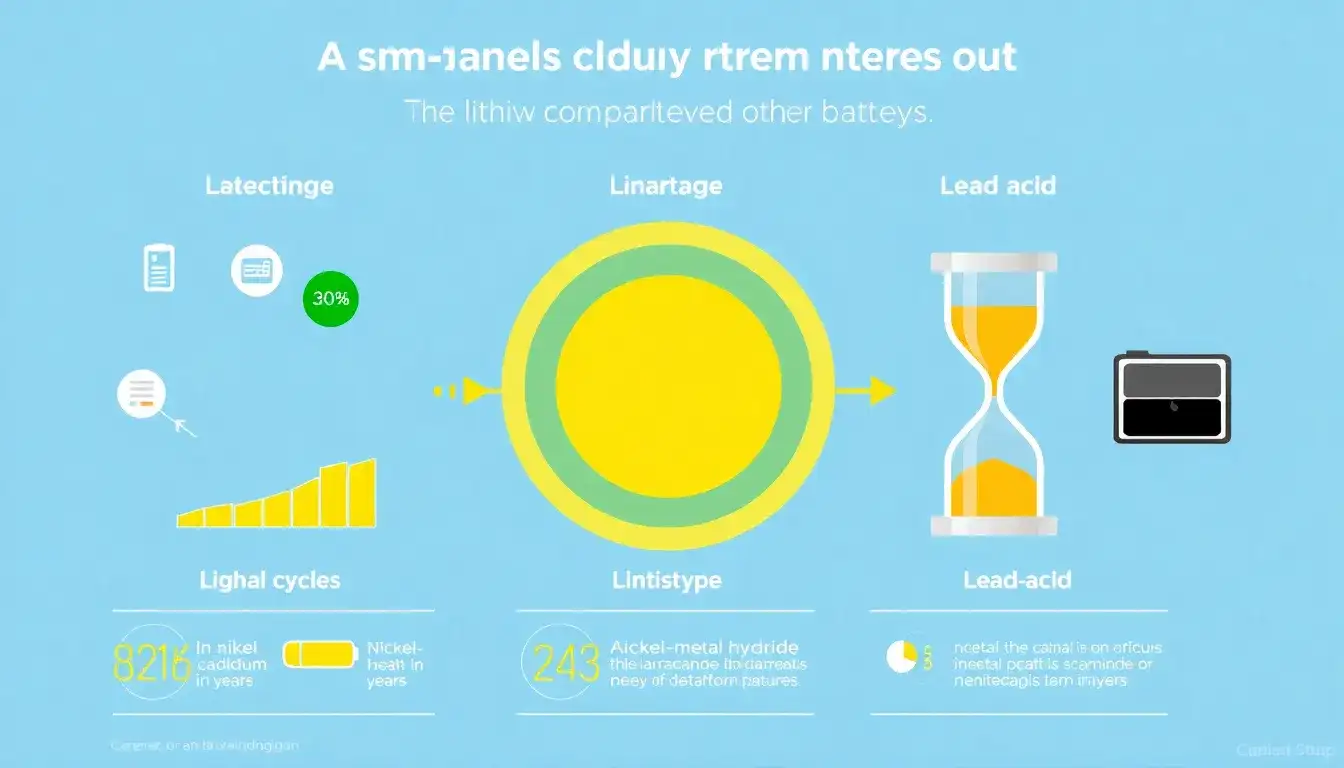
Comparison of Lithium-Ion Batteries with Other Types in Terms of Lifespan
Overview of Lifespan by Battery Type
- Lithium-ion (Li-ion) Batteries:
- Lifespan: Typically lasts between 2 and 10 years, with a cycle life of 300 to 1000 cycles.
- They can last longer, up to 3,000 cycles, with proper care and conditions.
- Often used in smartphones, laptops, and electric vehicles.
- Lead-acid Batteries:
- Lifespan: Generally 3 to 5 years with 200 to 300 cycles.
- Used in applications like automotive starter batteries and backup systems.
- Nickel-Metal Hydride (NiMH) Batteries:
- Lifespan: Between 2 and 5 years with 500 to 800 cycles.
- Commonly found in hybrid vehicles and consumer electronics.
- Alkaline Batteries:
- Lifespan: Non-rechargeable, typically lasting between 5 and 10 years.
- Widely used in household devices like flashlights and toys.
Key Points for Comparison
- Cycle Life: Lithium-ion batteries generally have a longer cycle life compared to lead-acid batteries but can vary depending on usage conditions.
- Longevity: Properly maintained lithium-ion batteries tend to outlast other types by 2-3 times.
- Factors Influencing Lifespan: Heat, charge levels, and discharge depth significantly affect lithium-ion battery longevity. Keeping a battery in a mid-state-of-charge and avoiding high temperatures can prolong its life.
Special Variants of Lithium Batteries
- Lithium Polymer Batteries:
- Typically last 800 to 1200 cycles, with some reports suggesting up to 1500 to 2000 cycles.
- Known for better energy density and charge retention when not in use.
Conclusion
Lithium-ion batteries generally offer a longer lifespan compared to lead-acid and NiMH batteries. Lithium polymer batteries can last even longer than standard lithium-ion batteries in certain applications. Proper care can extend the lifespan of lithium-ion batteries significantly.
Original article by NenPower, If reposted, please credit the source: https://nenpower.com/blog/how-do-lithium-ion-batteries-compare-to-other-battery-types-in-terms-of-lifespan-2/

