

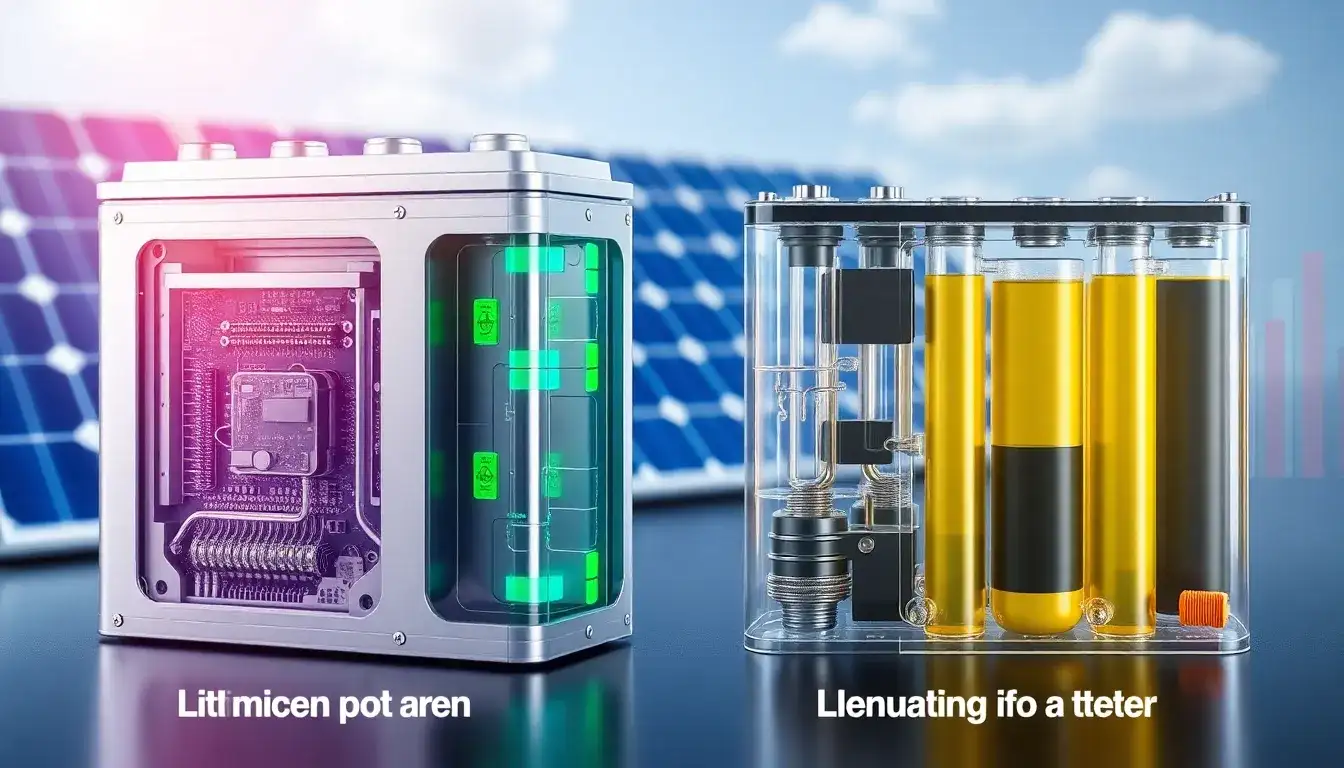
Lithium-ion batteries are a dominant technology for solar energy storage due to their high efficiency, long lifespan, and high energy density. Here’s a comparison with other battery technologies:
Comparison of Lithium-Ion Batteries with Other Technologies
1. Lithium-Ion (General)
- Pros:
- High round-trip efficiency (90-95%).
- High energy density.
- Low maintenance requirements.
- Long lifespan.
- Cons:
- Higher upfront cost.
- Risk of overheating and environmental toxicity if not properly managed.
2. Lithium Iron Phosphate (LFP)
Subtype of Lithium-Ion
- Pros:
- Longer lifespan and safer than NMC batteries.
- More environmentally friendly.
- Stable at high temperatures.
- Flat discharge curve.
- Cons:
- Lower energy density compared to NMC.
- Poor performance in low temperatures.
3. Nickel Manganese Cobalt (NMC)
Subtype of Lithium-Ion
- Pros:
- Higher energy density.
- Cost-effective manufacturing.
- Better performance in cold temperatures.
- Cons:
- Shorter lifespan compared to LFP.
- Less safe and more toxic materials used.
4. Lead-Acid Batteries
- Pros:
- Lower initial cost.
- Deep cycle capability.
- Can last many years with proper maintenance.
- Cons:
- Lower efficiency and energy density.
- Heavy and less suitable for modern solar setups.
5. Nickel-Cadmium (Ni-Cd) Batteries
- Pros:
- Long cycle life.
- Low self-discharge rate.
- Good recyclability.
- Cons:
- Toxic materials (cadmium).
- Less common and less efficient for solar applications.
6. Nickel-Zinc (NiZn) Batteries
- Pros:
- Environmentally friendly compared to Ni-Cd.
- Good cycle life.
- Cons:
- Less efficient and less common in solar applications.
Summary
- Lithium-ion batteries, particularly LFP and NMC variants, are preferred for solar energy storage due to their high efficiency, long lifespan, and adaptability to solar systems. LFP offers safety and longevity, while NMC provides high energy density and cost-effectiveness. Lead-Acid batteries are less efficient but more budget-friendly. Nickel-Cadmium and Nickel-Zinc are less common and have specific drawbacks or limitations for solar applications.
Original article by NenPower, If reposted, please credit the source: https://nenpower.com/blog/how-do-lithium-ion-batteries-compare-to-other-battery-technologies-for-solar-energy-storage/

