

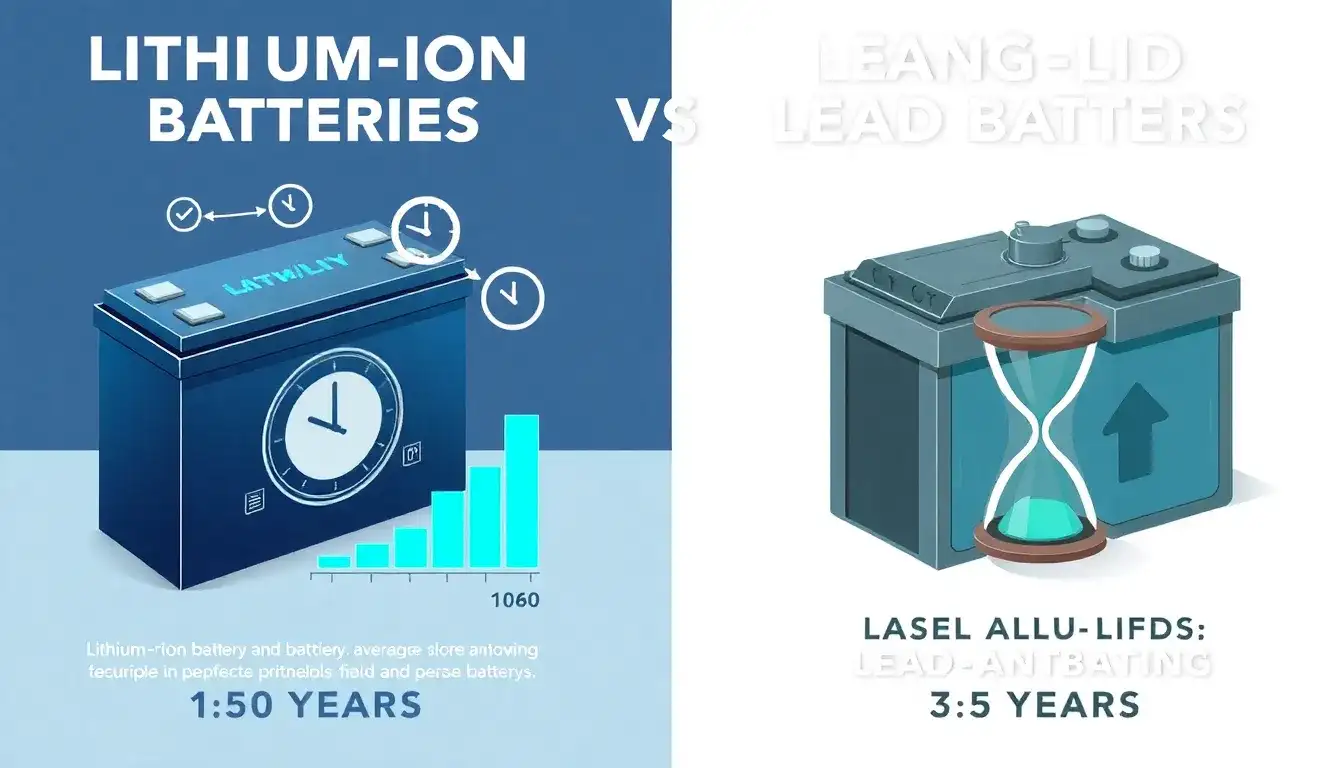
Comparison of Lithium-Ion vs. Lead-Acid Batteries: Lifespan
Lithium-ion and lead-acid batteries differ significantly in terms of lifespan, largely due to their chemical composition and design. Here’s a comparison of their key characteristics:
Cycle Life
- Lithium-ion batteries can endure between 2,000 to 5,000 charge-discharge cycles before their capacity drops to 80% of its original value. This translates into a longer lifespan when compared to lead-acid batteries.
- Lead-acid batteries typically last for around 300 to 500 cycles. Their shorter cycle life is due to internal corrosion and lower efficiency.
Overall Lifespan
- Lithium-ion batteries generally last between 2 to 10 years under typical usage conditions. In some cases, like in electric vehicles, they can last up to 15 years.
- Lead-acid batteries usually have a lifespan of about 3 to 5 years. Proper maintenance can extend their life, but they will not match the longevity of lithium-ion batteries.
Factors Affecting Lifespan
- Depth of Discharge (DOD): Lithium-ion batteries handle deep discharges better than lead-acid batteries, which suffer significantly from deep DOD.
- Maintenance: Lead-acid batteries require more maintenance, such as electrolyte level checks, compared to lithium-ion batteries, which are essentially maintenance-free.
- Environmental Conditions: Both types are affected by temperature extremes, but lithium-ion batteries perform better in cold conditions.
Summary
Lithium-ion batteries have a significantly longer lifespan and cycle life compared to lead-acid batteries, making them suitable for applications requiring durability and efficiency. Despite higher upfront costs, lithium-ion batteries can be more cost-effective over time due to their longer lifespan.
Original article by NenPower, If reposted, please credit the source: https://nenpower.com/blog/how-do-lithium-ion-batteries-compare-to-lead-acid-batteries-in-terms-of-lifespan/

