

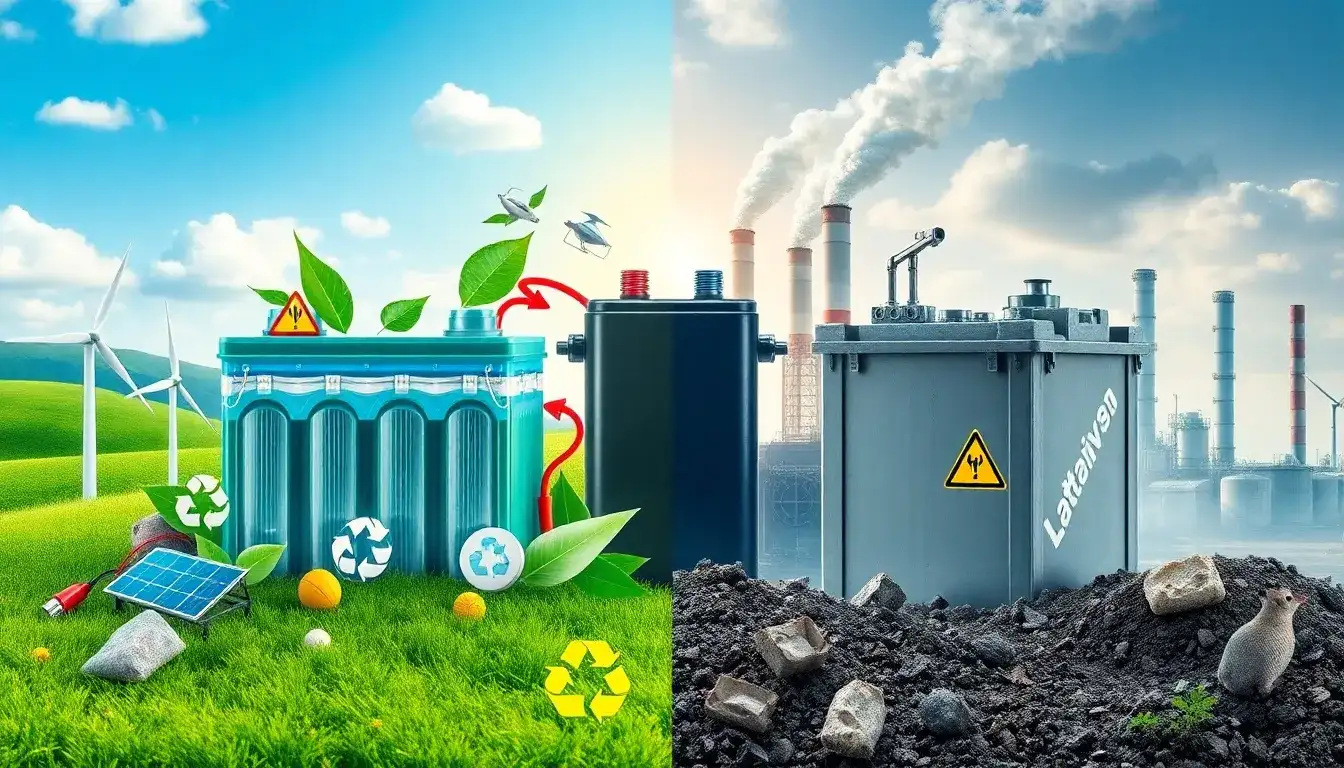
Environmental Impact Comparison
Toxicity and Hazards
- Lead-Acid Batteries: These are composed of lead plates submerged in sulfuric acid, both of which are highly toxic. If not disposed of properly, they can leak into the soil and groundwater, posing serious health risks. Lead is known to cause neurological damage and organ dysfunction.
- Lithium-Ion Batteries: While they contain heavy metals like cobalt, nickel, and lithium, they lack the toxic lead and sulfuric acid found in lead-acid batteries. However, the extraction of these metals can lead to environmental issues such as water pollution and soil damage.
Recycling and Reuse
- Lead-Acid Batteries: Highly recyclable at about 99%. However, recycling processes can expose workers to lead if not managed properly.
- Lithium-Ion Batteries: Only about 5% are currently recyclable due to complex recycling technology. However, innovations and investments in recycling technologies are ongoing.
Energy Efficiency and Carbon Footprint
- Lithium-Ion Batteries: Offer higher energy density and can reduce energy consumption by up to 40% compared to lead-acid batteries. This results in lower carbon footprints during charging.
- Lead-Acid Batteries: Have lower energy density, require more energy for charging, and contribute to higher operational costs over time.
Disposal and Waste Management
- Lead-Acid Batteries: Due to their toxic nature, improper disposal can lead to severe environmental contamination.
- Lithium-Ion Batteries: While not as toxic, improper disposal can still contribute to environmental issues due to the presence of heavy metals.
Overall, lithium-ion batteries are generally considered more environmentally friendly due to their lack of toxic materials and higher efficiency, despite the challenges associated with their recycling and material extraction. Lead-acid batteries, while highly recyclable, pose significant environmental risks if not handled correctly.
Original article by NenPower, If reposted, please credit the source: https://nenpower.com/blog/how-do-lithium-ion-batteries-compare-to-lead-acid-batteries-in-terms-of-environmental-impact/

