

Efficiency Comparison
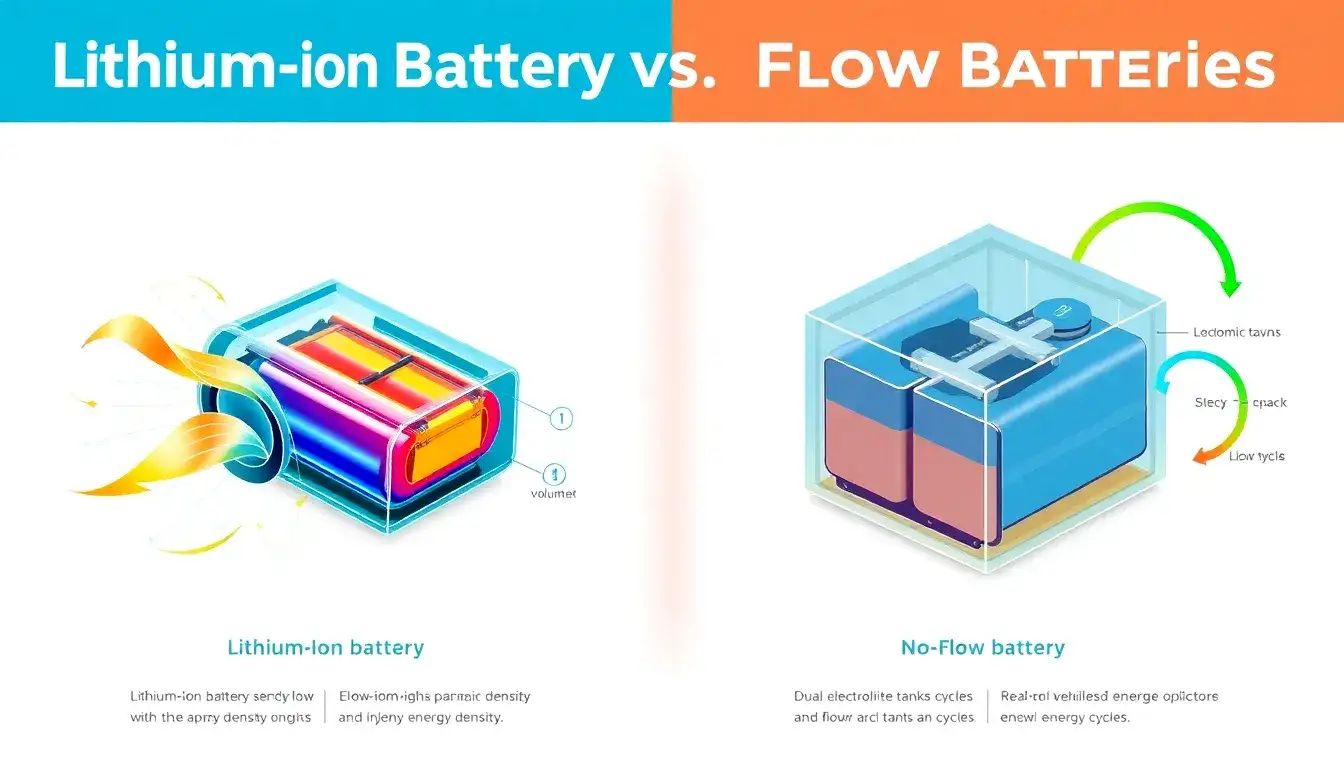
- Lithium-ion Batteries: These batteries have a higher round-trip efficiency, typically ranging from 85% to 95%. This means that for every unit of electricity used to charge them, they can deliver up to 95% of that energy back when discharged.
- Flow Batteries: Flow batteries generally have a lower efficiency, often between 70% and 85%. However, they offer advantages in other areas such as scalability and longevity.
Key Efficiency Factors
- Cycle Life and Degradation: Flow batteries have a nearly unlimited cycle life, with minimal degradation over thousands of cycles. This contrasts with lithium-ion batteries, which typically last for 500 to 1,500 cycles before significant capacity loss.
- Energy Density: Lithium-ion batteries have a higher energy density, making them more suitable for applications where space is limited. Flow batteries have lower energy density but excel in long-duration energy storage applications.
- Environmental Impact: Flow batteries tend to have a lower environmental impact due to their lower CO2 emissions during production and use.
In summary, lithium-ion batteries offer higher efficiency and energy density but are more limited in terms of cycle life and environmental impact compared to flow batteries. Flow batteries, while less efficient in terms of round-trip efficiency, provide advantages in longevity, safety, and scalability for long-duration applications.
Original article by NenPower, If reposted, please credit the source: https://nenpower.com/blog/how-do-lithium-ion-batteries-compare-to-flow-batteries-in-terms-of-efficiency/

