

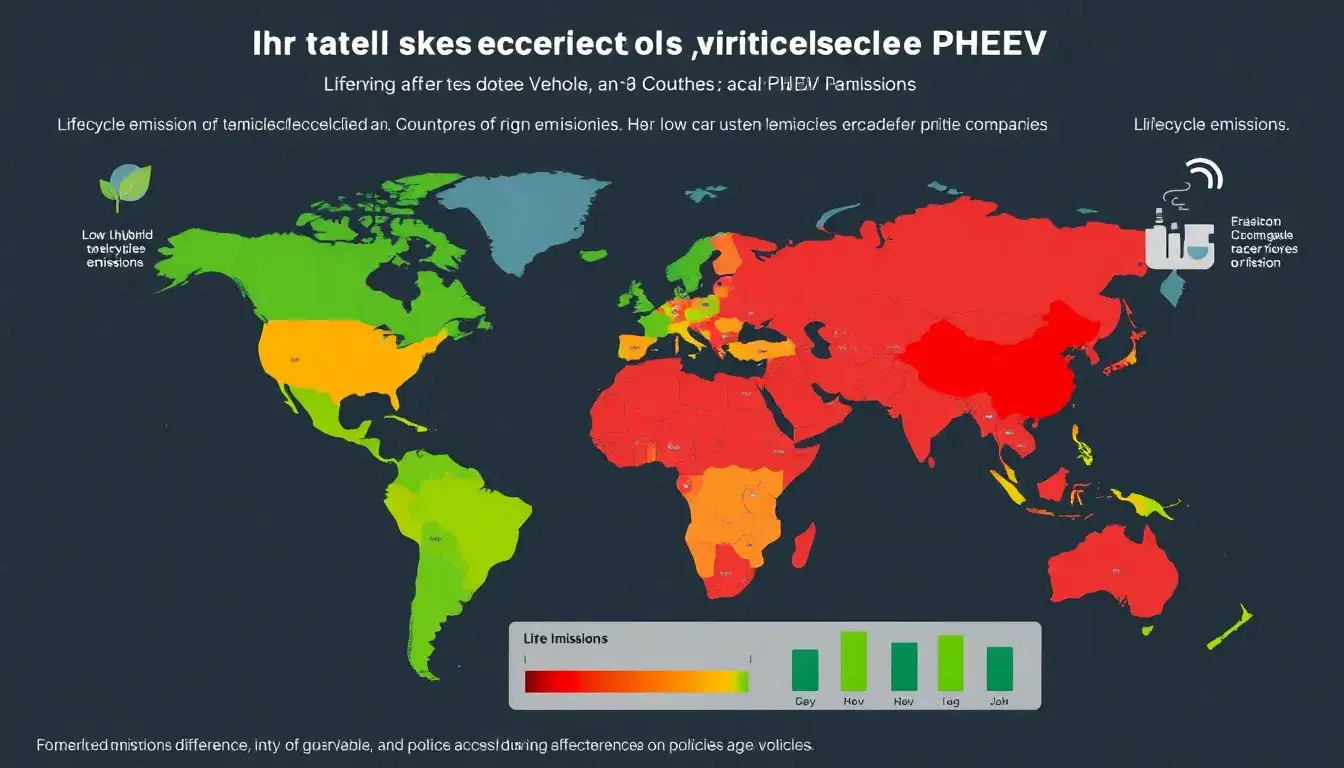
Life-Cycle Emissions Overview
- PHEVs typically offer significant lifecycle greenhouse gas (GHG) emissions reductions compared to conventional gasoline vehicles, with an average reduction of 34% globally. This is because PHEVs can operate on electricity alone for a portion of their usage, relying on less polluting energy sources when available.
- HEVs, while still reducing emissions by leveraging regenerative braking and efficient engine operation, generally produce more lifecycle emissions than PHEVs. HEVs do not use electricity from the grid and thus rely entirely on fossil fuels during operation.
Regional Variations
- United States:
- In the US, PHEVs are noted to reduce emissions by about 46% over their lifetime compared to conventional vehicles, while Battery Electric Vehicles (BEVs) reduce emissions by around 41% on average. This advantage for PHEVs is attributed to lower battery production emissions and lower reliance on critical minerals.
- High-Renewable Energy Regions:
- In areas with predominantly renewable energy sources, both PHEVs and BEVs can significantly reduce lifecycle emissions because they utilize cleaner electricity for operation. This improves their environmental performance over traditional vehicles.
- Regions with High-Grid Emissions:
- In regions where the electricity grid primarily relies on fossil fuels, the emissions benefits of PHEVs and BEVs are reduced. However, PHEVs may still offer advantages over BEVs due to their smaller battery size and resultant lower production emissions.
- Global Perspective:
- Globally, the lifecycle emissions of PHEVs are generally lower than those of HEVs, especially when considering the potential for PHEVs to use electricity from cleaner sources for part of their operation. However, specific regional conditions like grid emissions and driving habits play crucial roles in determining the exact emissions reductions achievable by either type of vehicle.
In summary, while both HEVs and PHEVs offer emissions reductions compared to conventional vehicles, PHEVs typically provide greater benefits, particularly in regions with cleaner electricity generation. However, the specific advantages can vary significantly based on local energy mixes and vehicle usage patterns.
Original article by NenPower, If reposted, please credit the source: https://nenpower.com/blog/how-do-lifecycle-emissions-of-hevs-and-phevs-compare-in-different-countries/

