

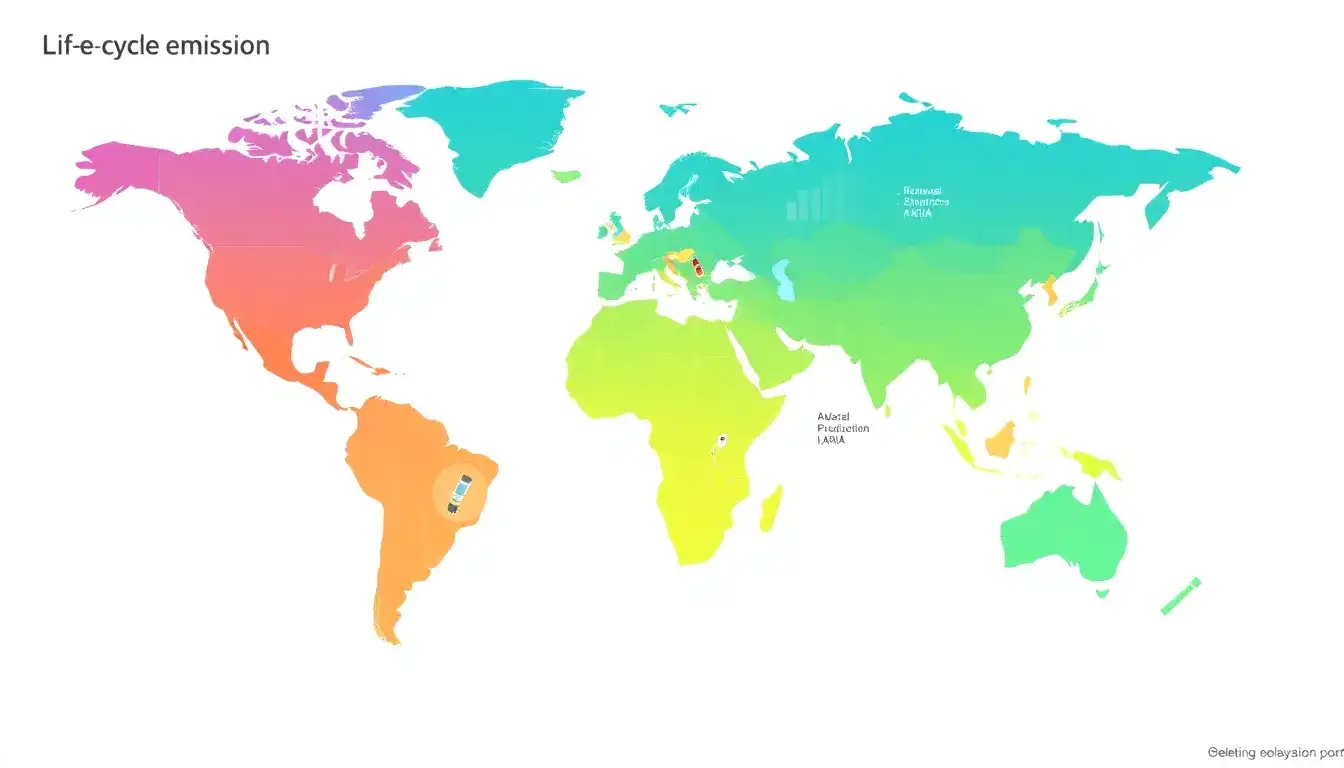
Life cycle emissions of electric vehicles (EVs) vary significantly across different regions, primarily due to differences in the electricity generation mix used to charge them, as well as regional factors related to vehicle manufacturing and battery production.
Key Factors Affecting Life Cycle Emissions of EVs by Region
1. Electricity Generation Mix
- Regions that rely heavily on low-carbon or renewable electricity sources (such as hydro, wind, solar, or nuclear) enable EVs to have much lower life cycle greenhouse gas emissions compared to internal combustion engine (ICE) vehicles. In these areas, the well-to-wheel emissions associated with electricity use are minimal, so the overall life cycle emissions advantage of EVs is greatest.
- Conversely, in regions where electricity is generated mainly from fossil fuels like coal or natural gas, EVs have higher upstream emissions from electricity production. This reduces but generally does not eliminate the emissions advantage of EVs over conventional cars. For example, all-electric vehicles produce zero tailpipe emissions but will have higher life cycle emissions in areas with carbon-intensive electricity generation.
2. Manufacturing Emissions and Battery Production
- The production phase of EVs, especially battery manufacturing, tends to generate more CO2-equivalent emissions than producing conventional vehicles. For instance, EV production emissions can be around 8.8 metric tons of CO2 compared to 5.6 metric tons for ICE vehicles.
- However, modern battery recycling technologies can reduce production-related emissions by about 60-65%, helping to offset the initial manufacturing carbon footprint significantly.
3. Overall Life Cycle Emissions Comparison
- Studies consistently show that despite higher production emissions, the lifetime emissions of electric vehicles are significantly lower than those of conventional gasoline vehicles when accounting for the entire life cycle, including manufacturing, use, and disposal. Hybrid and electric vehicles can reduce life cycle emissions by up to 89% compared to internal combustion engine vehicles, depending on the grid carbon intensity.
- The typical break-even mileage for electric vehicles—where the initial higher manufacturing emissions are offset by the use-phase emissions savings—is around 15,000 to 20,000 miles (about one year of typical vehicle use). Beyond that, EVs outperform gas vehicles in lifetime emissions.
4. Regional Examples
- In countries or regions with predominantly renewable or low-carbon electricity (e.g., parts of Europe, California in the US), EV life cycle emissions are very low.
- In regions with coal-heavy electricity generation (e.g., parts of China, India, or some US states), the life cycle emissions reduction of EVs still exists but is less pronounced.
Summary Table of Regional Influences on EV Life Cycle Emissions
| Factor | Low-Carbon Grid Regions | Fossil-Fuel-Intensive Grid Regions |
|---|---|---|
| Electricity generation mix | Mostly renewables/nuclear – low CO2 | Mostly coal/gas – higher CO2 |
| EV charging emissions | Low | Higher |
| Battery manufacturing impact | Offset effectively by recycling | Same impact, recycling helps |
| Overall EV life cycle emissions | Up to ~89% lower than ICE vehicles | Lower than ICE but smaller margin |
| Break-even mileage for emissions | ~15,000-20,000 miles | Similar, but total savings smaller |
In conclusion, electric vehicles offer a clear life cycle emissions advantage over internal combustion engine vehicles in all regions, but the magnitude of this benefit depends strongly on the carbon intensity of the electricity grid in each region. Cleaner electricity sources maximize the climate benefit of EVs, while regions reliant on fossil-fueled power see reduced—but still positive—emissions improvements from switching to electric vehicles.
Original article by NenPower, If reposted, please credit the source: https://nenpower.com/blog/how-do-life-cycle-emissions-of-electric-vehicles-compare-across-different-regions/

