

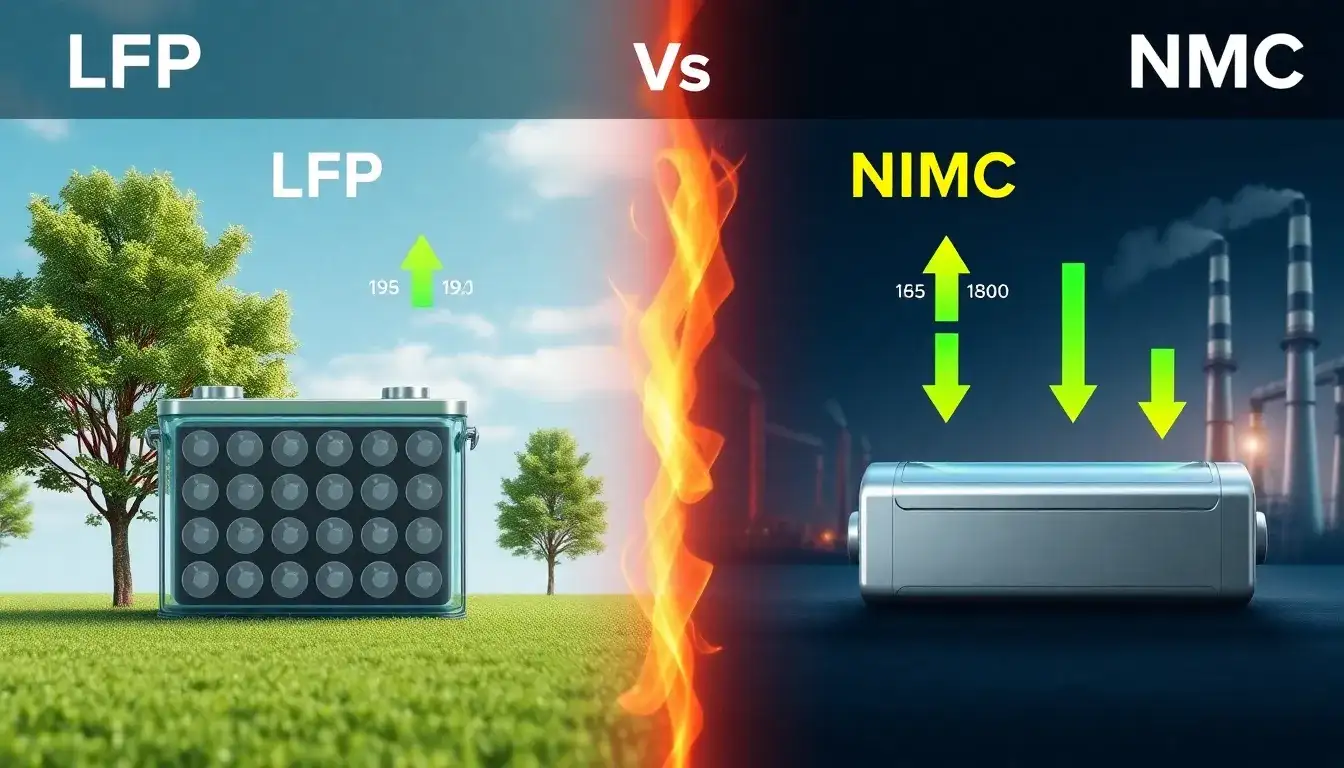
LFP (Lithium Iron Phosphate) batteries and NMC (Nickel Manganese Cobalt) batteries differ notably in their overall emissions primarily due to their energy densities and material requirements.
Emissions Comparison
- Material Intensity and Emissions: LFP batteries have a lower energy density compared to NMC batteries. This means that to achieve the same energy capacity (kWh), LFP batteries require more active and inactive materials. As a result, their material intensity per kWh is higher, leading to greater emissions per kWh during production compared to NMC batteries.
- Raw Materials and Environmental Impact: NMC batteries use cobalt and nickel, which are rarer and more environmentally damaging to mine, whereas LFP batteries do not contain cobalt and use more widely available, cheaper metals like iron and phosphate. This results in lower environmental and social impacts related to raw material extraction for LFP batteries.
Energy Density and Efficiency Factors
- NMC batteries provide higher energy density, packing more energy into a smaller, lighter package. This means less material is needed for a given energy capacity, often resulting in lower emissions when considering the whole battery pack on a per kWh basis.
- LFP’s lower energy density means more material and weight are needed to achieve the same energy, increasing emissions despite the use of more abundant metals.
Lifecycle and Durability Considerations
- LFP batteries tend to have a longer cycle life, often exceeding 3,000 charge-discharge cycles versus 1,000–2,000 cycles typical of NMC batteries. This longer lifespan can translate into lower lifecycle emissions and costs because the batteries need to be replaced less frequently.
- Better durability and tolerance to rapid charging in LFP batteries can also contribute to improved sustainability profiles over time.
Summary
| Aspect | LFP Batteries | NMC Batteries |
|---|---|---|
| Energy density | Lower, requires more material per kWh → higher emissions per kWh | Higher, requires less material per kWh → lower emissions per kWh |
| Raw material impact | Uses abundant, less damaging metals (iron, phosphate); no cobalt | Uses cobalt and nickel, more environmentally damaging to source |
| Production emissions | Higher per kWh due to more material use | Lower per kWh due to higher energy density |
| Cycle life | Longer (~3,000+ cycles) → better lifecycle impact | Shorter (~1,000–2,000 cycles) |
In conclusion, while LFP batteries tend to have higher emissions per kWh due to their lower energy density and greater material use, they benefit from using less harmful and more abundant materials, longer cycle life, and better sustainability in terms of raw material sourcing. NMC batteries have lower emissions on a per kWh basis due to higher energy density but rely on more environmentally challenging materials. The overall emissions impact depends on the balance of these factors and the specific application context.
Original article by NenPower, If reposted, please credit the source: https://nenpower.com/blog/how-do-lfp-batteries-compare-to-nmc-batteries-in-terms-of-overall-emissions/

