

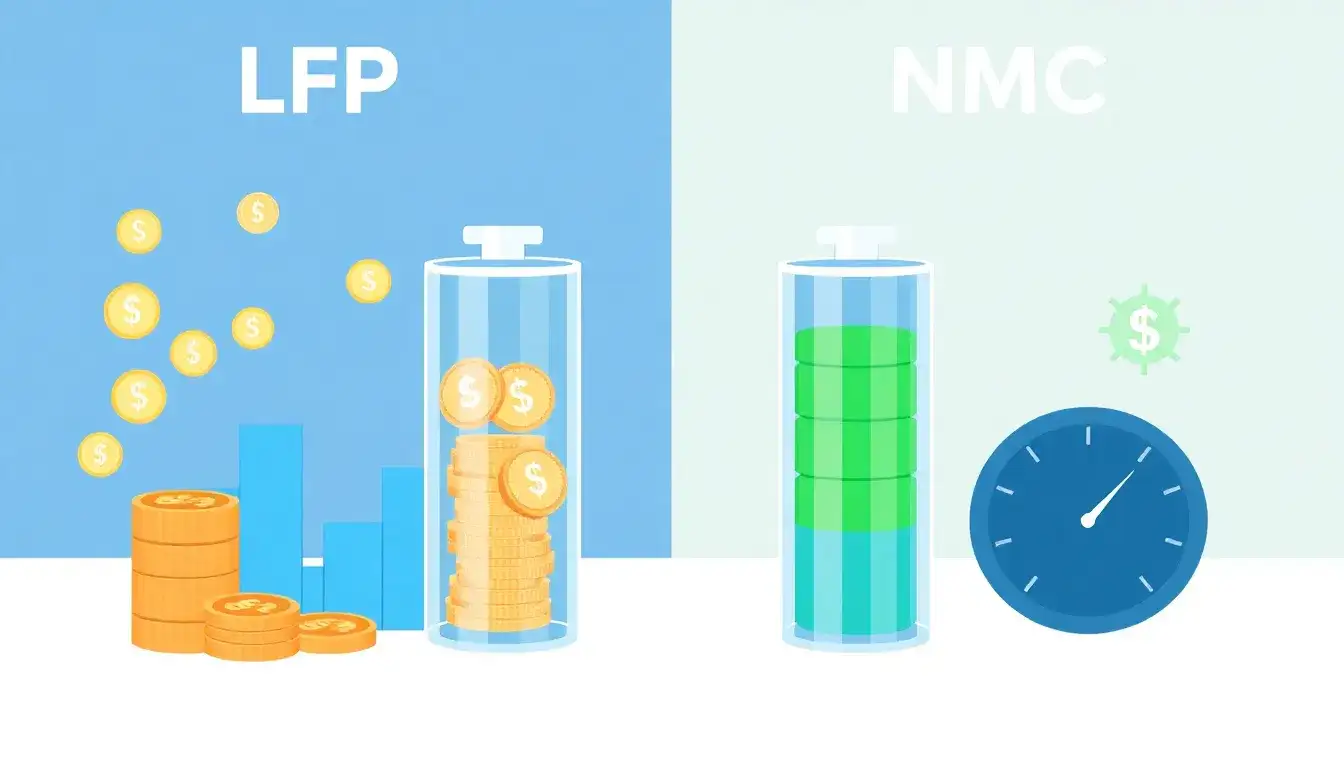
When comparing LFP (Lithium Iron Phosphate) and NMC (Nickel Manganese Cobalt) batteries in terms of cost and performance, several key differences emerge:
Cost
- LFP Batteries: These are generally more cost-effective in terms of cost per cycle, making them attractive for applications where long-term cost efficiency is critical. The cost advantage is partly due to the non-toxic and abundant materials used, which also simplify recycling.
- NMC Batteries: While NMC batteries have a lower upfront cost due to their widespread use in electric vehicles, which has developed a strong supply chain, their higher energy density makes them more expensive when considering space and weight savings. However, they are cost-effective in applications where compact design is a priority.
Performance
Energy Density
- NMC Batteries: Offer higher energy density, ranging from 150 to 220 Wh/kg, which is beneficial for applications where space and weight are critical, such as electric vehicles and portable electronics.
- LFP Batteries: Have a lower energy density, typically between 90 to 120 Wh/kg, but their safety and longer cycle life make them suitable for stationary energy storage and applications where safety is paramount.
Power Density and Charging
- NMC Batteries: Provide slightly higher power densities, allowing for faster charging and discharging, which is advantageous in applications requiring rapid power delivery.
- LFP Batteries: While not as fast in charging, LFP batteries offer stable and safe performance, with no significant degradation from regular full charging, making them suitable for applications where steady power output is needed.
Cycle Life
- LFP Batteries: Typically offer a longer cycle life of 3,000 cycles or more, making them ideal for long-term energy storage applications.
- NMC Batteries: Generally have a shorter cycle life, typically ranging from 1,000 to 2,000 cycles, but are still reliable for applications where their other advantages outweigh this limitation.
Summary
| Characteristics | LFP Batteries | NMC Batteries |
|---|---|---|
| Cost Per Cycle | More cost-effective | Less cost-effective |
| Energy Density | Lower (90-120 Wh/kg) | Higher (150-220 Wh/kg) |
| Power Density | Lower | Higher |
| Cycle Life | Longer (3,000+ cycles) | Shorter (1,000-2,000 cycles) |
| Safety | Superior thermal stability | Less stable, requires thermal management |
| Applications | Energy storage, electric buses | Electric vehicles, portable electronics |
Overall, the choice between LFP and NMC batteries depends on specific application requirements. LFP excels in safety and longevity, while NMC offers high energy density and faster charging.
Original article by NenPower, If reposted, please credit the source: https://nenpower.com/blog/how-do-lfp-batteries-compare-to-nmc-batteries-in-terms-of-cost-and-performance/

