

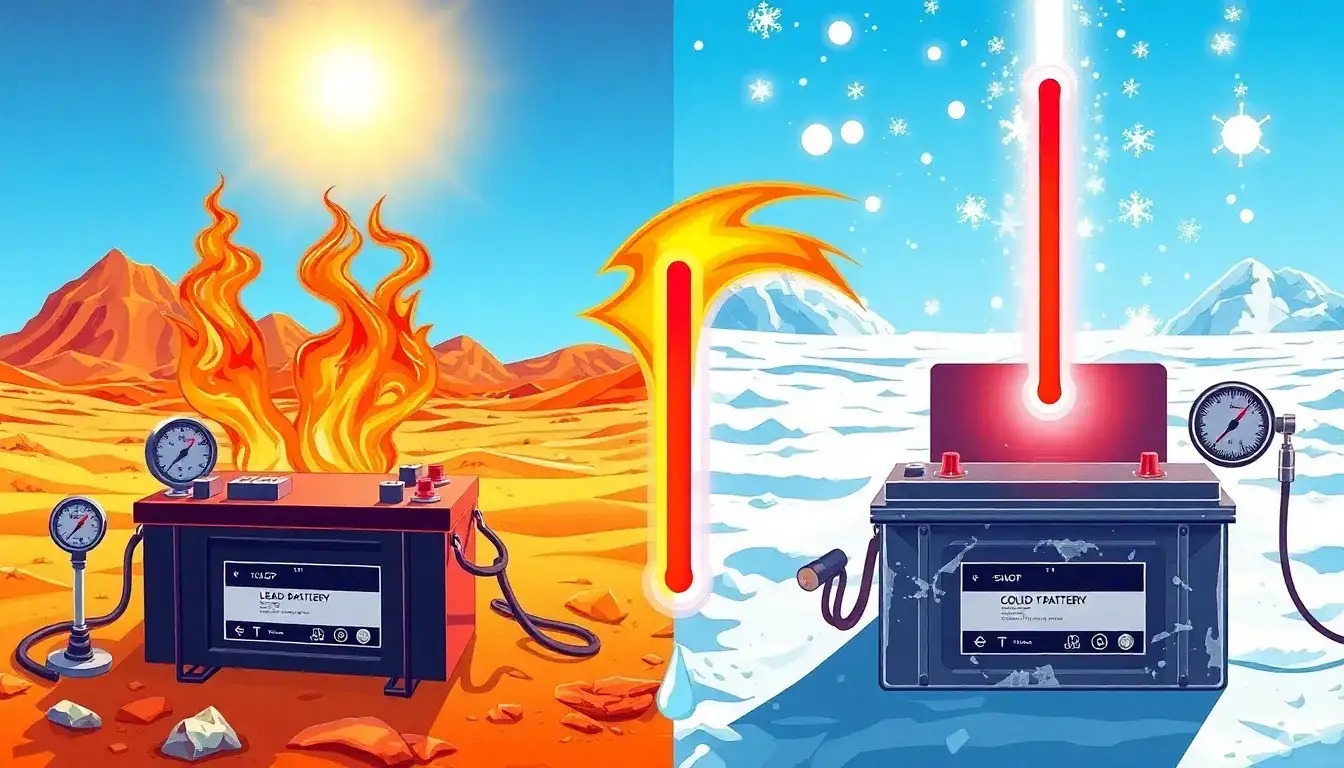
Lead-acid batteries are designed to operate over a wide temperature range, but extreme temperatures can significantly impact their performance and lifespan. Here’s how they manage in both high and low temperatures:
Performance at High Temperatures
- Chemical Reaction Increase: Higher temperatures accelerate the chemical reactions inside lead-acid batteries, which can result in faster discharge and increased self-discharge rates.
- Reduced Lifespan: For every 15°F (8.3°C) above 77°F (25°C), the lifespan of lead-acid batteries is generally reduced by half. This means that prolonged exposure to high temperatures can significantly decrease battery life.
- Plate Corrosion and Sulfation: Heat causes plate corrosion, leading to sulfation, which can irreparably damage the battery by creating hard lead sulfate crystals on the plates.
- Charging Limitations: Best charging results are obtained between 50°F (10°C) and 86°F (30°C). Charging at higher temperatures reduces efficiency and may not be recommended.
Performance at Low Temperatures
- Reduced Capacity: Battery capacity decreases as temperatures drop. At -22°F (-30°C), lead-acid battery capacity is reduced by about 50% compared to its capacity at room temperature.
- Increased Charging Voltage: Charging voltage needs to be increased at lower temperatures to maintain efficiency. This adjustment helps prevent damage to the battery.
- Risk of Freezing: Fully discharged batteries are more susceptible to freezing damage than fully charged ones. Freezing can cause permanent damage to lead-acid batteries by cracking the case or reducing potency.
Best Practices for Extreme Temperatures
- Storage: Store batteries in a climate-controlled environment if possible, or in a shaded area during hot weather.
- Temperature Compensation: Use chargers with temperature compensation to adjust for temperature variations and prolong battery life.
- Selection of Right Battery Type: Use batteries specifically designed for extreme conditions, such as flooded lead-acid batteries for hot climates and batteries with adjusted electrolyte strength for colder environments.
Original article by NenPower, If reposted, please credit the source: https://nenpower.com/blog/how-do-lead-batteries-perform-in-extreme-temperatures/

