

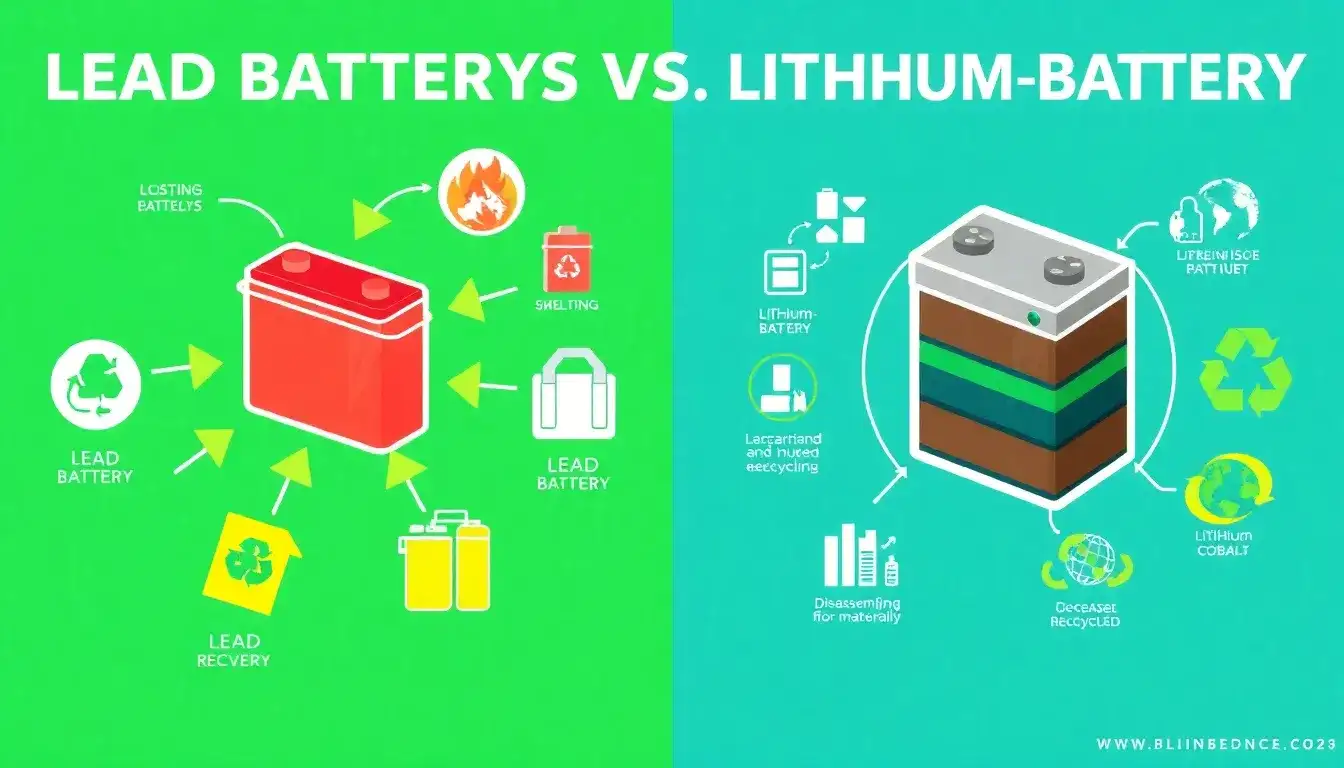
Comparing lead batteries and lithium-ion batteries in terms of recyclability highlights significant differences in their recycling processes, efficiency, and environmental impact.
Lead Batteries
- Recyclability Rate: Lead batteries have a very high recycling rate, with about 99% of them being recycled in the U.S.
- Process: The recycling process involves breaking down the batteries into components like lead, plastic, and sulfuric acid. Lead is melted and purified for reuse, while plastic is converted into pellets. Sulfuric acid is neutralized and often converted into water or other safe materials.
- Environmental Impact: Lead is a toxic metal, but proper recycling minimizes its environmental risk.
- Reuse Cycle: Lead can be recycled infinitely, reducing the need for new raw materials and conserving resources.
Lithium-Ion Batteries
- Recyclability Rate: The recycling rate for lithium-ion batteries is much lower compared to lead batteries. While recycling technology is advancing, it is not yet as widespread or efficient as for lead batteries.
- Process: Recycling lithium-ion batteries involves disassembling the battery to extract materials like lithium, cobalt, nickel, and graphite. The process is complex due to the variety of materials used and the need for specialized facilities to handle potential fire hazards safely.
- Environmental Impact: Lithium-ion batteries contain critical materials like cobalt and lithium, which have significant environmental and ethical concerns related to their extraction. Proper recycling can help mitigate these issues by reducing the demand for primary materials.
- Reuse Cycle: While materials from lithium-ion batteries can be reused, the recycling infrastructure and efficiency are still developing, and it does not have the same infinite recyclability as lead.
Comparison Summary
| Feature | Lead Batteries | Lithium-Ion Batteries |
|---|---|---|
| Recyclability Rate | High (99%) | Lower, Developing |
| Recycling Process | Well-established, efficient | Complex, specialized facilities required |
| Environmental Impact | Minimized by effective recycling | Ethical concerns in material extraction; recycling can mitigate these |
| Reuse Cycle | Infinite | Developing, less efficient than lead |
Overall, lead batteries have a more established and efficient recycling system compared to lithium-ion batteries. However, as technology advances, lithium-ion battery recycling is expected to improve, reducing environmental impacts and increasing resource conservation.
Original article by NenPower, If reposted, please credit the source: https://nenpower.com/blog/how-do-lead-batteries-compare-to-lithium-ion-batteries-in-terms-of-recyclability/

