

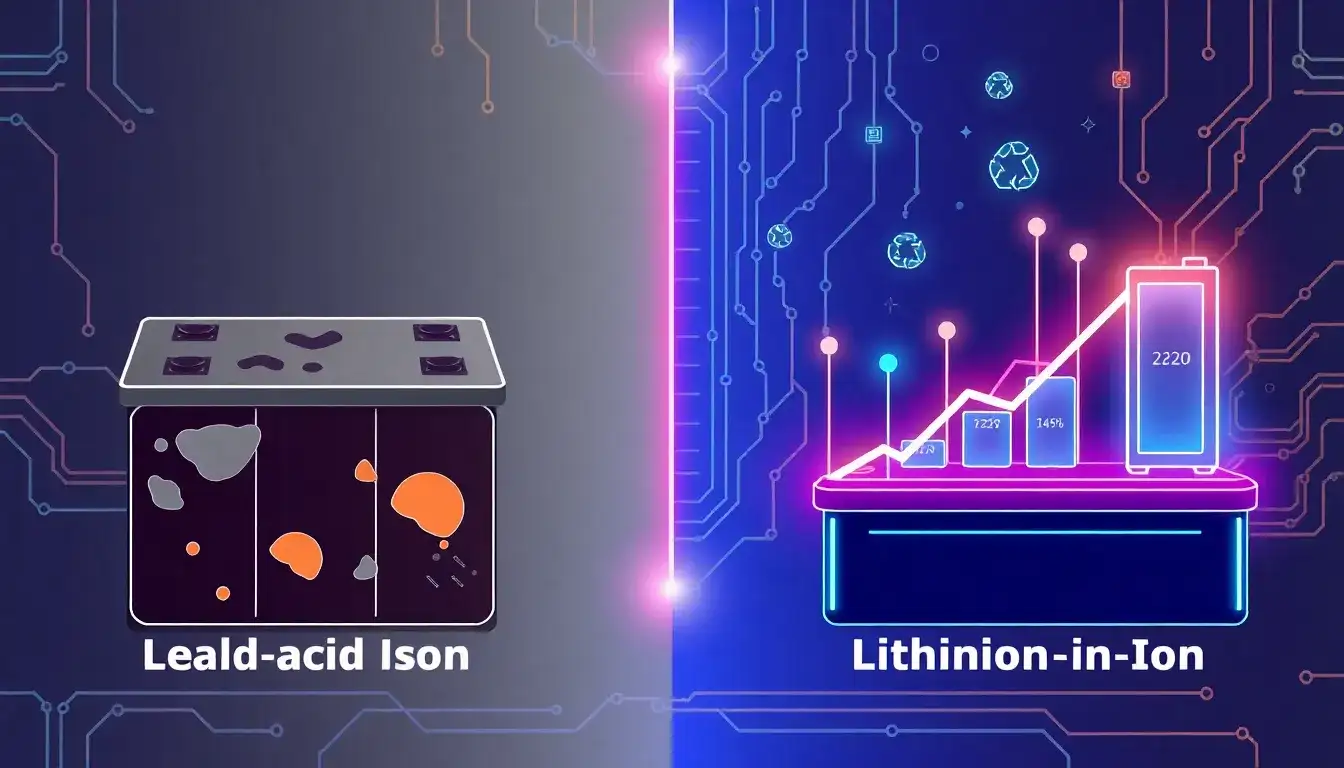
Lifespan Comparison
- Lithium-ion Batteries:
- Cycle Life: They can last for thousands of charge cycles, typically ranging from 2,000 to 3,500 cycles if properly maintained.
- Overall Life: They are expected to last around 5 years or more under optimal conditions, offering a longer operational lifespan compared to lead-acid batteries.
- Lead Acid Batteries:
- Cycle Life: These batteries typically last between 300 to 500 charging cycles.
- Overall Life: Their lifespan is generally shorter, often requiring replacement after 1 to 2 years depending on usage and environmental conditions.
Factors Influencing Lifespan
- Depth of Discharge (DOD): Lithium-ion batteries can be safely discharged to a lower percentage of their capacity than lead-acid batteries, which further enhances their lifespan. Lithium-ion batteries can safely discharge to around 20-80% of their capacity, while lead-acid batteries are generally safe to discharge to 30-50%.
- Charging and Maintenance: Lithium-ion batteries allow for faster, more efficient charging with minimal maintenance, whereas lead-acid batteries require regular maintenance like water replacement and longer charging times, which can impact their lifespan.
Overall, lithium-ion batteries offer a longer lifespan with more efficient operation compared to lead-acid batteries. However, lead-acid batteries remain cost-effective for short-term applications or specific use cases where lithium-ion is not required.
Original article by NenPower, If reposted, please credit the source: https://nenpower.com/blog/how-do-lead-acid-batteries-compare-to-lithium-ion-batteries-in-terms-of-lifespan/

