

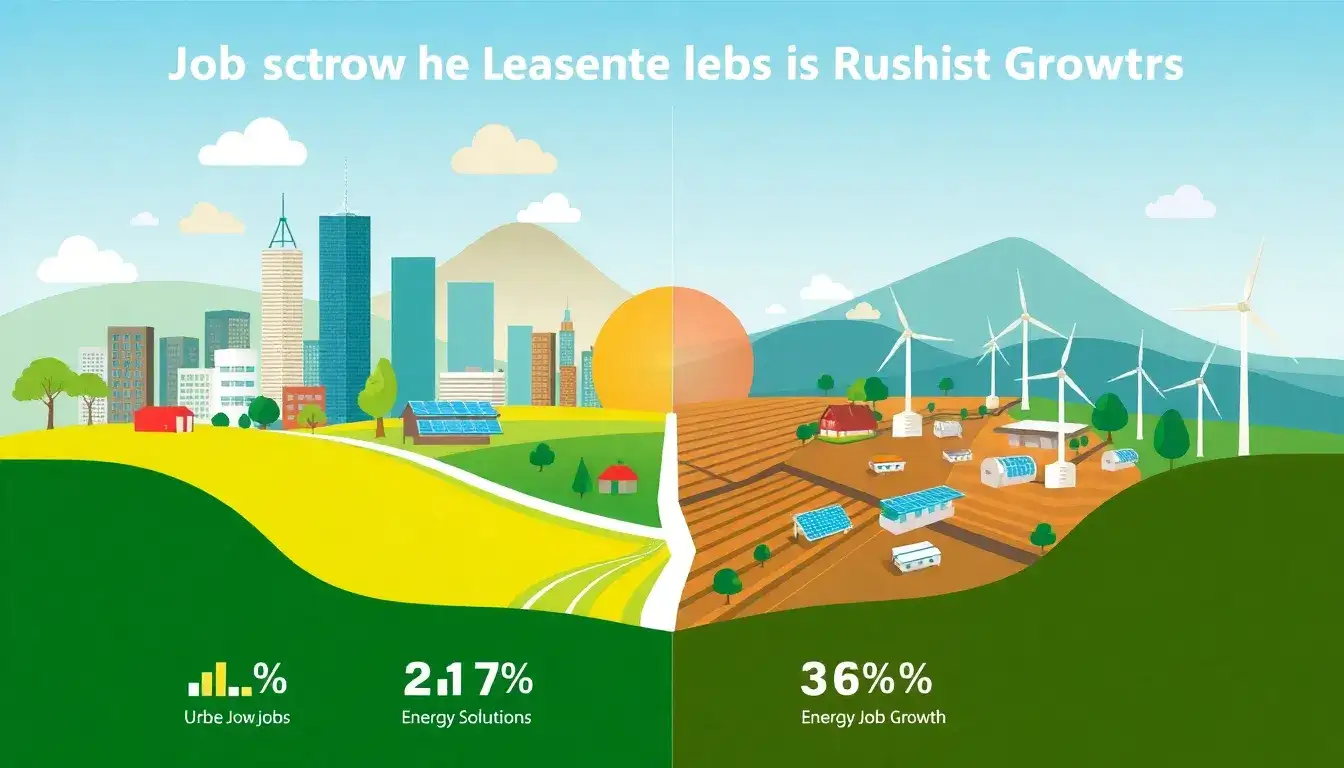
The available data does not explicitly break down energy storage job growth rates by urban vs. rural areas. However, insights can be drawn from broader clean energy trends and the nature of energy storage projects:
- Growth Drivers: Energy storage job growth (4.4% in 2023) aligns with overall clean energy trends, which grew 4.9% nationally in 2023. This growth is driven by grid upgrades, renewable integration, and state/federal policies, suggesting opportunities in both urban (grid infrastructure) and rural (renewable project sites) regions.
- Project Locations:
- Rural areas often host utility-scale battery storage and renewable energy projects, requiring construction, installation, and maintenance roles.
- Urban areas may see higher demand for technical roles (engineering, IT, finance) and behind-the-meter storage systems.
- State-Level Trends: States like Texas (6.0% clean energy job growth) and New Mexico (5.9%) demonstrate rapid expansion, with rural-urban distributions likely influenced by local energy portfolios and policy goals.
While specific urban/rural rates aren’t reported, the sector’s diversity – spanning construction, engineering, and R&D – implies growth across geographies. Rural areas likely lead in installation roles, while urban centers concentrate higher-skill technical positions.
Original article by NenPower, If reposted, please credit the source: https://nenpower.com/blog/how-do-job-growth-rates-in-energy-storage-vary-between-urban-and-rural-areas/

