

Iron-air batteries and lithium-ion batteries
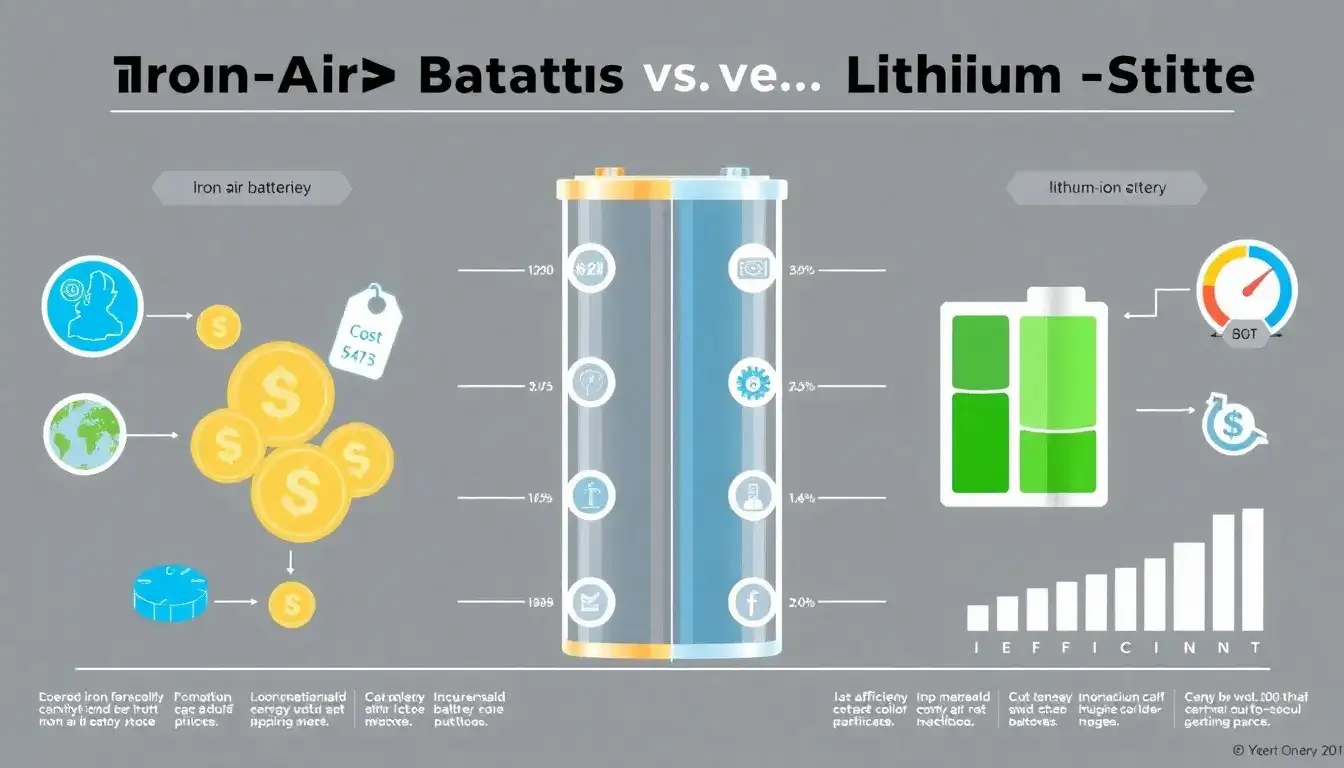
Iron-air batteries and lithium-ion batteries serve different roles in energy storage but can be compared across key dimensions of cost and efficiency.
Cost Comparison
Iron-air batteries are notably cheaper to produce than lithium-ion batteries. According to reports, iron-air technologies can be produced at one-tenth the cost of traditional lithium-ion batteries and utilize abundant materials like iron and air, making them highly cost-effective for large-scale energy storage applications.
In contrast, lithium-ion batteries generally require more expensive materials and production processes. The market has been facing supply chain issues related to lithium, malleability concerns, and high costs associated with extraction and refinement. While iron-air batteries are permanently poised to offer much lower costs, lithium-ion batteries have typically been a leading choice due to their established infrastructure and deployment in consumer electronics and electric vehicles.
Efficiency Comparison
When looking at efficiency, lithium-ion batteries outperform iron-air batteries significantly.
- Lithium-ion batteries have a round-trip efficiency exceeding 90%, which refers to the amount of energy that can be retrieved from the battery relative to the energy put in.
- Iron-air batteries, on the other hand, have a round-trip efficiency of around 50-60%. This lower efficiency means that they lose more energy during storage and retrieval phases compared to lithium-ion systems.
Performance Characteristics
Lithium-ion batteries are known for their high energy density and fast charge/discharge rates, making them suitable for applications requiring quick bursts of power, such as in smartphones and electric vehicles.
Iron-air batteries, however, excel in long-duration energy storage, capable of storing energy for up to 100 hours, compared to lithium-ion batteries which can generally store energy for only 4 to 6 hours at most. This makes iron-air batteries especially suitable for stabilizing the grid and balancing the intermittencies of renewable energy sources, such as solar and wind generation, during prolonged periods of low generation.
Safety and Environmental Impact
Iron-air batteries are typically safer than lithium-ion counterparts, as they do not use flammable materials and have a lower risk of thermal runaway, a significant hazard associated with lithium-ion batteries. Furthermore, their use of non-toxic materials aligns well with growing environmental concerns, as they reduce reliance on hazardous resources that are often mined under environmentally damaging conditions.
In summary, while iron-air batteries present a promising, cost-effective, and safer alternative for large-scale energy storage with long duration capabilities, they currently lag behind lithium-ion batteries in terms of efficiency and power output. As the energy storage landscape evolves, developments in iron-air technology could address some of these efficiency challenges, potentially expanding their use in various power applications.
Original article by NenPower, If reposted, please credit the source: https://nenpower.com/blog/how-do-iron-air-batteries-compare-to-lithium-ion-batteries-in-terms-of-cost-and-efficiency-2/

