

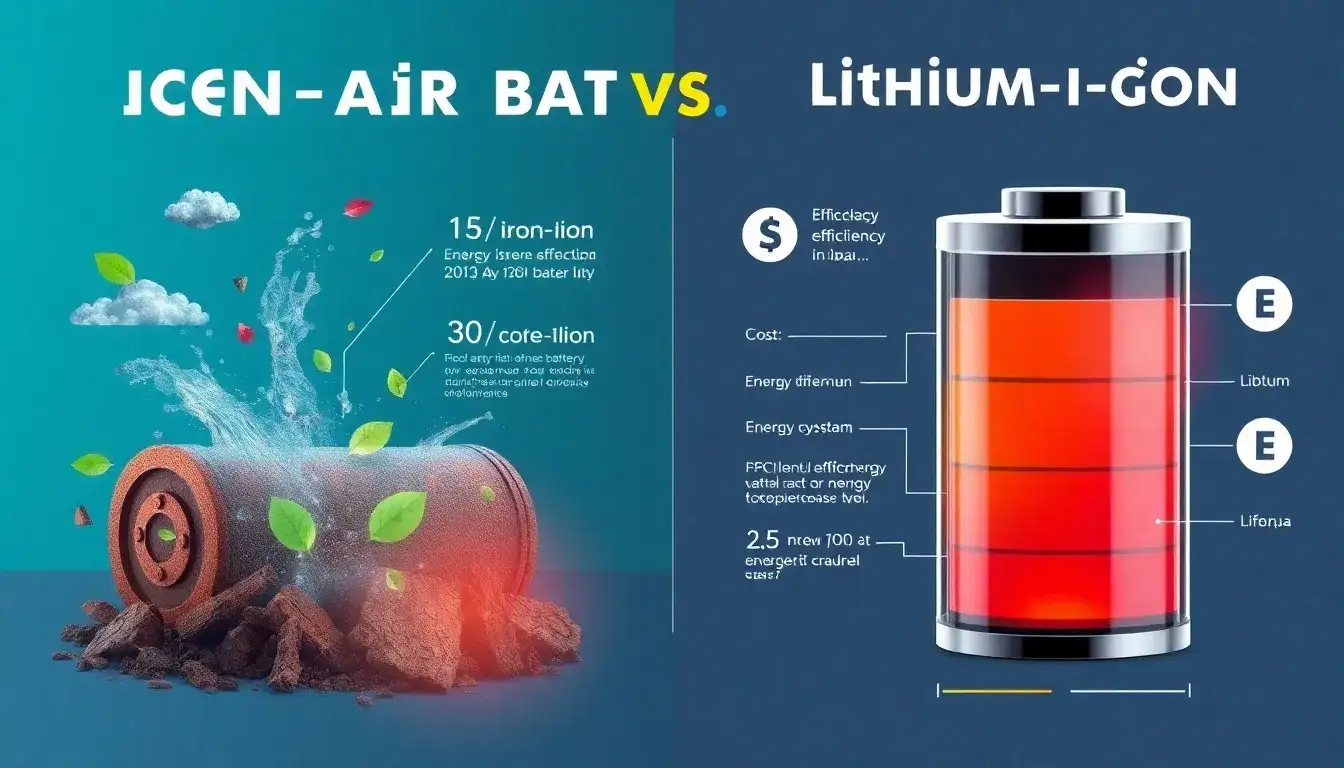
Iron-Air Batteries vs Lithium-Ion Batteries
Iron-air batteries and lithium-ion batteries differ significantly in terms of cost and efficiency. Below are the key comparisons:
Cost
- Iron-Air Batteries: These batteries are significantly cheaper than lithium-ion batteries. They use abundant and low-cost materials like iron and air, making them 10 times cheaper than traditional lithium-ion technologies in some estimates, although this comparison can vary depending on the specific application and scale.
- Lithium-Ion Batteries: Lithium-ion batteries are more expensive due to the cost of lithium and other materials required for their production. They are widely used in consumer electronics but face supply chain issues and environmental concerns related to lithium mining.
Efficiency
- Iron-Air Batteries: Iron-air batteries have a round-trip efficiency of around 50-60%. This is lower than lithium-ion batteries but they excel in long-duration energy storage, capable of storing electricity for up to 100 hours.
- Lithium-Ion Batteries: Lithium-ion batteries have a much higher round-trip efficiency, typically exceeding 90%, but they are limited in their ability to store energy for long durations, usually up to a few hours.
Key Points Summary
| Feature | Iron-Air Batteries | Lithium-Ion Batteries |
|---|---|---|
| Cost | Significantly cheaper | More expensive |
| Efficiency | Lower (50-60%) | Higher (exceeds 90%) |
| Duration of Storage | Up to 100 hours | Typically up to a few hours |
| Materials | Abundant, non-toxic materials | Scarce materials (lithium) |
| Safety | Safer, less flammable | Risk of thermal runaway |
In summary, iron-air batteries offer a cost-effective, safer alternative with longer storage duration but are less efficient and slower in charging/discharging compared to lithium-ion batteries.
Original article by NenPower, If reposted, please credit the source: https://nenpower.com/blog/how-do-iron-air-batteries-compare-to-lithium-ion-batteries-in-terms-of-cost-and-efficiency/

