

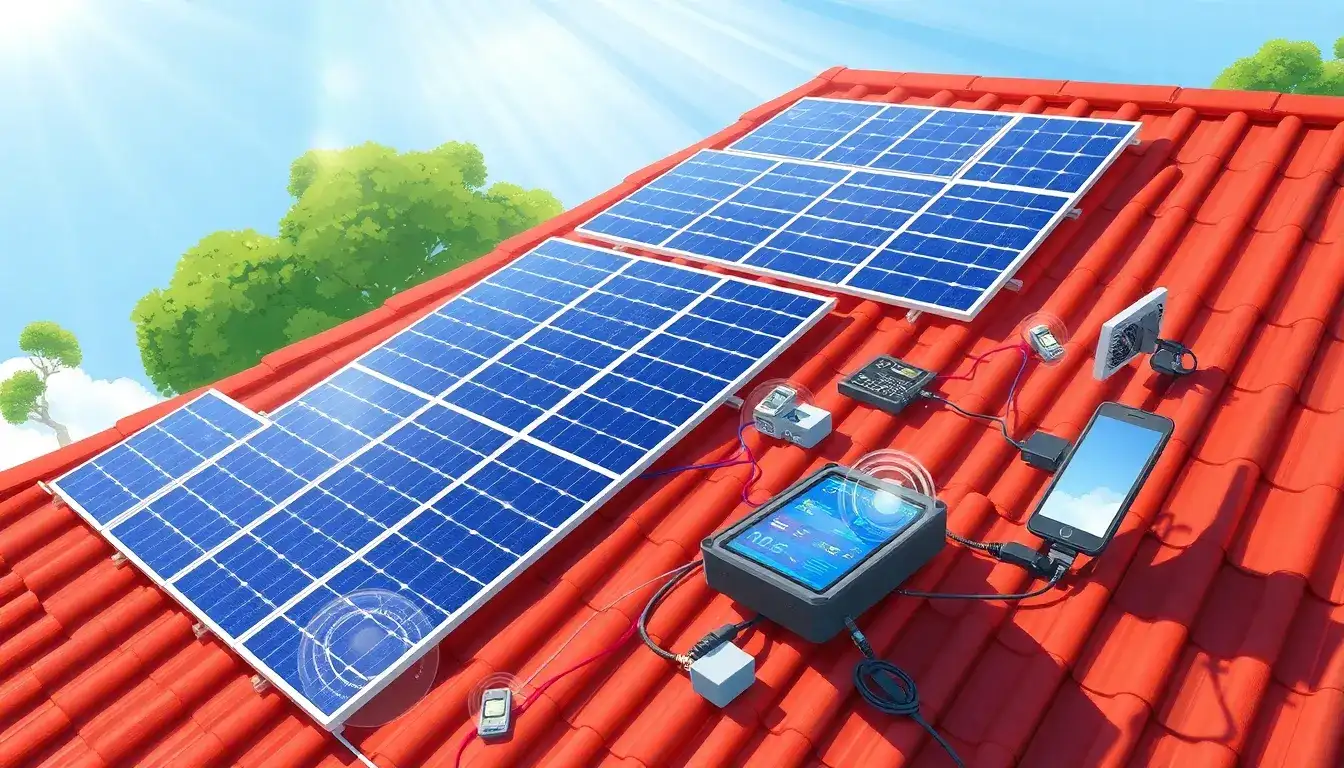
IoT sensors monitor solar panels through a multi-step process combining data collection, transmission, and analysis:
Data Collection via Sensors
Specialized sensors measure:
- Electrical parameters (voltage, current, power output) from panels/inverters
- Environmental conditions (solar irradiance, ambient temperature, shading)
- Panel health (module temperature, micro-crack detection, soiling levels via dust/particulate sensors)
Data Transmission
Collected data is sent via IoT gateways using communication protocols like cellular networks (4G/5G), Wi-Fi, or LPWAN. Gateways aggregate data from multiple sensors before transmitting it to cloud platforms.
Cloud-Based Analysis
Cloud servers process the data using:
- Real-time dashboards showing energy production and system health
- Machine learning algorithms to detect anomalies (e.g., sudden voltage drops or temperature spikes)
- Predictive maintenance alerts for issues like panel degradation or inverter failures
Key Monitoring Features
- Soiling detection: Measures accumulated dust/grime to optimize cleaning schedules
- Performance tracking: Compares actual vs. expected energy output using irradiance and temperature data
- Remote diagnostics: Identifies faults (e.g., faulty bypass diodes) without physical inspections
This system enables continuous, automated monitoring that replaces manual checks while improving energy output and maintenance efficiency.
Original article by NenPower, If reposted, please credit the source: https://nenpower.com/blog/how-do-iot-sensors-specifically-monitor-solar-panels/

