

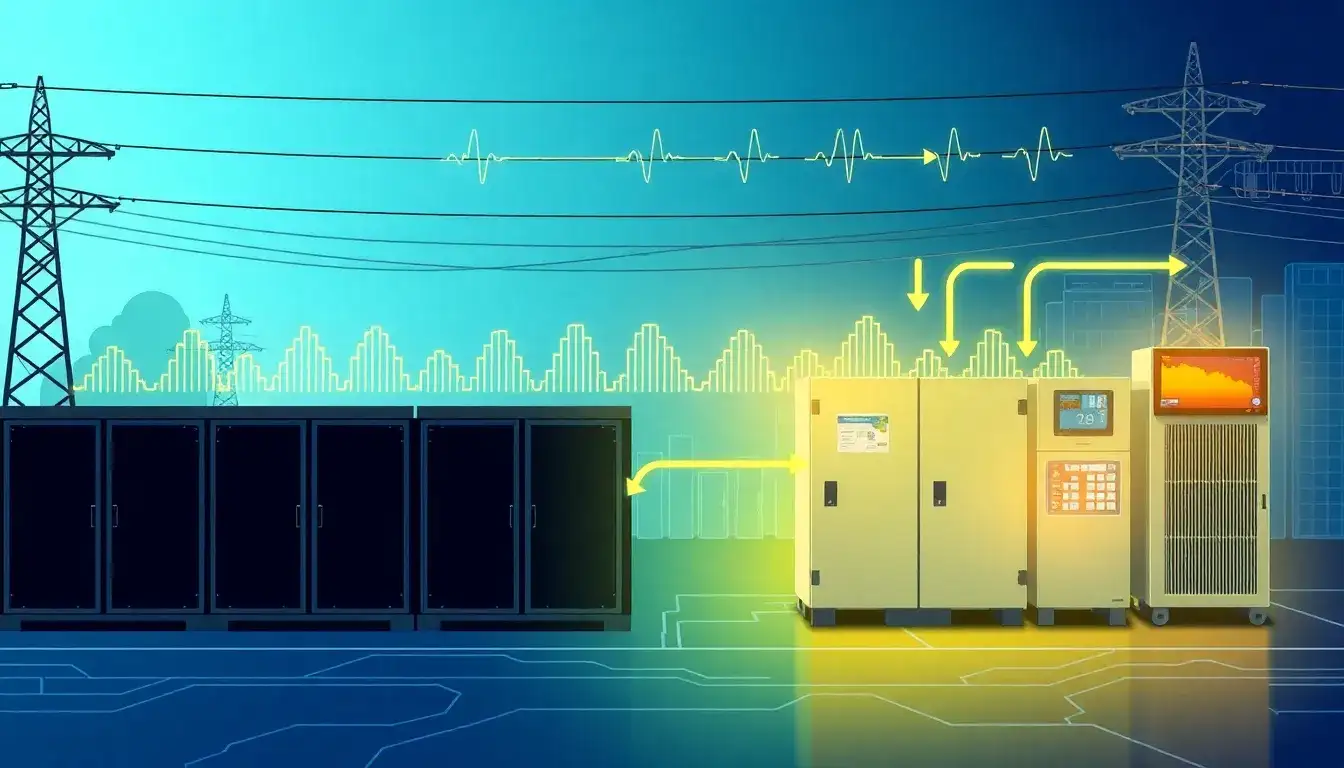
Inverters play a crucial role in Battery Energy Storage Systems (BESS) by contributing to frequency regulation in power grids. Here’s how they help:
- Grid Interface: Inverters serve as the interface between the battery storage system and the electrical grid. They convert DC power from the batteries into AC power suitable for the grid, allowing BESS to interact with the grid dynamically.
- Frequency Response: Inverters can be programmed to respond quickly to changes in grid frequency. When the grid frequency drops (indicating a shortage of power supply), inverters enable the BESS to inject electricity into the grid rapidly, helping to stabilize the frequency. Conversely, when the frequency rises (indicating excess supply), the system can absorb power from the grid.
- Active Power Control: Inverters allow BESS to control the active power output, which is essential for frequency regulation. By adjusting this output in response to frequency deviations, the system helps maintain a balance between power supply and demand, ensuring grid stability.
- Real-Time Adjustment: Modern inverter technology supports sub-second response times, enabling BESS to react quickly to grid imbalances. This rapid response capability is critical in managing the variability introduced by renewable energy sources and ensuring reliable grid operation.
In summary, inverters are vital in enabling BESS to participate in frequency regulation by controlling the flow of power into and out of the grid, thereby stabilizing the grid’s frequency and ensuring a reliable supply of electricity.
Original article by NenPower, If reposted, please credit the source: https://nenpower.com/blog/how-do-inverters-contribute-to-frequency-regulation-in-bess/

