

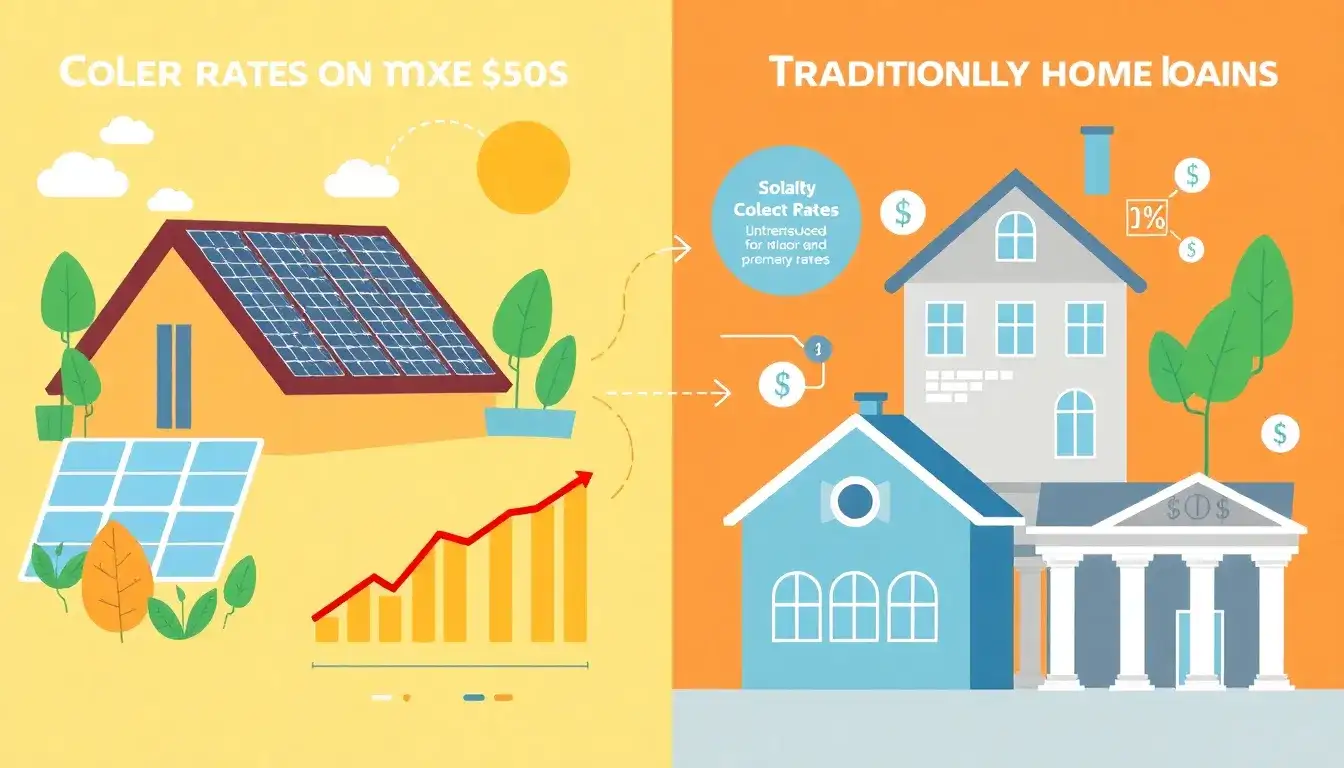
Interest rates on solar loans generally differ from those on traditional home loans in several ways:
Key Differences
- Interest Rates:
- Solar Loans: Interest rates for solar loans can range widely, from about 3.99% to 16.99% APR depending on the lender and terms, with secured options often having lower rates and unsecured options generally higher. Some lenders might have rates as low as 3.95% or as high as 21.24%.
- Traditional Home Loans: These typically offer more stable and potentially lower interest rates, often between 2.5% and 5% APR, although they can vary depending on credit score, market conditions, and loan type.
- Loan Terms:
- Solar Loans: Solar loan terms often range from 5 to 25 years, with the option to spread payments over an extended period to match energy savings.
- Traditional Home Loans: These usually last much longer, commonly 15 to 30 years, and are tailored more for long-term homeownership.
- Secured vs. Unsecured:
- Solar Loans: Both secured and unsecured options exist. Secured solar loans use collateral (like home equity) for potentially lower rates but involve risk of losing the asset if payments aren’t met. Unsecured loans have higher rates due to increased lender risk.
- Traditional Home Loans: Typically secured against the property being purchased, offering lower interest rates due to reduced lender risk.
- Fees:
- Solar Loans: Some solar loans come with significant dealer fees, which can greatly increase the total cost of the loan.
- Traditional Home Loans: These may have closing costs and other fees but are generally more transparent and often lower in comparison to some solar loan fees.
- Purpose and Benefits:
- Solar Loans: Allow homeowners to purchase solar panels while retaining ownership and benefits like the federal solar tax credit. The energy savings can help offset loan payments.
- Traditional Home Loans: Primarily for buying or refinancing a home, providing a place to live and possibly generating value through equity.
In summary, solar loans offer a specialized financing option for renewable energy investments, with interest rates and terms tailored to facilitate the purchase of solar panels and maximize energy savings. Traditional home loans, however, are designed for the broader real estate market, offering stable and generally more favorable interest rates over longer terms.
Original article by NenPower, If reposted, please credit the source: https://nenpower.com/blog/how-do-interest-rates-on-solar-loans-compare-to-traditional-home-loans/

