

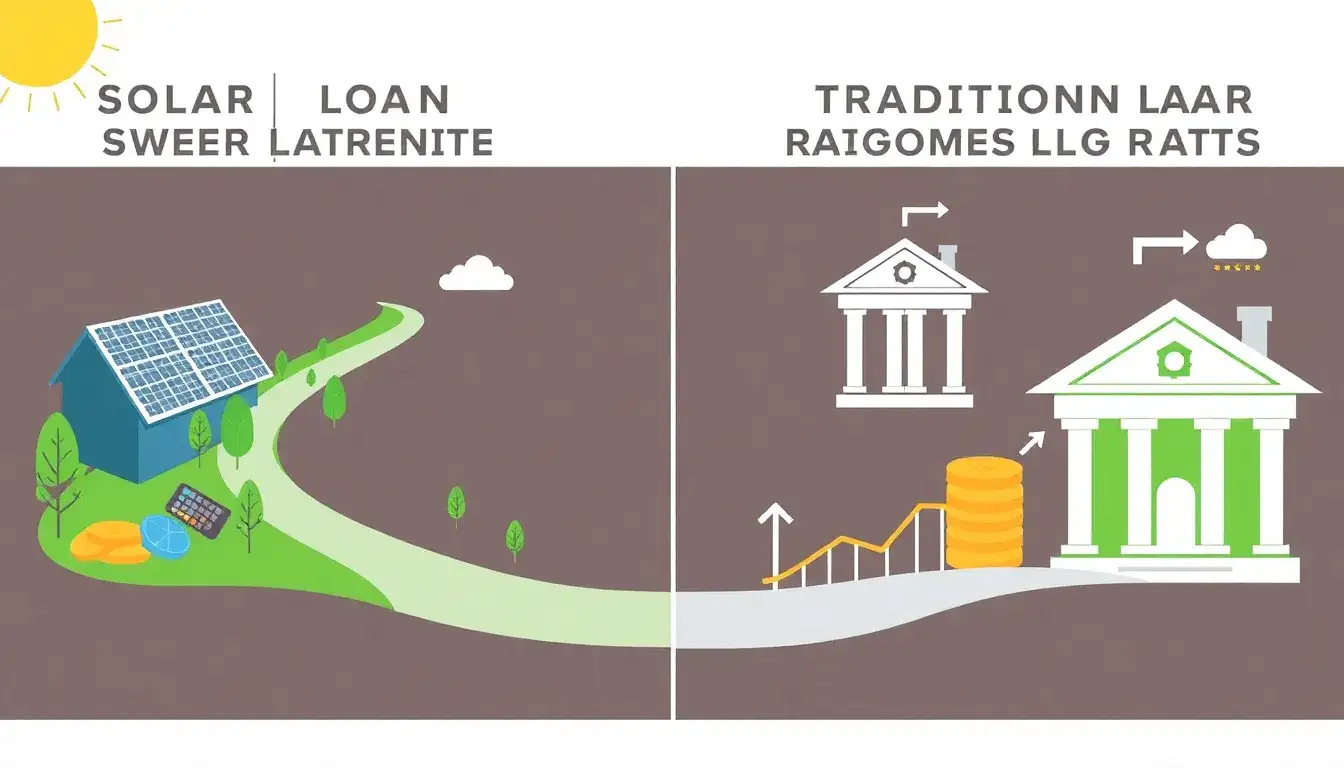
Interest Rates on Solar Loans
- Solar loan interest rates typically range from about 3.99% to 16.99% APR, with some lenders offering lower rates around 2.99% to 8.00% APR for credit union or secured loans.
- For example, Star One Credit Union offers solar loans with APRs between 6.25% and 8.00% for up to 180 months (15 years).
- Some prominent solar loan providers offer rates around 3.95% to 7.99% for terms from 15 to 25 years, with unsecured loans averaging 2.99% to 5.99% APR but often including dealer fees.
- Dealer fees associated with solar loans can be substantial, sometimes averaging around 25% and as high as 40-50% of the loan principal, which can offset the benefit of lower nominal interest rates and raise the effective cost of borrowing.
Interest Rates on Traditional Home Loans
- Traditional home loans (mortgages), especially conventional fixed-rate mortgages, typically have interest rates that can be comparable or sometimes lower than solar loan APRs, often ranging from about 5% or less for prime borrowers depending on the market conditions.
- Home equity loans and home equity lines of credit (HELOCs), commonly used to finance solar systems, often have lower interest rates than many solar loans, partly because they are secured by the home and have lower fees. HELOCs usually have variable rates, which may start low but can fluctuate over time.
- Traditional mortgages usually have fewer fees attached compared to solar loans, which may have dealer or origination fees embedded in the financed amount.
Comparison Summary
| Aspect | Solar Loans | Traditional Home Loans (Mortgage, HELOC) |
|---|---|---|
| Typical Interest Rates | 3.99% to 16.99%; common range ~3%-8% APR | Often 4%-7% (depending on credit, market, type) |
| Loan Term Length | 15-25 years typical | 15-30 years for mortgages; HELOCs variable |
| Fees | Can include large dealer fees (up to 25-50%) | Generally lower fees; home equity loans have origination fees but no dealer fees |
| Secured/Unsecured | Both secured (credit union) and unsecured options exist | Generally secured by home equity |
| Impact of Fees on Cost | Lower interest rate loans may have high fees that increase total cost | Fewer hidden fees, more straightforward costs |
| Tax Incentives Eligibility | Eligible for federal solar tax credit (30%) when owning panels | Depends on loan use; HELOC interest may be deductible |
Key Takeaways
- Solar loans often have competitive nominal interest rates but may carry substantial dealer fees hidden in the financed amount, increasing total costs.
- Home equity loans or HELOCs tend to offer lower interest rates and fewer fees, making them often less expensive overall financing options for solar systems compared to dedicated solar loans.
- Traditional home loans are typically secured and may have lower effective interest costs without the extra dealer fees common in solar loans.
- When comparing solar loans to traditional home loans, it is critical to evaluate the total cost, including fees, loan term, and interest rates, not just the headline APR.
In summary, interest rates on solar loans are often comparable to or sometimes higher than traditional home loan rates, especially when factoring in dealer fees that can significantly increase the overall cost. Home equity loans or lines of credit generally offer lower cost financing options for homeowners looking to install solar panels, although solar loans provide the advantage of dedicated financing with potential tax benefits and specific loan structures tailored to solar projects.
Original article by NenPower, If reposted, please credit the source: https://nenpower.com/blog/how-do-interest-rates-on-solar-loans-compare-to-those-on-traditional-home-loans/

