

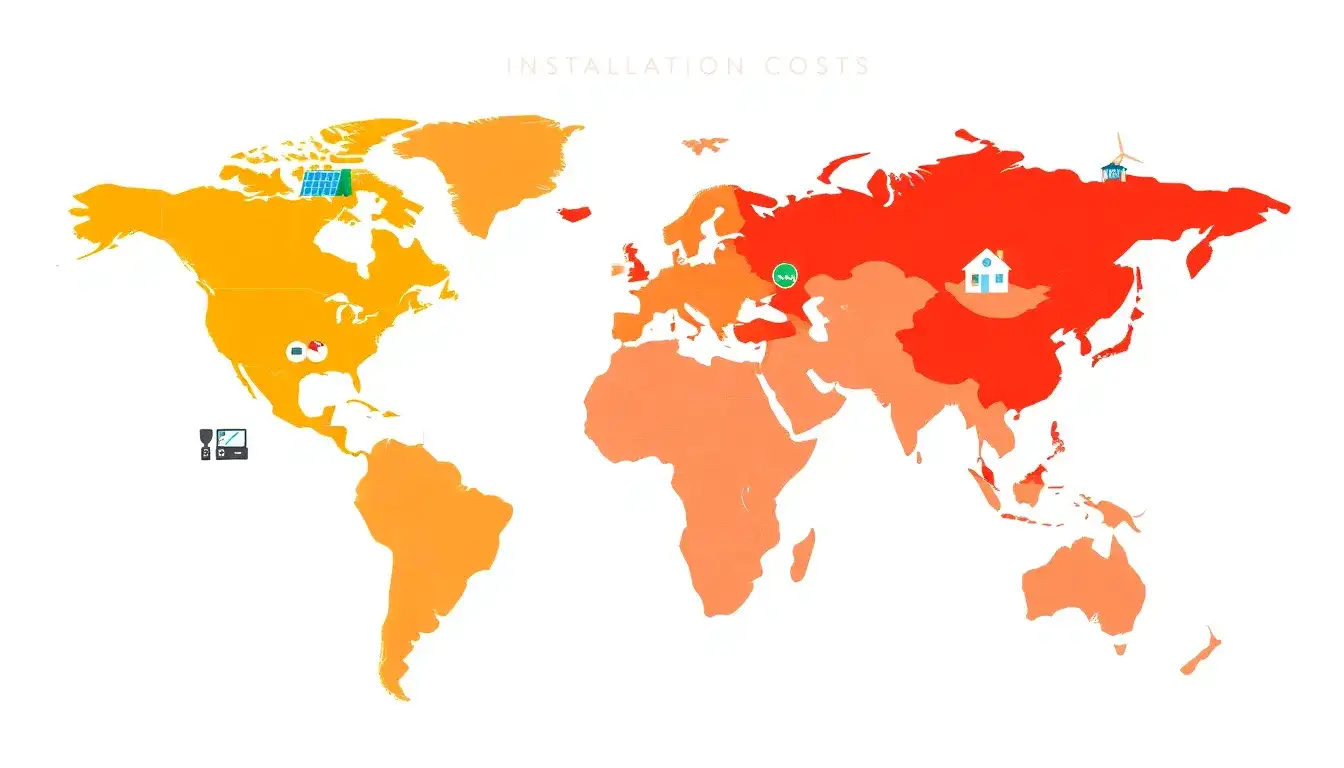
Installation costs can vary significantly by location due to several geographic and economic factors. Here’s how different types of installations are affected:
1. Residential Level 2 Electric Vehicle Charging Installations
- Geographic Factors: Installation costs for residential Level 2 EV charging stations vary widely by location. For example, Los Angeles has one of the highest average costs at $1,828, while Atlanta is among the lowest at $775.
- Permit Fees: Permit fees significantly impact total costs and can vary from $49 to $206 across different markets.
- Incentives: Local incentives, like rebates, can also influence costs. For instance, Los Angeles offered an additional rebate during the EV Project, affecting overall costs.
2. Solar Panel Installations
- Sunlight Availability: Areas with more sunlight require fewer panels, reducing costs. Conversely, less sunlight means larger solar systems are needed, increasing initial expenses.
- Weather Patterns: Regions with extreme weather may require more durable equipment, raising costs.
- Market Demand and Local Incentives: High demand areas often have competitive pricing, while lower demand areas may see higher costs due to fewer providers. Local incentives can significantly reduce net costs.
3. Utility Installations (Water, Sewer, Electrical)
- Type of Installation: Costs vary significantly depending on the type of utility. For example, water lines generally cost between $1,000 and $5,000, while sewer systems can range from $3,000 to $7,000.
- Labor Costs: Labor rates increase in urban areas due to a higher cost of living and demand for skilled workers.
- Site Conditions: Difficulty in accessing the site or challenging soil conditions can increase labor and equipment costs.
4. Custom Home Builds
- Land Prices: Urban areas typically have higher land prices than rural areas, affecting overall construction costs.
- Labor Costs: Urban locations often have higher labor costs due to increased demand and wages for skilled workers.
- Building Codes and Regulations: Stricter regulations in urban or coastal areas can lead to higher costs.
In summary, installation costs vary by location due to factors such as local regulations, labor rates, environmental conditions, and market demand, impacting different types of installations uniquely.
Original article by NenPower, If reposted, please credit the source: https://nenpower.com/blog/how-do-installation-costs-vary-by-location/

