

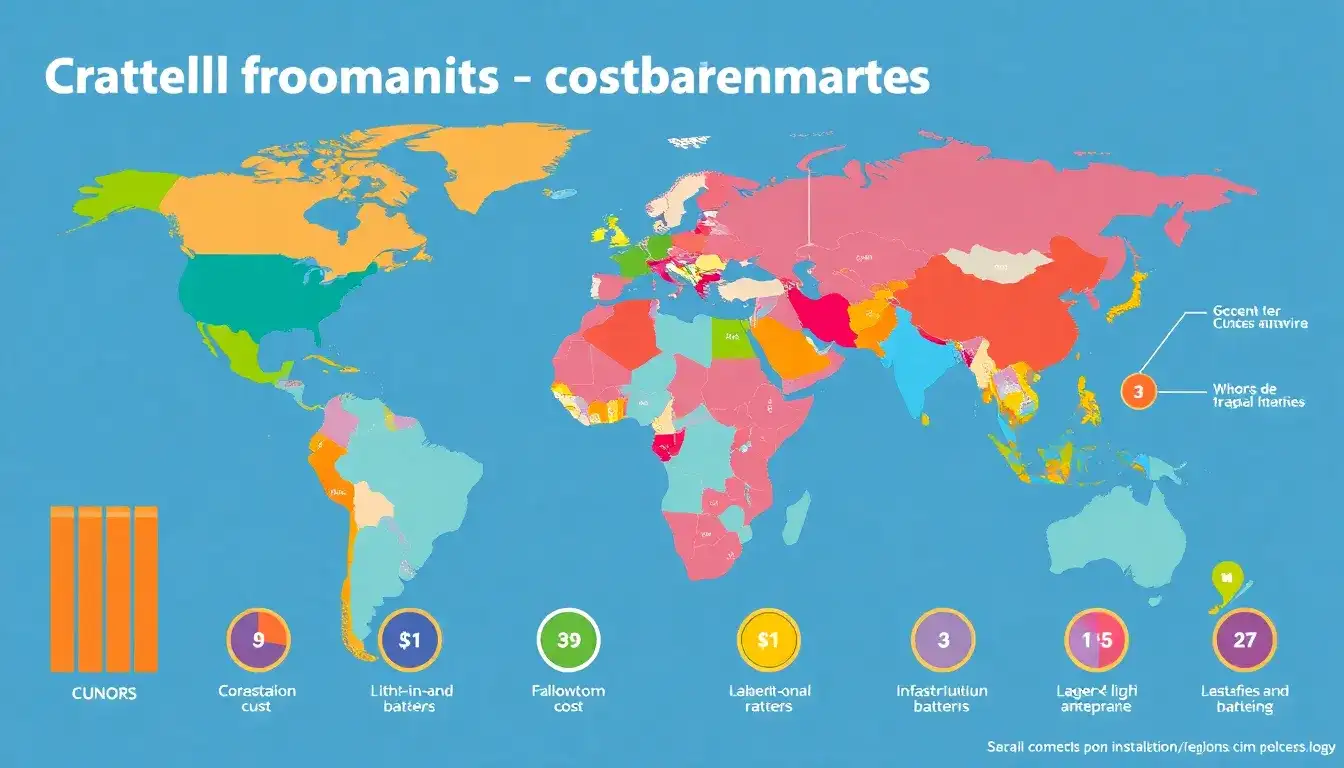
Installation costs for lithium-ion batteries
Installation costs for lithium-ion batteries can vary significantly by region, influenced by factors such as production capacity, demand, local policies, and raw material costs. Here are some key variations:
Regional Variations in Installation Costs
- China: China typically has the lowest battery pack prices, averaging around $126/kWh due to high production volumes and competitive markets. This is supported by the scale-up of Chinese manufacturing, which benefits from lower costs compared to Western countries.
- United States: Battery pack prices in the U.S. are generally higher compared to China, about 11% higher, due to higher production and operational costs. Policies like the Inflation Reduction Act offer production tax credits to offset some of these costs, though the impact is still being assessed.
- Europe: European battery pack prices are even higher, about 20% more than in China, reflecting higher production costs and a less mature market. Similar challenges exist in Europe, with ongoing efforts to build up local manufacturing capacity.
- Global Trends: Globally, the cost of lithium-ion batteries is influenced by factors like raw material prices (e.g., lithium, nickel, cobalt), technological advancements (e.g., LFP chemistry), and regional demand variations. These factors can lead to regional disparities in installation costs.
Utility-Scale Battery Storage Costs
For utility-scale installations, costs not only include the battery packs but also inverters and balance of system (BOS) components. The overall capital cost for 4-hour battery systems can vary significantly, with projections for 2030 ranging from approximately $245/kWh to $403/kWh, depending on the scenario. In regions like New York, installation costs for retail projects were higher, averaging $567/kWh in recent reports.
Key Factors Influencing Regional Variations
- Raw Material Costs: Fluctuations in material prices, especially for lithium, can affect regional costs.
- Production Capacity: Regions with higher production capacities, like China, tend to have lower costs due to economies of scale.
- Local Policies: Tax credits and incentives can influence costs by reducing the financial burden on manufacturers and consumers.
- Market Demand: High demand can lead to increased prices if supply chains are strained.
Original article by NenPower, If reposted, please credit the source: https://nenpower.com/blog/how-do-installation-costs-for-lithium-ion-batteries-vary-by-region/

