

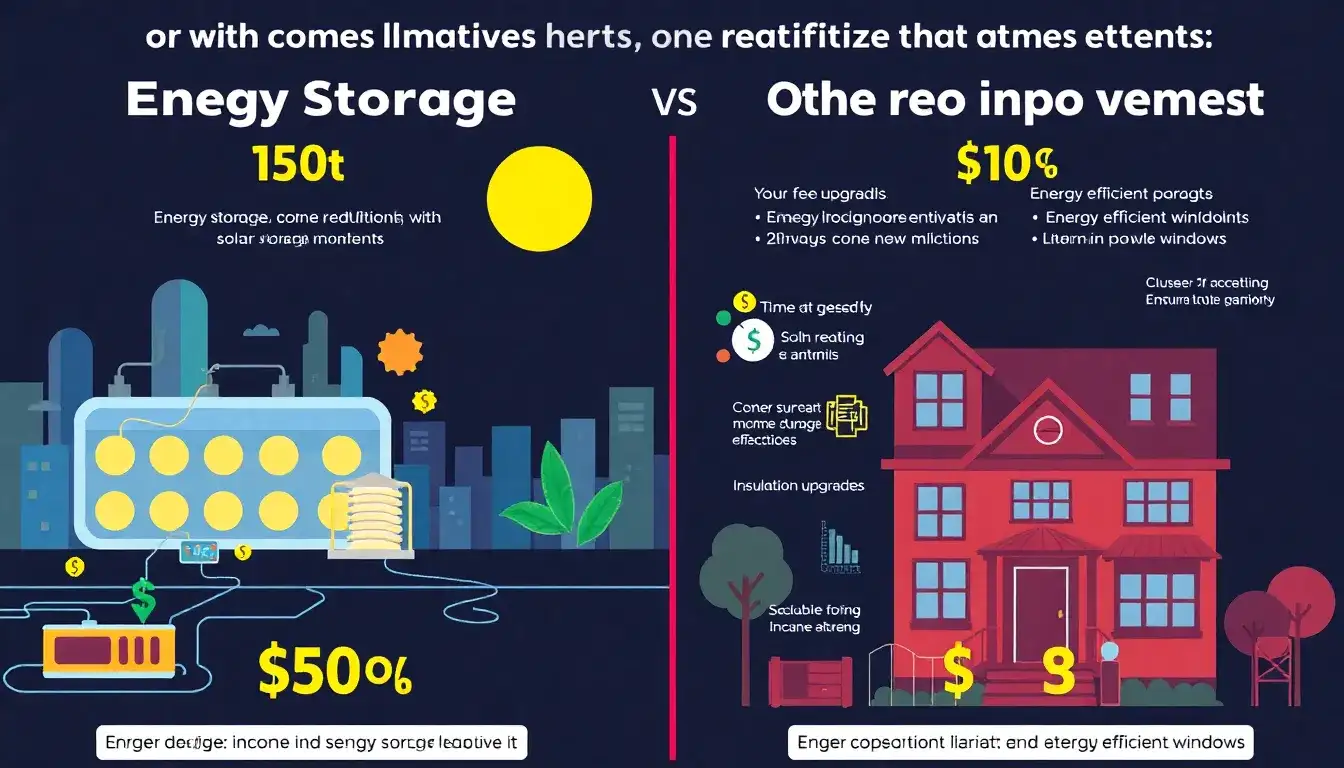
Energy Storage Incentives
Residential Clean Energy Credit:
- Eligibility: Homeowners can claim a 30% tax credit on qualified energy storage systems with a capacity of at least 3 kilowatt-hours (kWh). This applies to installations in both existing homes and new constructions. There are no income restrictions specified for claiming this credit; thus, it is available to all taxpayers meeting the installation requirements.
- Credit Limits: The Residential Clean Energy Credit allows claiming multiple years as long as the qualifying work is done. The maximum for standby energy storage is determined by the total investment without an annual or lifetime cap, aside from specific limitations for certain technologies like fuel cells.
- Additional Requirements: Under the Inflation Reduction Act (IRA), for credits claimed on energy storage initiated after 2022, projects must meet prevailing wage and apprenticeship requirements if taxpayers wish to claim additional bonus credits. However, smaller projects (under 1 MW) are exempt from these requirements for bonus rates.
Low-Income Communities Bonus Credit:
- Income Focus: Previously, energy storage projects could qualify for the Low-Income Communities Bonus Credit, which added up to 20 percentage points to the investment tax credit for projects benefiting low-income communities. However, starting in 2025, energy storage systems will no longer be eligible for this bonus, which could limit access for lower-income households that might need these systems for energy resilience.
Other Home Improvement Credits
General Home Improvement Credits:
- Eligibility: The credits available for other home improvements, such as energy efficiency upgrades (like HVAC systems, windows, or insulation), generally have similar broad eligibility criteria without strict income limitations. However, some specific programs or state-level incentives might target lower-income households by offering higher rebates or additional funding.
- Credit Amounts: Similar to energy storage, home improvement credits vary widely based on the type of improvement made. For many energy efficiency upgrades, federal credits may not be as generous as the 30% offered for energy storage under the Residential Clean Energy Credit but can still provide substantial incentives.
- State Variations: Home improvement incentives can also vary significantly by state with additional funding aimed at low-income residents, whereas energy storage benefits are more uniformly structured across the U.S. without state-specific variations regarding income levels.
In conclusion, while energy storage and other home improvement credits may not have inherent income restrictions for eligibility, the structure of incentives varies. Energy storage specifically has been affected by regulatory changes impacting low-income credits, highlighting a potential gap for lower-income households needing access to affordable energy solutions.
Original article by NenPower, If reposted, please credit the source: https://nenpower.com/blog/how-do-income-restrictions-differ-for-energy-storage-incentives-compared-to-other-home-improvement-credits/

