

Federal Funding Dependencies
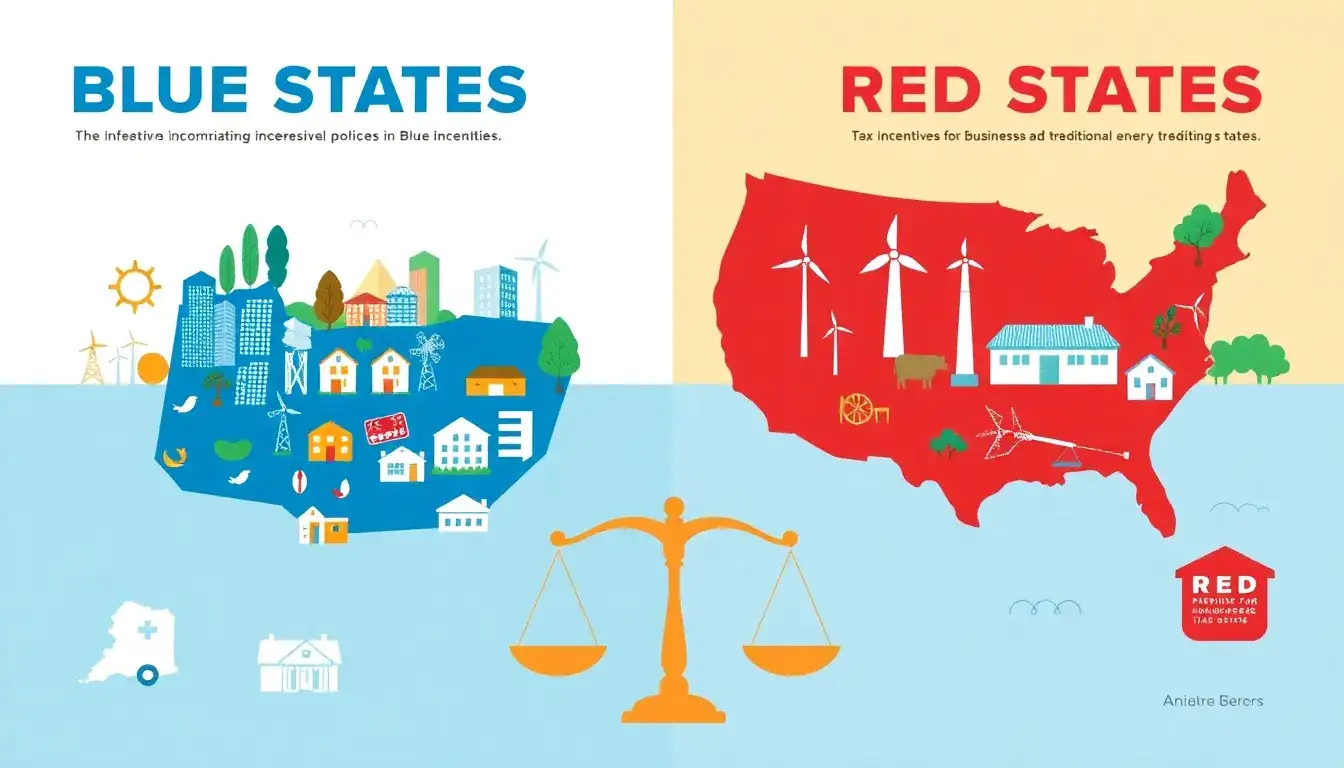
Red states generally receive more net federal support relative to taxes paid, while blue states contribute disproportionately to federal revenues. However, blue states secure advantages in specific categories:
- Grants: Blue states receive more nominal ($2.3T vs. $1.7T) and per capita ($13,200 vs. $12,300) federal grants, primarily for Medicaid and nutrition programs.
- Contracts: Blue states obtain more federal contracts ($1.6T vs. $1.1T), largely for defense, health research, and veterans’ programs.
Clean Energy Incentives
The Inflation Reduction Act (IRA) has disproportionately benefited red states:
- Investment growth: Clean tech manufacturing investments rose 84% in red states (to $105B) but declined 25% in blue states post-IRA.
- Per capita allocation: Red states receive $4,221 per capita in IRA-related funds, compared to $2,427 in blue states.
- Drivers: Red states attract projects due to lower land/labor costs and lighter regulations.
Education & Economic Dynamics
- Title I funding: Red states rely more on federal education aid, with programs supporting 6.4% of teacher roles vs. 5.1% in blue states.
- Economic performance: While recent analyses suggest Republican-led states have stronger growth metrics, this contrasts with their higher federal dependency.
Key Trade-Off: Blue states retain advantages in high-value federal contracts and grants, while red states leverage structural cost benefits to dominate emerging sectors like clean energy.
Original article by NenPower, If reposted, please credit the source: https://nenpower.com/blog/how-do-incentives-in-blue-states-compare-to-those-in-red-states/

