

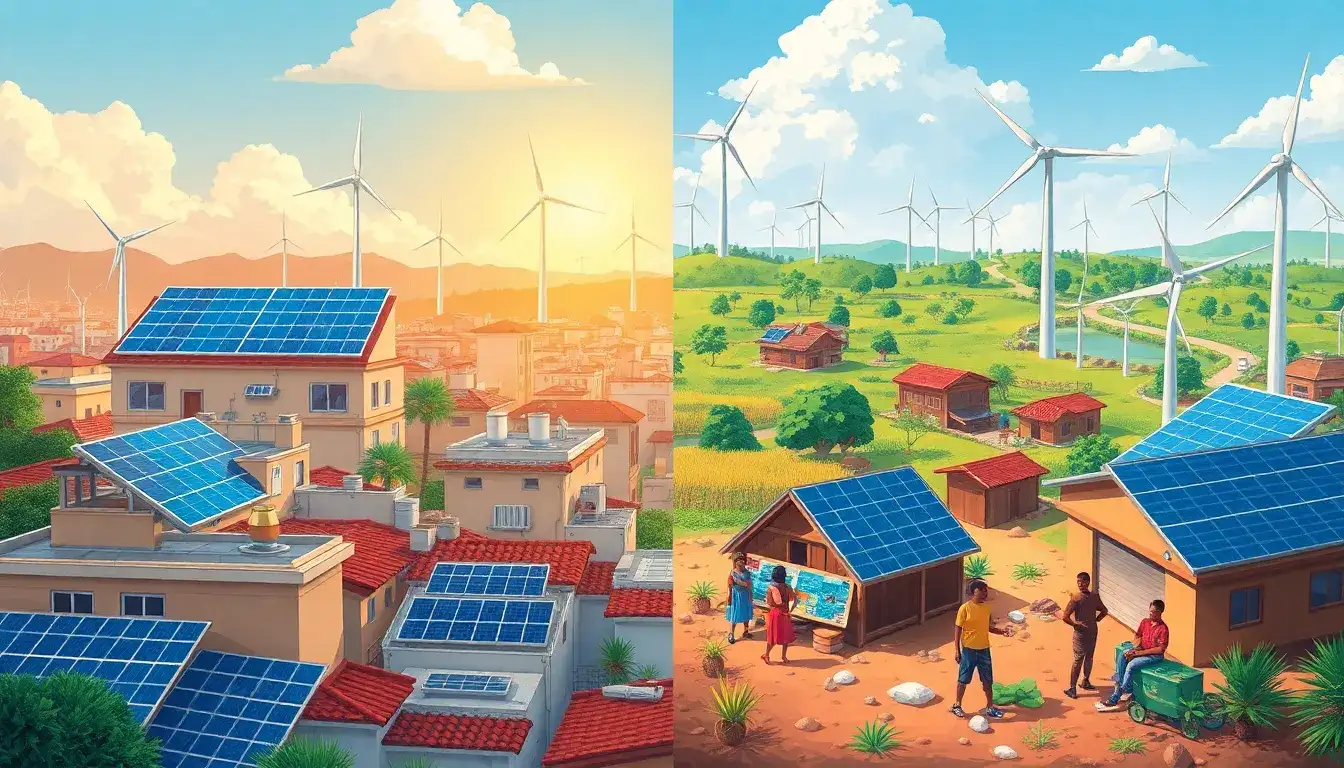
Incentives for renewable energy differ significantly between developed and developing countries, reflecting their unique economic conditions, technological capabilities, and policy priorities.
Developed Countries
Developed countries often have more established renewable energy sectors and sophisticated incentive structures:
- Financial Incentives: Developed nations like the United States and Germany offer tax credits (e.g., the U.S. Investment Tax Credit) and feed-in tariffs to encourage the adoption of solar and wind energy.
- Grants and Loans: Programs provide financial assistance to households and businesses for installing renewable energy systems, such as solar panels or community batteries in Australia.
- Regulatory Frameworks: Robust regulatory frameworks support the growth of renewable energy by setting ambitious targets and ensuring market stability.
- Public Awareness: Educational campaigns and media initiatives are used to promote public understanding and support for renewable energy adoption.
Developing Countries
Developing countries face different challenges and opportunities in promoting renewable energy:
- Financial Support: Developing nations often require international financial support and technology transfer to build their renewable energy capacity.
- Incentive Structure: While financial incentives like subsidies and tax credits are valuable, they may be less comprehensive compared to developed countries. Instead, developing countries might rely more on international aid and partnerships.
- Regulatory Challenges: Weak or evolving regulatory frameworks can hinder the efficient implementation of renewable energy projects. This necessitates international cooperation to strengthen governance and policy structures.
- Public Awareness and Education: Limited public awareness can be a barrier, but integrating renewable energy education into national curricula or conducting community outreach can help mitigate this issue.
Examples
- India: Offers successful solar power initiatives, such as the rooftop solar program in Gujarat, which has shown significant growth. India also aims for substantial non-fossil fuel power generation by 2030.
- China: Represents a unique case, possessing both characteristics of developed and developing nations. China is the world’s leading renewable power producer and offers robust incentives like feed-in tariffs, significantly expanding its solar capacity.
Overall, while both developed and developing countries use various incentives to promote renewable energy, developed nations tend to have more sophisticated and diverse programs, whereas developing countries often rely on international support and simpler incentive structures.
Original article by NenPower, If reposted, please credit the source: https://nenpower.com/blog/how-do-incentives-for-renewable-energy-differ-between-developed-and-developing-countries/

