

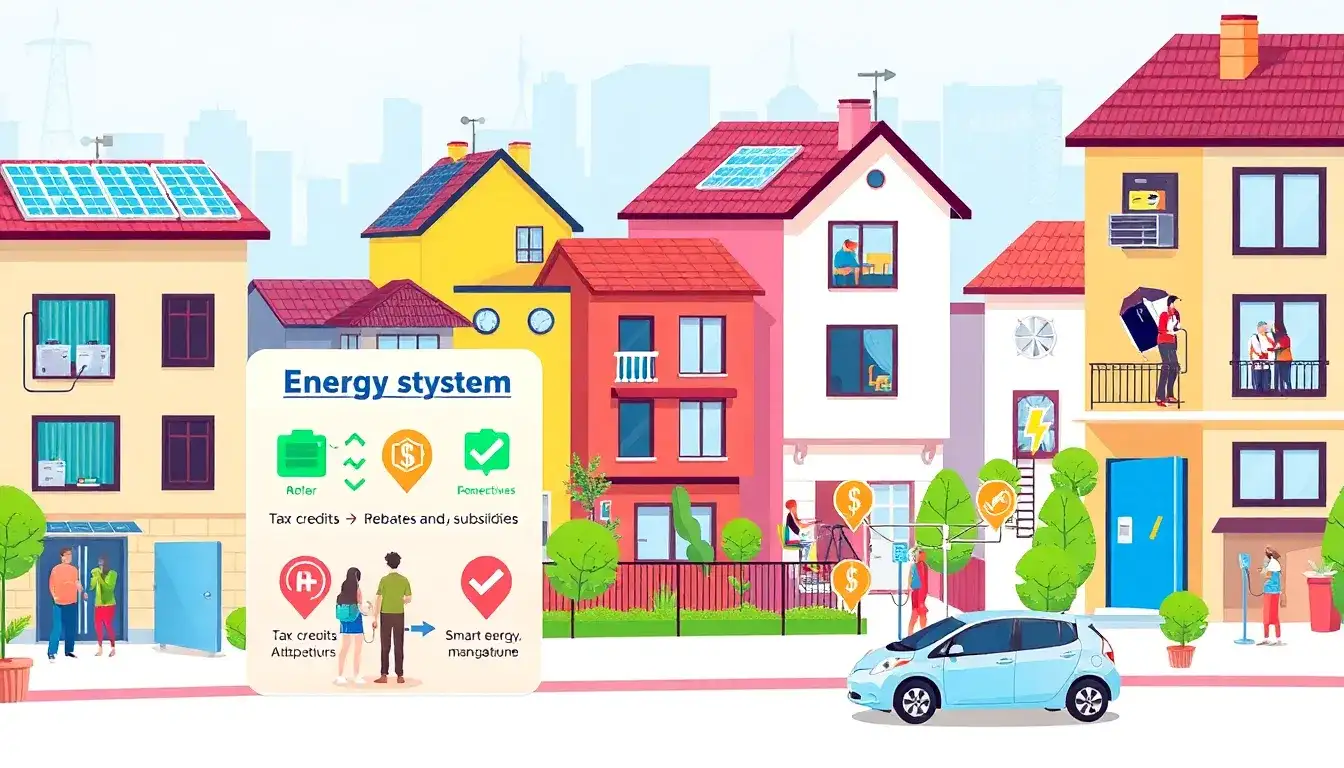
Incentives for energy storage play a crucial role in driving consumer adoption by reducing upfront costs and enhancing financial returns. Here’s how incentives impact consumer adoption:
Types of Incentives
- Federal Incentives:
- Investment Tax Credit (ITC): The Inflation Reduction Act (IRA) allows for a 30% tax credit on the installation of energy storage systems, including standalone batteries, through 2032. This applies to residential systems over 3 kWh.
- Clean Electricity Investment Credit (CEIC): Offers up to 50% credit for commercial projects, starting at 6%, with higher credits available for projects meeting specific criteria like using U.S.-based materials.
- State-Level Incentives:
- California: Self-Generation Incentive Program (SGIP) provides rebates for energy storage, particularly benefiting high fire threat districts and low-income households.
- Connecticut: Energy Storage Solutions offer up to $16,000 for residential customers and 50% savings for businesses, along with performance-based incentives.
- Massachusetts: Programs like ConnectedSolutions and Clean Peak Standard offer financial incentives for energy conservation during peak demand.
- Performance-Based Incentives:
These incentives reward consumers for contributing to grid stability. Examples include demand response programs and virtual power plant participation.
Impact on Adoption
- Cost Reduction: Incentives help lower the upfront costs of energy storage systems, making them more affordable for consumers. For instance, the IRA can reduce residential costs by $3,000 to $5,000.
- Increased ROI: By providing tax credits and rebates, incentives improve the return on investment for homeowners and businesses, encouraging more to adopt battery storage.
- Grid Stability and Resilience: Incentives promote participation in programs that enhance grid reliability, offering both financial benefits and enhanced energy independence for consumers.
- Market Growth: The number of residential solar installations including battery storage is rising, with about 15-20% of new installations now incorporating storage, driven partly by these incentives. In 2023 alone, over 200,000 U.S. homeowners added battery storage to their solar systems.
Overall, incentives for energy storage have significantly accelerated consumer adoption by mitigating financial barriers and highlighting the long-term benefits of energy independence and cost savings.
Original article by NenPower, If reposted, please credit the source: https://nenpower.com/blog/how-do-incentives-for-energy-storage-impact-consumer-adoption/

