

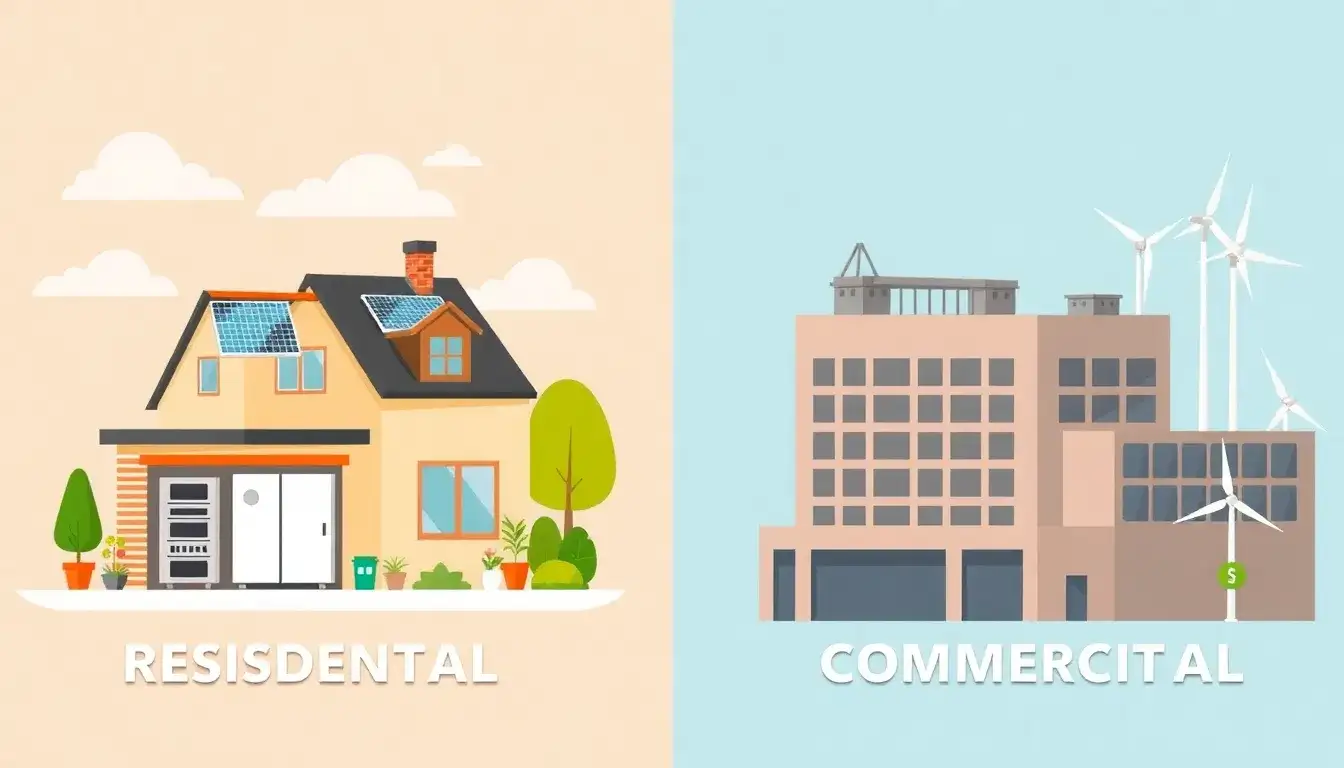
Incentives for energy storage in the United States differ noticeably between residential and commercial projects, reflecting the distinct needs and opportunities of each sector.
Residential Energy Storage Incentives
- Motivation: Residential customers often prioritize resilience and backup power as primary reasons for installing energy storage systems.
- Incentives: Many state programs offer higher per-unit incentives for residential systems compared to commercial ones. For example, California’s Self-Generation Incentive Program (SGIP) provides a rebate for battery storage, with additional funds for high fire threat districts and low-income households. These incentives help offset the higher cost per kilowatt for residential systems.
- Monetization Challenges: Residential customers often face challenges in monetizing their battery services, except through specific state or utility programs.
Commercial Energy Storage Incentives
- Motivation: Commercial customers are motivated by opportunities for demand charge management, participation in energy markets, and potential revenue generation through grid services.
- Incentives: The Clean Electricity Investment Credit (CEIC) offers up to 50% of the project cost for battery storage at commercial properties, depending on factors like the use of U.S.-based materials. Many states also offer incentives specifically for businesses, which can be lower per unit compared to residential incentives due to economies of scale.
- Revenue Streams: Commercial systems can participate in utility demand response programs and wholesale energy markets, providing additional revenue streams beyond just energy savings.
Overall, while residential customers benefit from higher per-unit incentives due to higher costs and fewer monetization opportunities, commercial customers leverage economies of scale and various revenue streams to justify larger investments.
Original article by NenPower, If reposted, please credit the source: https://nenpower.com/blog/how-do-incentives-for-energy-storage-differ-between-residential-and-commercial-projects/

