

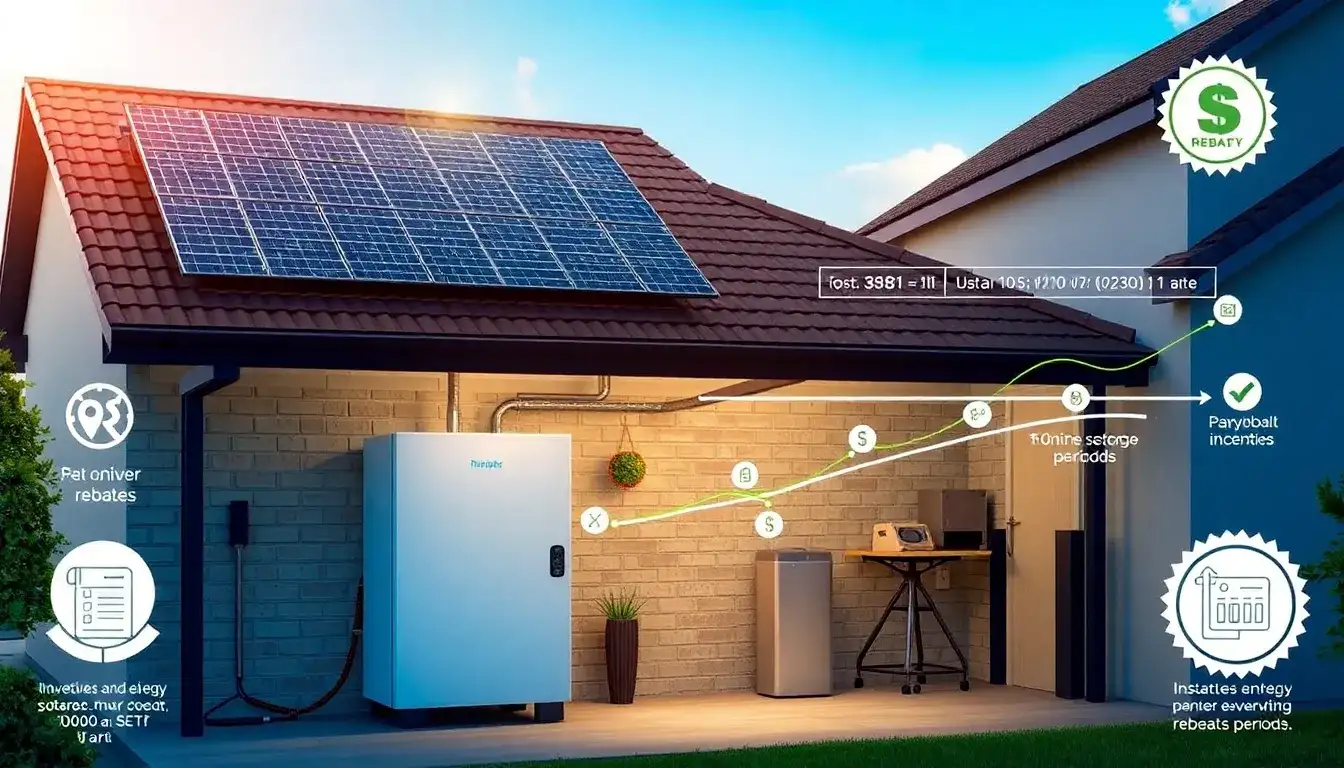
Incentives and rebates significantly impact the payback period for residential energy storage systems by reducing upfront costs and enhancing financial savings over time. Here’s how they influence the payback period:
Impact of Incentives and Rebates
- Federal Incentives:
- The Inflation Reduction Act (IRA) offers a 30% federal tax credit for residential energy storage systems over 3 kWh, which can lower the cost by $3,000 to $5,000 depending on the system size.
- This tax credit is available for systems installed before January 1, 2033.
- State-Level Rebates:
- States like California offer the Self-Generation Incentive Program (SGIP), providing rebates that can reach $200 per kWh of capacity during certain phases.
- Connecticut offers up to $16,000 in rebates for residential installations and 50% upfront incentives for businesses.
- New York provides a $250 per kilowatt rebate for Long Island residents.
- Other states like Oregon and Illinois also offer significant rebates, such as up to $2,500 for battery storage in Oregon and $300 per kWh capacity in Illinois.
- Utility Company Incentives:
- Some utilities offer additional incentives, such as rebates or performance-based payments for energy sent back to the grid during peak hours.
Effect on Payback Period
- Shortened Payback Period:
- Incentives and rebates reduce the upfront cost of energy storage systems, thereby shortening the payback period. Systems with robust incentives can pay for themselves in as little as five years.
- These financial benefits encourage more homeowners to adopt energy storage solutions.
- Increased Savings:
- By lowering the initial investment, homeowners can start saving on utility bills sooner, further enhancing the financial benefits of energy storage.
- Additionally, time-of-use (TOU) rate structures allow batteries to optimize savings by charging during off-peak hours and discharging during peak hours.
- Enhanced Energy Independence:
- Besides financial benefits, incentives for energy storage systems also promote energy resilience and backup power during outages, which can justify longer payback periods for some homeowners.
In summary, incentives and rebates are crucial in making residential energy storage more affordable and financially viable, significantly reducing the payback period and encouraging wider adoption of these systems.
Original article by NenPower, If reposted, please credit the source: https://nenpower.com/blog/how-do-incentives-and-rebates-impact-the-payback-period-for-residential-energy-storage-systems/

