

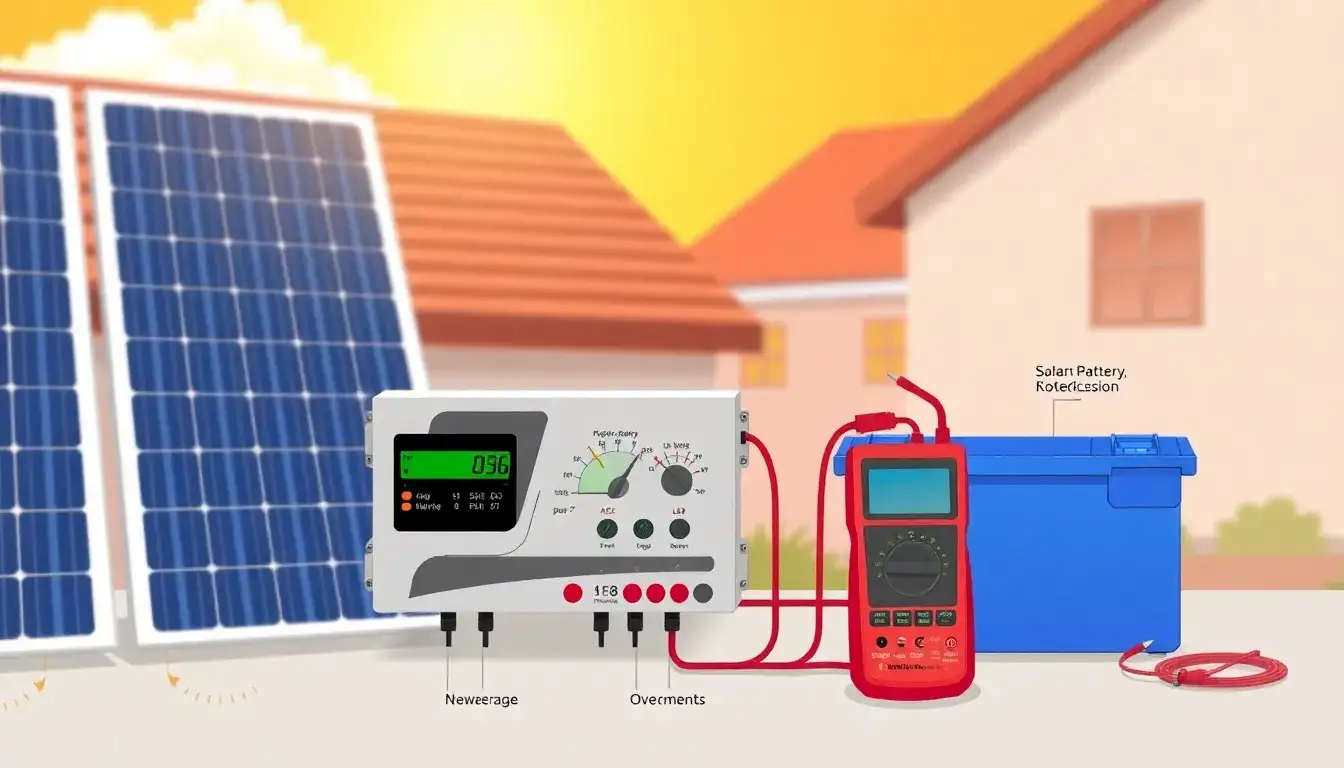
To determine if your solar charge controller is malfunctioning, you can look for several key indicators and perform some troubleshooting steps:
Signs of a Malfunctioning Solar Charge Controller
- Reduced or Fluctuating Power Output: If your solar system is producing less power than usual, or the output fluctuates unexpectedly, it could indicate a problem with the controller.
- Battery Not Charging Properly: If the battery is not charging fully or is discharging too quickly, it may indicate a controller issue.
- Overheating: If the controller feels excessively hot, it could be due to poor ventilation, dust buildup, or excessive environmental heat, leading to component failure.
- Error Codes or Display Issues: Many controllers display error codes or warning lights. If you see these, check your manual to understand the issue.
- Physical Damage: Visible signs of physical damage such as a cracked casing or exposed wires should prompt an immediate inspection and possible replacement.
- Loose Connections: Regularly check all connections to ensure they are secure. Loose wires can cause erratic performance or complete system failure.
Troubleshooting Steps
- Check Connections: Ensure all connections between the solar panels, battery, and charge controller are secure and not damaged.
- Inspect for Damage: Look for any signs of physical damage such as cracked casings or exposed wiring.
- Use a Multimeter: Check the voltage output from the solar panels and the battery to ensure they match the expected readings.
- Monitor Temperature: Ensure the controller is operating in a cool environment and clean it regularly to prevent dust buildup.
- Review Error Codes: If your controller displays error codes, refer to the manual to diagnose the issue.
If after troubleshooting you still encounter issues, it might be necessary to consult a professional or replace the charge controller.
Original article by NenPower, If reposted, please credit the source: https://nenpower.com/blog/how-do-i-know-if-my-solar-charge-controller-is-malfunctioning/

