

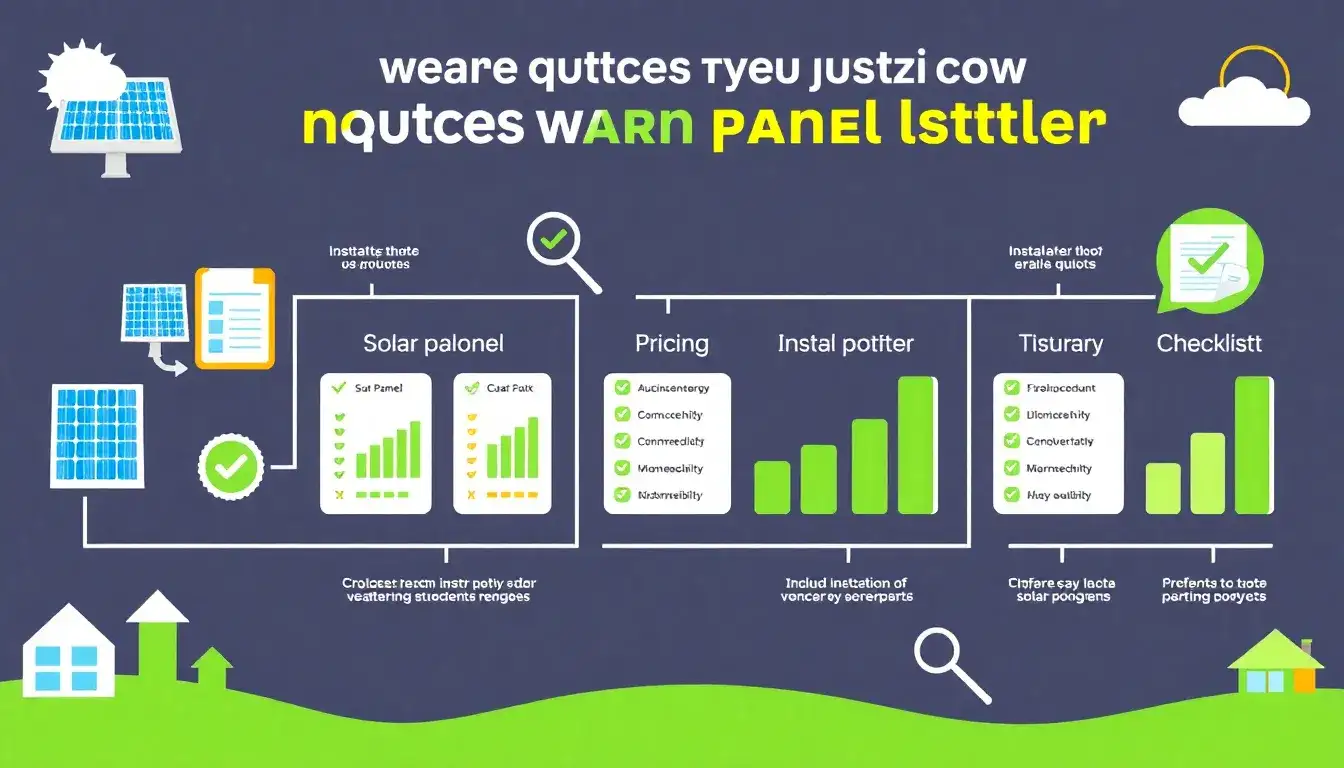
When comparing quotes from different solar installers, it’s essential to evaluate several key factors beyond just the total price to ensure you select the best system for your needs and budget. Here’s a comprehensive guide on how to effectively compare solar quotes:
1. Understand Your Electricity Needs
Start by reviewing your past electricity bills to get an accurate idea of your average and peak energy usage. This helps you evaluate whether the system sizes quoted are appropriate for your consumption patterns, accounting for seasonal fluctuations and future needs such as electric vehicles or heat pumps.
2. Compare System Size and Design
Each installer might propose different system sizes or configurations. Check:
- The total kilowatts (kW) or wattage of the system
- The estimated energy production versus your energy needs
- Panel placement and roof coverage
- Inclusion of batteries or energy storage if relevant
- Assumptions about net metering or selling excess power back to the grid
If system sizes vary notably, ask the installers to explain their sizing rationale to ensure you’re comparing equivalent scopes.
3. Calculate Cost Per Watt
A crucial metric to compare is the cost per watt, which normalizes the quotes to the size of the system:
Cost per watt = Total pre-incentive cash price / System size in wattsThis helps compare quotes with different sized systems on an equal footing, rather than comparing total prices directly.
4. Evaluate Equipment Quality
Examine the brand, model, and efficiency ratings of the solar panels, inverters, and any batteries included. Higher quality equipment usually offers better longevity and performance. Check the warranties provided for panels, inverters, and workmanship to ensure protection against defects and installation issues.
5. Review Financing Options and Terms
Solar projects may be purchased outright, financed with loans, leased, or accessed through power purchase agreements (PPAs). Look carefully at:
- Loan interest rates, fees, and repayment terms if financing
- Lease or PPA monthly payments and possible escalators
- Available tax credits and incentives and how they are applied
- Whether the quoted price reflects cash purchase or financed cost
Get both cash and financed quotes for comparison.
6. Inspect Energy Savings Estimates
Installers often provide projections of energy bill savings based on their system’s estimated output and local utility policies. Verify assumptions such as:
- Net metering or buyback rates for excess energy
- System degradation rates over time
- Estimated payback periods and return on investment
Ask installers to explain their calculation methods to ensure estimates are realistic.
7. Check Installer Reputation and Experience
The quality of installation and service matters greatly. Research:
- Installer certifications, licenses, and insurance
- Customer reviews and testimonials
- Years of experience and local projects completed
- Availability of customer support and responsiveness post-installation
References or project visits can also provide assurance.
8. Compare Warranty Coverage
Warranty types to compare include:
- Product warranty (covers panel or equipment defects)
- Performance warranty (ensures panels maintain a certain power output over time)
- Workmanship warranty (covers installation-related issues)
Longer and more comprehensive warranties reduce future risks.
Summary Table of Key Comparison Factors
| Factor | What to Compare |
|---|---|
| Electricity needs | Match system size and production estimates to your usage |
| System size & design | Total kW, layout, battery inclusion, net metering assumptions |
| Cost per watt | Cash price divided by system wattage |
| Equipment quality | Panel/inverter brands, efficiency, and warranty |
| Financing | Cash price, loan terms, leases, PPAs, incentives |
| Savings estimates | Energy production, payback period, assumptions on utility credits |
| Installer reputation | Certifications, customer reviews, references |
| Warranties | Product, performance, and workmanship coverage |
Additional Tips
- Don’t just choose the lowest price; factor in equipment quality, warranties, and installer reliability.
- Ask installers to clarify any assumptions or details that differ between quotes.
- If possible, use tools or services (like EnergySage or Currents) that can help standardize quote comparisons and provide expert guidance.
- Negotiate with installers on pricing and system design to better fit your budget and goals.
By thoroughly assessing these aspects, you can confidently compare solar quotes and select the best installer and system for your home or business.
Original article by NenPower, If reposted, please credit the source: https://nenpower.com/blog/how-do-i-compare-quotes-from-different-solar-installers/

