

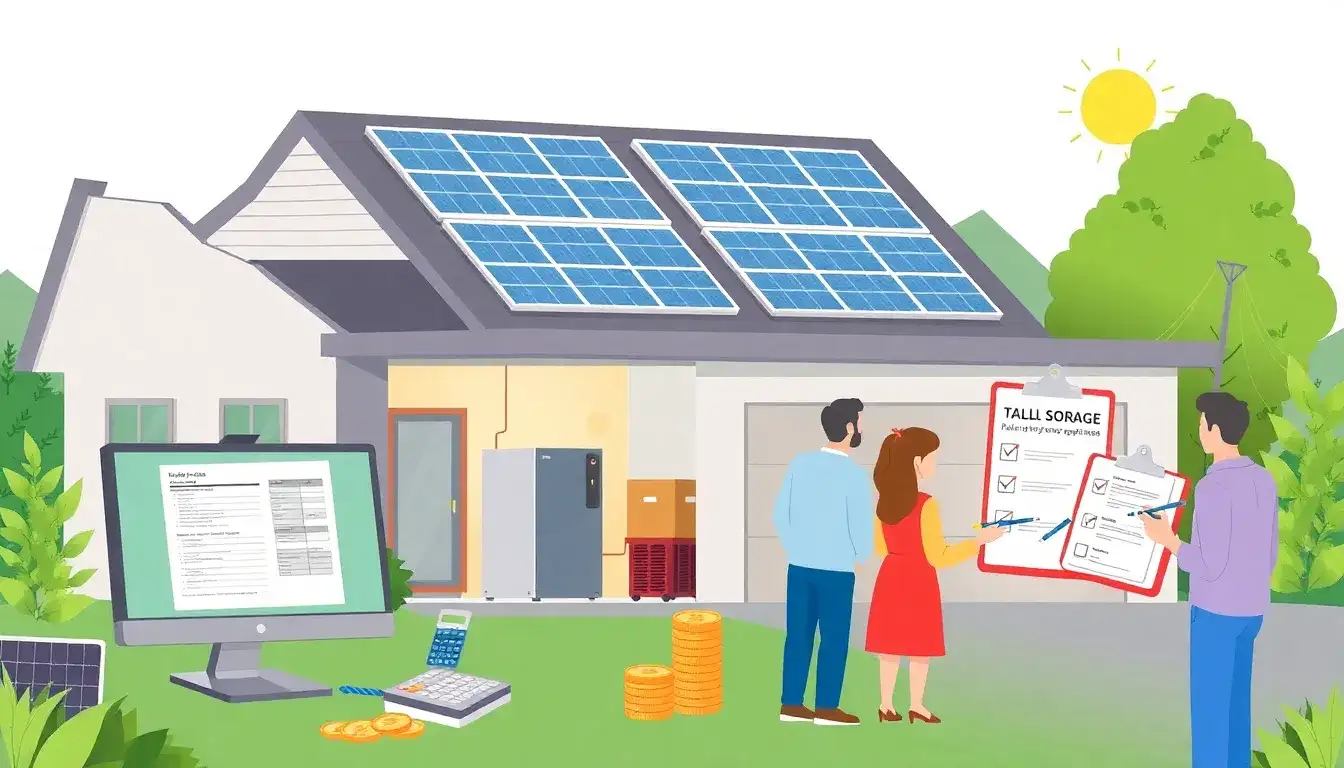
To claim the federal tax credit for battery storage, you need to follow these key steps:
- Eligibility: Your battery storage system must have a capacity of at least 3 kilowatt-hours and be installed in connection with a residence you own in the United States. Both your principal residence and second homes qualify, but rental properties do not.
- Tax Credit Amount: The credit is 30% of the cost of the battery storage system if placed in service after December 31, 2021, and before January 1, 2033. This applies even if the battery is not paired with a solar system. There is no maximum size or cost limit on the battery system to qualify for this credit.
- Documentation: Keep all records including receipts, invoices, and proof of installation. Document all expenses related to the purchase, preparation, assembly, and installation.
- Filing: You claim the credit by filing IRS Form 5695 (Residential Energy Credits) with your federal income tax return for the year the battery storage is installed and operational. For example, if installed in 2024, claim it on your 2024 tax return filed in 2025.
- Tax Benefit: The credit reduces your federal tax liability dollar-for-dollar but is nonrefundable, meaning it can only reduce taxes owed and does not generate a refund beyond your tax liability.
In summary, to claim the battery storage tax credit:
- Install a qualifying battery storage system (≥3 kWh).
- Keep all purchase and installation documentation.
- Complete IRS Form 5695 with your tax return for the installation year.
- Apply the 30% credit against your federal tax liability.
This process allows you to lower your federal income tax by 30% of your qualified battery storage system costs.
Original article by NenPower, If reposted, please credit the source: https://nenpower.com/blog/how-do-i-claim-the-tax-credit-for-battery-storage/

