

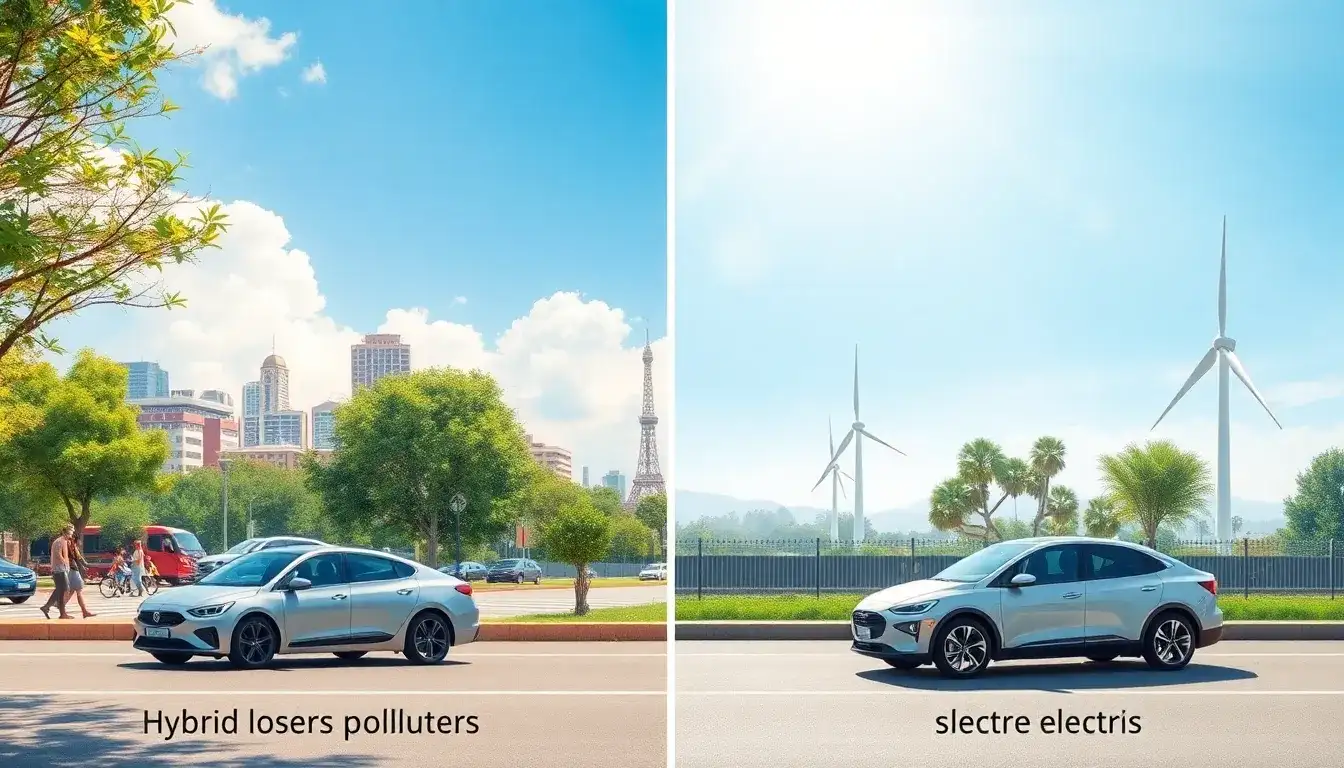
Air Quality Benefits of Hybrid vs. Electric Vehicles
Electric Vehicles (EVs):
- EVs produce zero tailpipe emissions, which directly reduces air pollutants such as nitrogen oxides (NOx), particulate matter, and volatile organic compounds, all of which contribute to urban air pollution and health issues.
- The overall climate and air quality benefits of EVs are generally higher because they rely fully on electricity rather than burning fossil fuels during operation.
- Some considerations exist around the emissions from manufacturing EVs (particularly their batteries), but once in use, EVs tend to be much cleaner than conventional vehicles.
Hybrid Vehicles (HEVs and PHEVs):
- Hybrids combine a gasoline engine with an electric motor, resulting in lower tailpipe emissions than traditional vehicles but not zero emissions like full EVs.
- Traditional hybrids recharge their batteries from the gasoline engine, while plug-in hybrids (PHEVs) can run on electric power alone for limited ranges before switching to gasoline.
- Under certain specific conditions—such as how they are driven, where electricity is generated, and how the vehicles are manufactured—hybrids might sometimes produce less overall climate pollution than some EVs. This could occur if EV battery manufacturing emissions are very high or if the EV is charged using electricity from high-pollution sources.
- Analysis from Emissions Analytics showed hybrids can reduce real-world carbon dioxide emissions significantly compared to equivalent gasoline vehicles, sometimes performing better in real-world driving conditions than some EVs.
Summary Comparison
| Aspect | Electric Vehicles (EVs) | Hybrid Vehicles (HEVs/PHEVs) |
|---|---|---|
| Tailpipe emissions | None | Lower than conventional vehicles, but not zero |
| Air pollutant reduction | Highest, direct reduction in urban air pollution | Moderate, depends on use and battery usage |
| Climate pollution | Generally lowest lifecycle emissions | Can be lower in some specific circumstances |
| Manufacturing impact | Higher emissions due to battery production | Lower battery-related emissions but still present |
| Dependency on electricity | Fully dependent and benefits from clean grids | Partially dependent, fallback on gasoline engine |
In essence, electric vehicles typically provide greater air quality benefits by eliminating tailpipe emissions entirely, which leads to reduced local air pollution and associated health benefits. However, hybrids still substantially reduce emissions compared to conventional vehicles and under certain specific conditions may rival or even exceed the climate benefits of some EVs, mostly depending on how they are manufactured, driven, and where their electricity comes from.
Original article by NenPower, If reposted, please credit the source: https://nenpower.com/blog/how-do-hybrid-vehicles-compare-to-electric-vehicles-in-terms-of-air-quality-benefits/

