

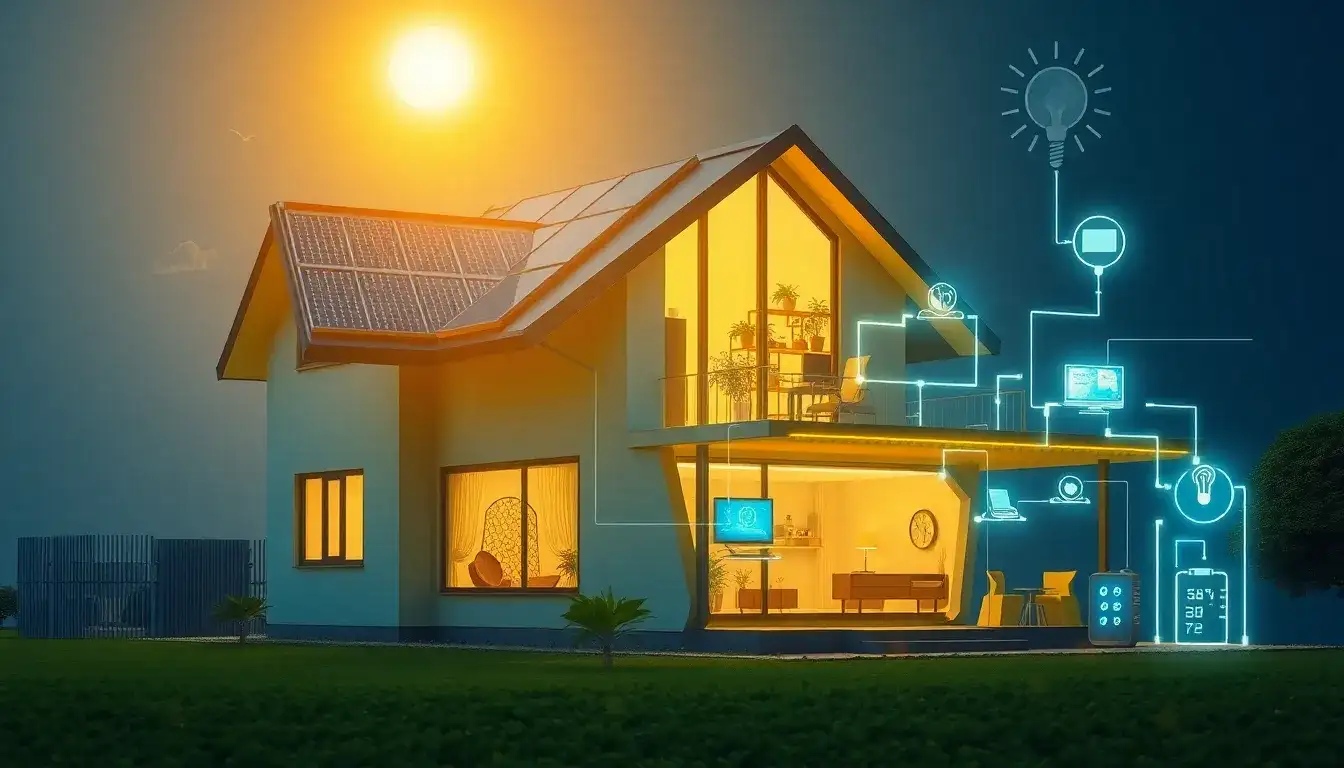
Hybrid solar battery systems optimize energy usage by integrating multiple components and using advanced technologies to manage power efficiently. Here’s how these systems enhance energy optimization:
Components and Functionality
- Solar Panels: Generate electricity from sunlight.
- Inverter: Converts DC power from solar panels into AC for household use.
- Battery Storage: Stores surplus solar energy for later use, such as during night or cloudy conditions.
- Grid Connection: Allows users to draw power from the grid when needed and send excess energy back.
Optimization Techniques
- Smart Power Distribution: Hybrid inverters manage power from solar panels, batteries, and the grid, ensuring efficient distribution based on availability and need.
- Real-Time Monitoring: Advanced monitoring systems track energy production and consumption, allowing for adjustments to optimize efficiency.
- Automated Optimization Algorithms: These algorithms select the best energy source (solar, battery, or grid) to minimize waste and maximize savings.
- Energy Storage and Usage: By storing excess energy generated during sunny periods, hybrid systems can reduce reliance on the grid during peak hours, lowering energy bills.
Benefits of Hybrid Solar Battery Systems
- Energy Independence: Reduces dependence on external power sources by providing backup during outages.
- Cost-Effectiveness: Significantly reduces energy costs by using stored energy during peak tariff hours.
- Sustainability: Promotes renewable energy usage and reduces carbon footprint.
- Reliability: Offers uninterrupted power supply through a combination of solar energy, battery storage, and grid connection.
Overall, hybrid solar battery systems optimize energy usage by efficiently managing power sources, reducing energy waste, and enhancing reliability and cost savings.
Original article by NenPower, If reposted, please credit the source: https://nenpower.com/blog/how-do-hybrid-solar-battery-systems-optimize-energy-usage/

