

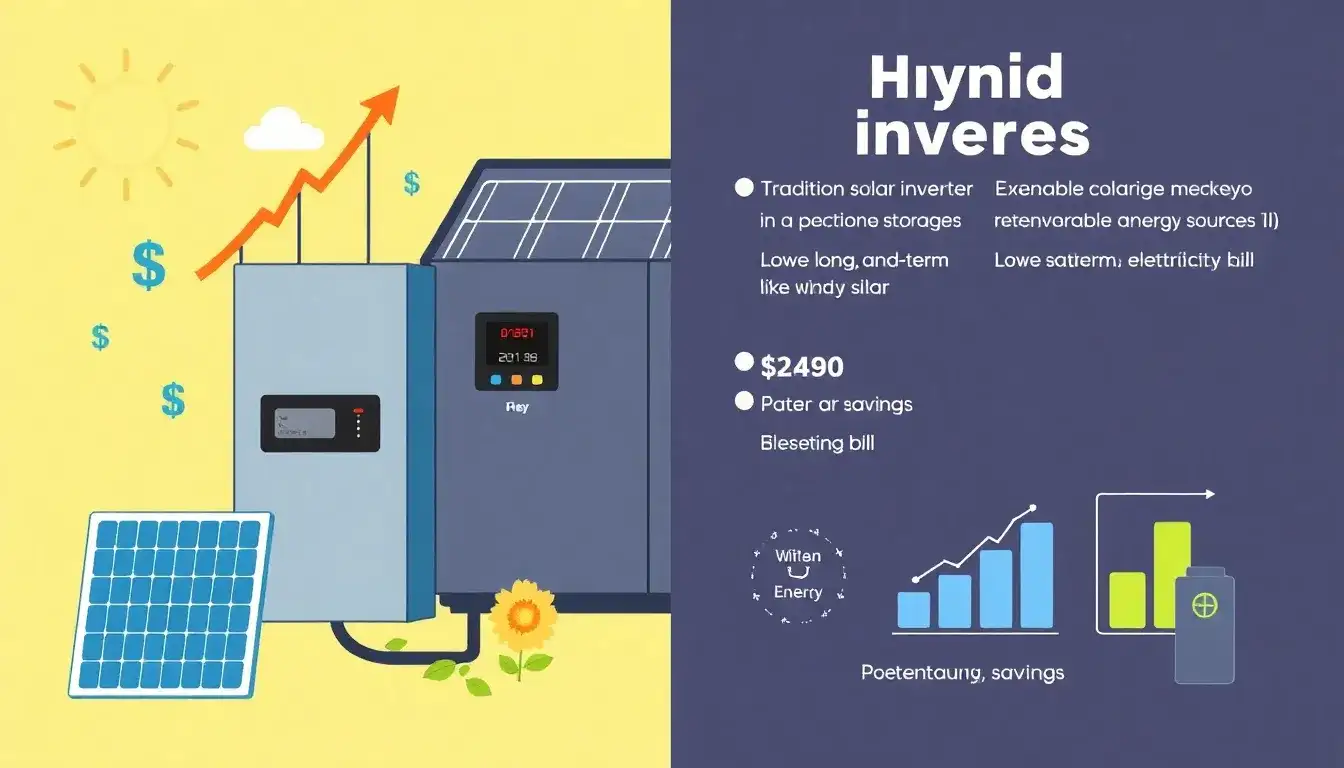
Hybrid Solar Inverters vs. Traditional Solar Inverters
Hybrid solar inverters and traditional solar inverters differ significantly when it comes to cost savings and overall functionality. Here’s a comparison of their features and how they impact cost:
Key Differences
- Energy Storage and Backup:
- Hybrid Inverters: These inverters can store excess solar energy in batteries, allowing homeowners to use this stored energy during blackouts or at night, reducing reliance on the grid. This feature enhances energy independence and can lead to lower electricity bills over time.
- Traditional Inverters: They do not store energy and shut down during power outages. While they export surplus energy back to the grid, this doesn’t provide power during blackouts.
- Cost Structure:
- Hybrid Inverters: Generally more expensive upfront due to the inclusion of battery storage systems. However, they offer long-term savings by reducing grid reliance and maximizing solar power usage.
- Traditional Inverters: Cheaper initially but lack the ability to store energy, leading to higher long-term costs due to continued reliance on the grid for power during blackouts or off-sun hours.
- Efficiency and Independence:
- Hybrid Inverters: Offer higher efficiency and energy independence by optimizing energy use through battery storage, even during blackouts or off-peak hours.
- Traditional Inverters: Depend entirely on the grid and immediate solar generation, limiting their effectiveness during outages or low sun conditions.
Cost Savings Analysis
While hybrid inverters have a higher initial cost, they provide significant long-term cost savings through reduced grid reliance and energy storage capabilities. They allow homeowners to use more of their solar power instead of feeding it back into the grid, especially during peak hours or blackouts. Additionally, many regions offer incentives and rebates for installing hybrid solar systems, which can offset the higher upfront cost.
In contrast, traditional inverters are cheaper initially but do not offer the same level of cost savings over time, especially for homeowners who experience frequent power outages or high electricity prices.
Overall, hybrid inverters are a better investment for those prioritizing energy independence, long-term cost savings, and efficient energy management, despite their higher upfront cost.
Original article by NenPower, If reposted, please credit the source: https://nenpower.com/blog/how-do-hybrid-inverters-compare-to-traditional-solar-inverters-in-terms-of-cost-savings/

