

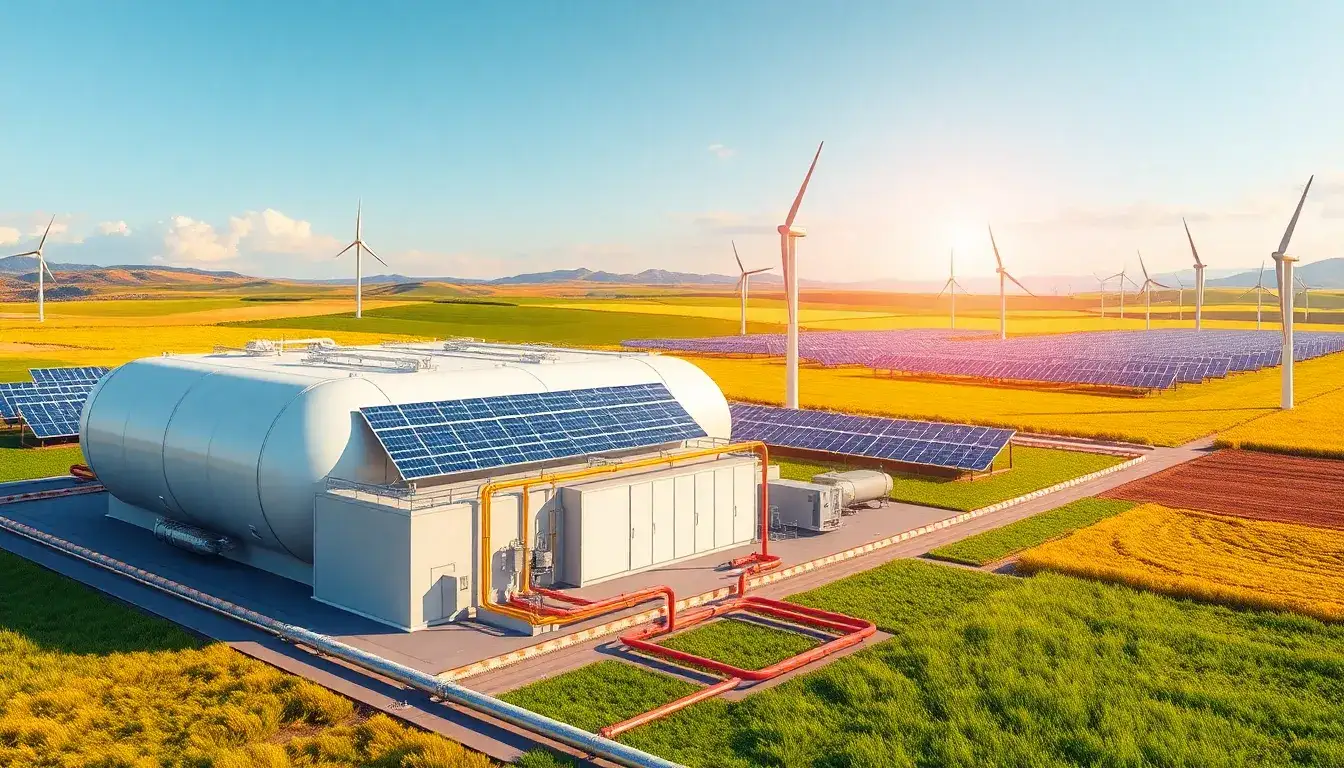
Hybrid Compressed Air Energy Storage (CAES) systems integrate renewable energy sources through innovative designs that address intermittency and storage challenges:
1. Energy Conversion and Storage
Hybrid systems like HT-CAES split incoming renewable energy (e.g., wind/solar) into two streams:
- Compressed air storage: A portion directly drives compressors to store energy as compressed air.
- Thermal storage: The remainder converts electrical energy into heat via Joule heating, stored in solid-state thermal media (e.g., ceramics or molten salts).
2. Emission-Free Operation
Unlike conventional CAES, hybrid systems eliminate natural gas combustion by repurposing excess renewable energy for thermal storage during discharge cycles. This enables carbon-free integration with wind, solar, and biomass.
3. Grid Flexibility
These systems buffer renewable intermittency by:
- Storing surplus energy during peak renewable generation.
- Discharging on-demand during low production periods, stabilizing grid frequency.
4. Reduced Infrastructure Demands
By hybridizing thermal and air storage, systems lower operating pressures and storage volume requirements compared to conventional CAES. This enables deployment in diverse geological settings without large underground caverns.
5. Coupled Renewable Integration
Advanced configurations directly pair with renewable sources:
- Wind-CAES: Compressors use excess wind power, while stored heat supplements discharge phases.
- Solar-CAES: Solar-generated heat augments thermal storage, improving round-trip efficiency.
- Biomass-CAES: Biomass-derived heat can optionally supplement thermal storage reservoirs.
Hybrid CAES systems thus serve as scalable, flexible platforms for high-penetration renewable grids, addressing variability while reducing land use and emissions compared to fossil-dependent alternatives.
Original article by NenPower, If reposted, please credit the source: https://nenpower.com/blog/how-do-hybrid-caes-systems-integrate-renewable-energy-sources/

