

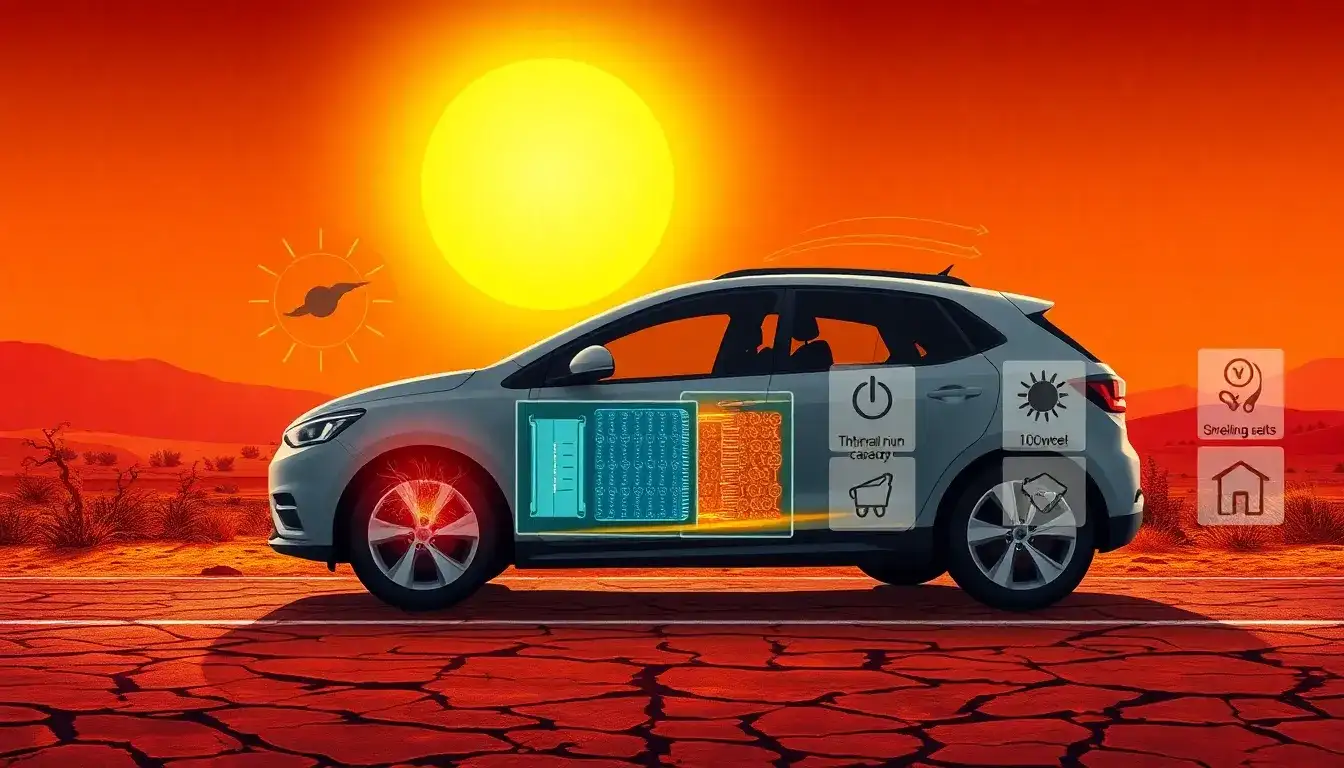
Hot temperatures significantly impact electric vehicle (EV) battery longevity, primarily through increased chemical reactions and degradation:
- Accelerated Aging: High temperatures accelerate chemical reactions within EV batteries, leading to faster aging and degradation. This process is similar to how fast charging can affect battery longevity, as it also increases ion movement and heat generation.
- Ion Movement and Chemical Reactions: In extreme heat, ions in the battery move more rapidly. This can lead to trouble in attaching to the anode or cathode and create small cracks, which reduce the battery’s usable life and range over time.
- Degradation Due to Heat: Warmer climates generally result in shorter battery lifespans compared to cooler environments. This is because EV batteries are optimized to perform best at moderate temperatures, and extreme heat can cause irreversible damage.
- Charging and Storage: Charging and storing EVs in high temperatures can further reduce battery lifespan. It’s advisable to charge in shaded areas or use cooling systems if available to mitigate these effects.
Overall, while EVs can function well in hot weather, prolonged exposure to high temperatures can have significant long-term impacts on battery longevity.
Original article by NenPower, If reposted, please credit the source: https://nenpower.com/blog/how-do-hot-temperatures-specifically-impact-ev-battery-longevity/

