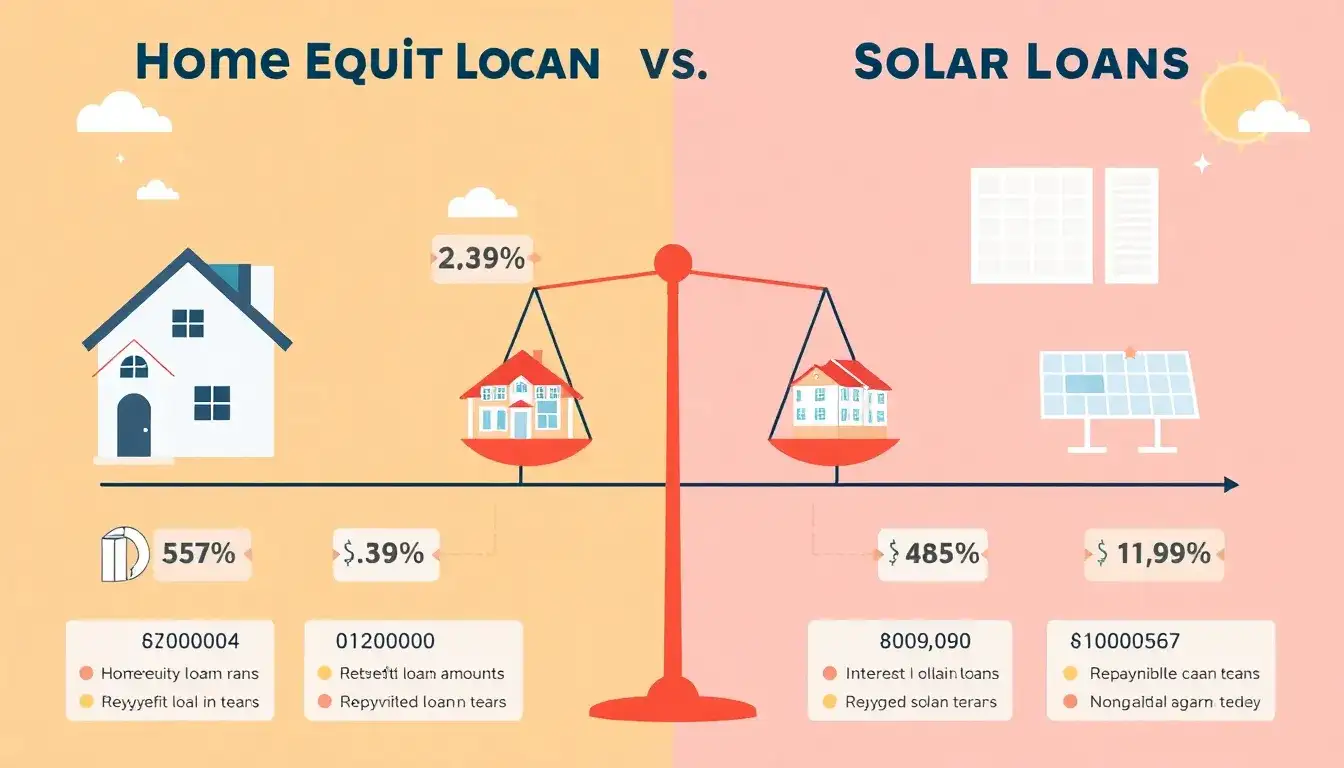
Home equity loans and solar loans differ notably in their interest rates and loan structure due to their security and purpose.
Home Equity Loans (and HELOCs):
- Typically have lower interest rates than many solar loans because they are secured by your home, reducing lender risk.
- HELOCs usually carry variable interest rates, which can lead to fluctuating payments over time.
- Home equity loans more commonly have fixed interest rates but remain generally lower than unsecured loans.
- The interest on home equity financing used for home improvements, such as solar panel installation, may be tax-deductible, adding to their financial advantage.
- However, borrowers must have sufficient home equity (often at least 15-20%) and meet debt-to-income requirements, and the loan puts the home at risk if payments are missed.
Solar Loans:
- Solar loans are usually unsecured personal loans backed by the solar equipment (not the home) and generally have fixed interest rates.
- Interest rates on solar loans can be higher than home equity loans but typically are competitive and sometimes not far above HELOC rates.
- Solar loans often have quicker approval times and fixed monthly payments, which may be preferable in a rising interest rate environment.
- Solar loans may include fees (origination or dealer fees) that can significantly increase the overall cost, sometimes negating the benefit of a lower nominal interest rate.
- Unlike HELOCs, solar loans do not use the home as collateral, reducing risk to the borrower’s home.
Summary Comparison of Interest Rates:
| Feature | Home Equity Loan/HELOC | Solar Loan |
|---|---|---|
| Interest Rate Level | Generally lower due to collateral (home) | Typically higher, but fixed rates common |
| Rate Type | HELOC: Variable; Home Equity Loan: Fixed | Fixed |
| Collateral | Secured by home | Secured by solar equipment (not home) |
| Fees | Usually lower fees | Potentially high origination/dealer fees |
| Tax Deductibility | Interest may be tax-deductible if used for home improvements | No tax benefits on interest payments |
| Risk to Home | Home at risk if default | Home not at risk |
In conclusion, home equity loans offer lower interest rates and potentially tax-deductible interest due to their secured nature but put your home at risk and require sufficient equity. Solar loans provide fixed rates and preserve home equity, but the interest rates can be higher, and fees may increase the total loan cost. Borrowers should weigh the cost of interest rates against fees and collateral risk when choosing between the two options.
Original article by NenPower, If reposted, please credit the source: https://nenpower.com/blog/how-do-home-equity-loans-compare-to-solar-loans-in-terms-of-interest-rates/