

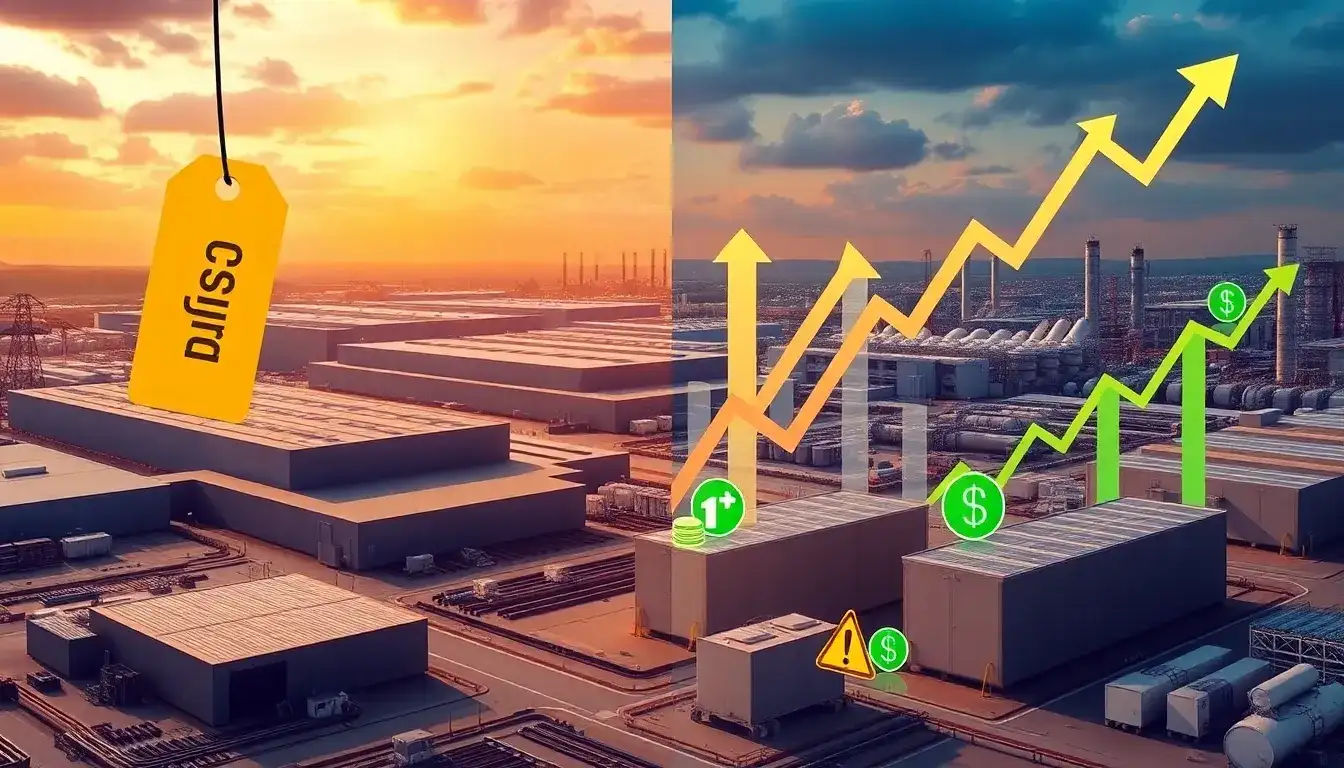
High upfront costs significantly impact the adoption of Battery Energy Storage Systems (BESS) in industrial settings by acting as a primary barrier to widespread deployment. These substantial initial investments include the purchase of battery modules, inverters, battery management systems, and installation expenses, which can be particularly large for high-capacity or large-scale systems common in industry.
Effects of High Upfront Costs on Industrial BESS Adoption
- Financial Burden and Investment Hesitation: The high capital expenditure required for BESS acquisition and setup leads many industrial operators to hesitate or delay adoption, especially when budget constraints are tight or when the return on investment (ROI) is uncertain.
- Impact on Decision-Making and Project Scaling: Industrial entities often must carefully evaluate system size and scalability against costs, which may limit the deployment of optimally sized systems for future needs. This conservative sizing to manage upfront costs can reduce potential efficiency gains and savings.
- Return on Investment Consideration: Although BESS can yield considerable energy cost savings through demand charge reduction, peak shaving, and load shifting, the payback period can be extended by the large initial capital outlay, making financial justification more challenging for some industrial users.
- Maintenance and Lifecycle Costs: Beyond the upfront costs, battery degradation and operational maintenance add to the lifecycle expenses. For lithium-ion batteries commonly used in industrial BESS, lifespan ranges from 10 to 15 years, and replacement or performance degradation must be accounted for, adding to the total cost of ownership (TCO).
- Limited Immediate Adoption Despite Price Declines: Although battery prices have dramatically decreased—lithium-ion battery costs fell from over $1,100 per kWh in 2010 to around $137 per kWh in 2023—the upfront investment remains substantial enough to slow industrial adoption. Experts predict continued price declines, but high initial costs still pose a hurdle.
- Access to Financing and Incentives: Industrial adoption can be facilitated through financial incentives such as tax credits (e.g., the U.S. Investment Tax Credit), subsidies, and other governmental support programs which help offset upfront costs and improve economic viability.
Summary
| Impact of High Upfront Costs on Industrial BESS Adoption | Details |
|---|---|
| Financial Barrier | Large initial capital required for batteries, inverters, and installation can deter investment. |
| Project Sizing Constraints | Cost concerns may lead to undersized systems, limiting benefits and scalability. |
| Extended Payback Period | Higher initial costs prolong ROI realization, affecting investment decisions. |
| Lifecycle Cost Considerations | Battery degradation and maintenance add to long-term costs, impacting total cost of ownership. |
| Price Trends and Market Dynamics | Despite significant cost reductions, upfront costs remain a primary adoption obstacle. |
| Incentives and Financing Options | Governmental tax credits and subsidies can partially mitigate upfront expenses. |
In conclusion, high upfront costs fundamentally slow the adoption of BESS in industrial contexts by increasing financial risk and complicating investment decisions. However, as battery prices continue to fall and as financing mechanisms and incentives improve, these barriers are gradually lowering, potentially accelerating BESS integration in industrial energy management.
Original article by NenPower, If reposted, please credit the source: https://nenpower.com/blog/how-do-high-upfront-costs-impact-the-adoption-of-bess-in-industrial-settings/

