

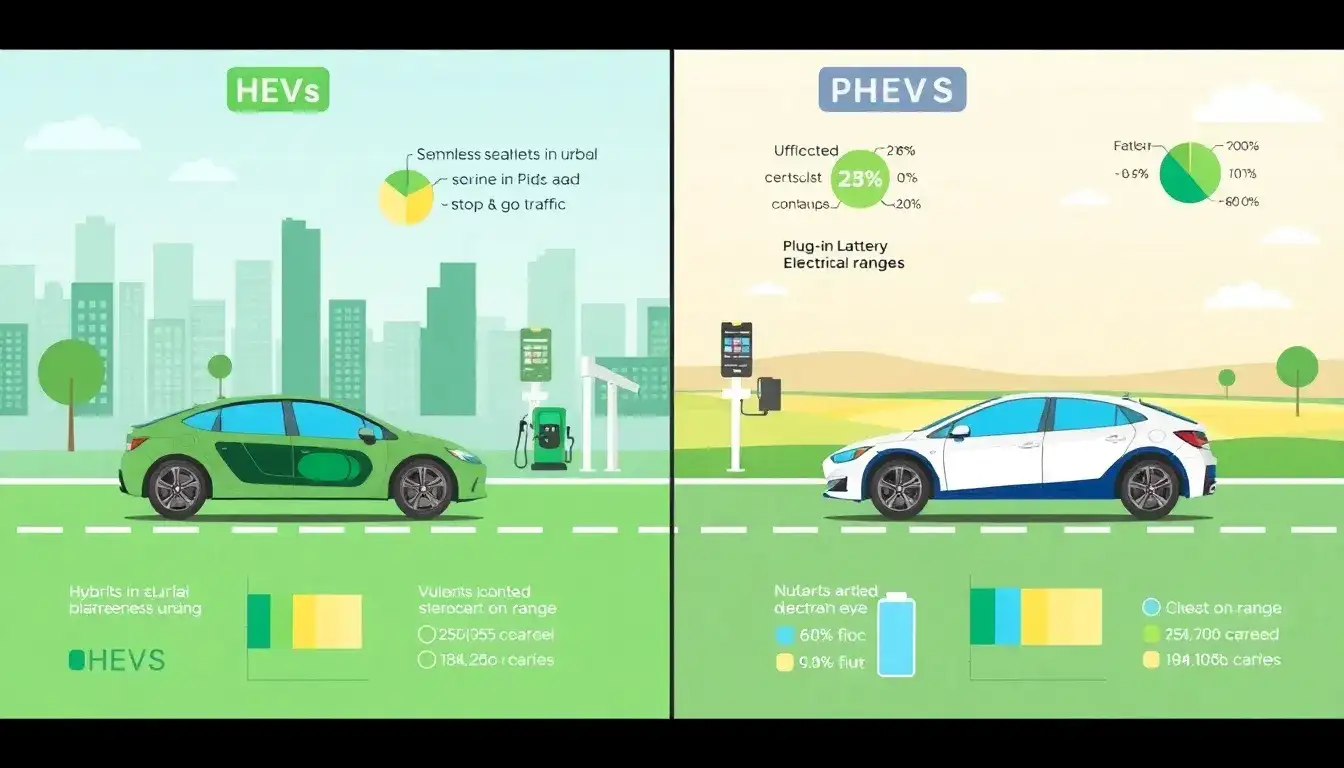
Fuel Efficiency Comparison: HEVs vs. PHEVs
Both Hybrid Electric Vehicles (HEVs) and Plug-in Hybrid Electric Vehicles (PHEVs) offer improved fuel efficiency compared to traditional gasoline-only vehicles, but they differ in how they achieve this efficiency.
Key Differences:
-
Electric-Only Capability:
- HEVs cannot operate solely on electric power and rely on their gasoline engine to assist the electric motor during operation.
- PHEVs have the ability to run on electric power alone for a certain range, thanks to their larger batteries, making them highly efficient for short trips without using gasoline.
-
Fuel Economy:
- HEVs generally offer fuel economies between 4.0 and 6.6 L/100 km in real-world tests.
- PHEVs achieve even better efficiency with fuel economies ranging from 1.3 to 3.1 L/100 km, depending on the model and driving conditions. This is because PHEVs can use electricity from charging for a significant portion of their operation, reducing reliance on gasoline.
-
Claimed vs. Actual Fuel Efficiency:
- HEVs tend to be closer to their claimed fuel efficiencies, typically averaging 10% to 20% over claimed fuel use in real-world tests.
- PHEVs often have larger discrepancies between claimed and actual fuel efficiency, averaging 45% to 73% over claimed use, partly because their efficiency claims are highly dependent on the electric driving range and charging habits.
Conclusion:
PHEVs generally offer superior fuel efficiency compared to HEVs, especially for short trips where they can operate primarily in electric mode. However, their actual efficiency can vary significantly based on driving habits and charging frequency. HEVs, while less efficient than PHEVs, are still more fuel-efficient than traditional gasoline vehicles and may offer better value for those who do not have easy access to charging infrastructure.
Original article by NenPower, If reposted, please credit the source: https://nenpower.com/blog/how-do-hevs-compare-to-phevs-in-terms-of-fuel-efficiency/

